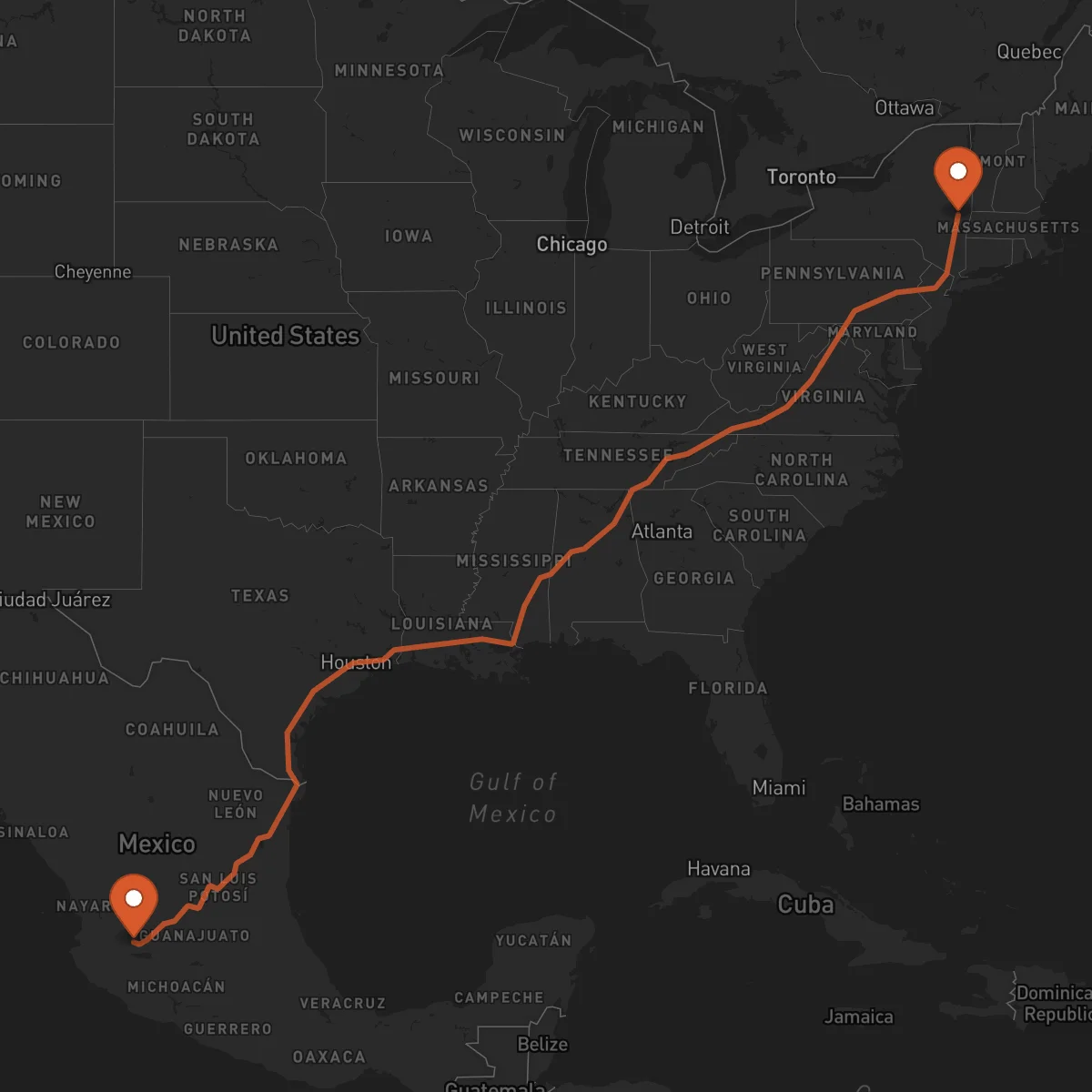
Guadalajara to Albany
Albany → GuadalajaraFTL freight transportation service between Guadalajara and Albany. Reliable logistics solutions for your business.
Route Description
Everything you need to know about the corridor Guadalajara - Albany
The logistics corridor connecting Guadalajara, Jalisco to Albany, New York represents a vital cross-border freight transportation route spanning approximately 3,682 kilometers. This corridor serves as a crucial link between Mexico's second-largest metropolitan area and a key distribution hub in the northeastern United States. The route traverses diverse terrain and crosses multiple states, requiring expert navigation of both Mexican and American transportation networks.
The economic significance of this corridor cannot be overstated. Guadalajara serves as Mexico's technology and manufacturing powerhouse, often referred to as the "Silicon Valley of Mexico," while Albany functions as a strategic gateway to the northeastern U.S. market. This connection facilitates the movement of high-value electronics, automotive components, aerospace parts, and medical devices from Mexican manufacturers to American consumers and assembly facilities.
Transportation along this corridor relies primarily on major interstate highways including I-35, I-44, and I-90, with critical border crossings at Laredo/Nuevo Laredo or El Paso/Juárez. Control Terrestre's expertise in cross-border logistics ensures seamless operations through customs procedures, regulatory compliance, and coordination with certified transportation partners who maintain C-TPAT and FAST certifications. Our dedicated fleet options provide the reliability and security that manufacturers and distributors require for time-sensitive shipments between these two industrial powerhouses.
Services for this Route
Available services for the corridor Guadalajara - Albany
 Origin
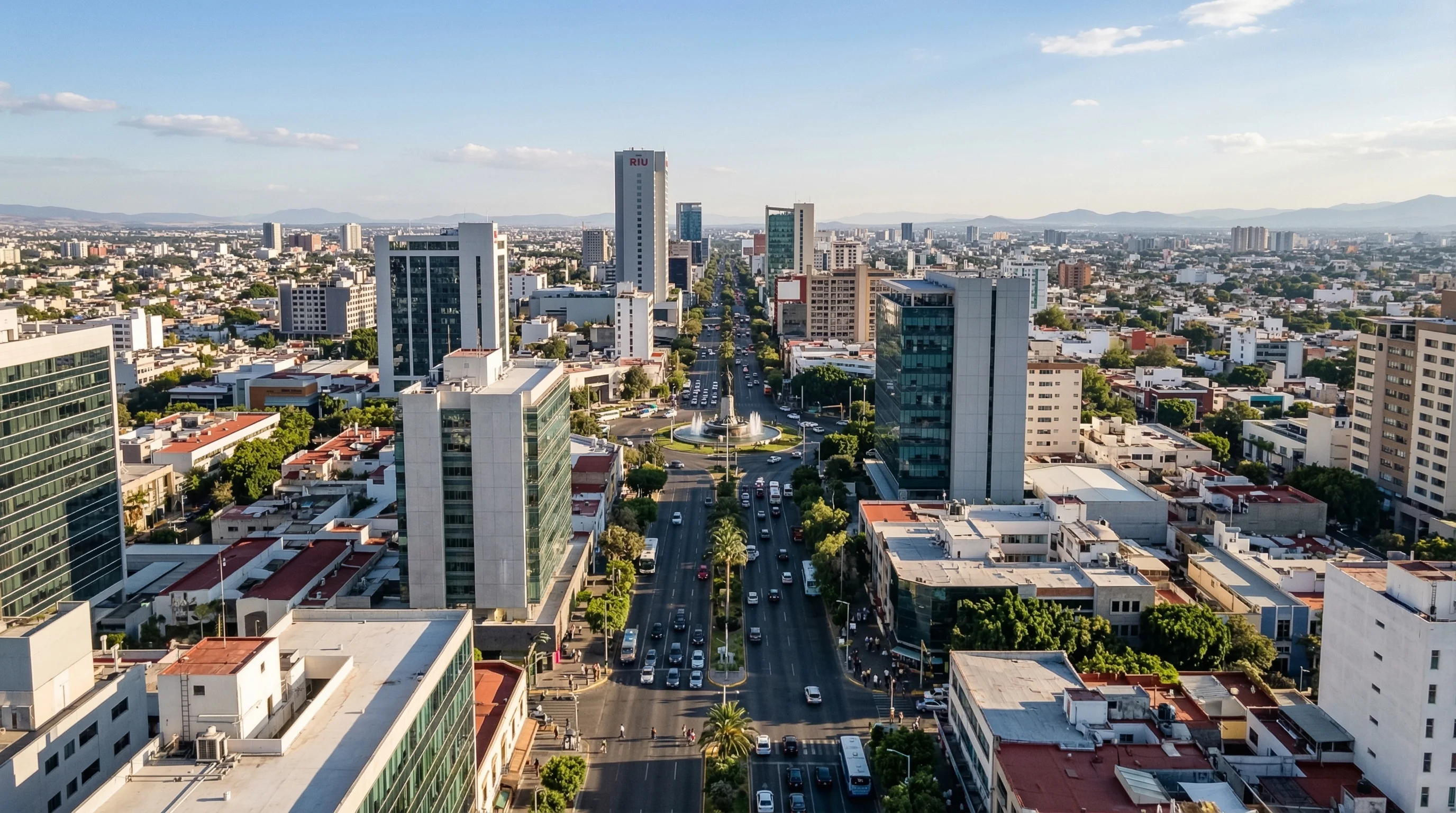
Guadalajara stands as Mexico's second-largest metropolitan area and serves as a strategic logistics hub for western Mexico. Located in the state of Jalisco, this city offers exceptional connectivity through its international airport, extensive highway network, and proximity to major ports including Manzanillo and Lázaro Cárdenas. The city's central-western location provides optimal access to both Pacific trade routes and northern border crossings.
The economic landscape of Guadalajara is dominated by advanced manufacturing, particularly in the technology, aerospace, and automotive sectors. Known as Mexico's "Silicon Valley," the region hosts numerous electronics manufacturers, software development companies, and research facilities. The city's industrial parks are home to global companies requiring sophisticated logistics solutions for just-in-time manufacturing and distribution. Guadalajara's robust infrastructure, skilled workforce, and concentration of high-tech industries make it an ideal origin point for cross-border freight movements requiring specialized handling and temperature-controlled transportation.
 Destination
Albany
Albany, New York serves as a strategic logistics gateway to the northeastern United States, positioned advantageously for distribution throughout the region. Located approximately 240 kilometers north of New York City, Albany provides access to one of the nation's most densely populated and economically active corridors. The city's location along the Hudson River and its proximity to major interstates including I-90 and I-787 create multiple transportation options for freight movement.
The Albany metropolitan area hosts a diverse economic base including state government operations, healthcare institutions, educational facilities, and advanced manufacturing. The region's logistics infrastructure includes intermodal facilities, warehousing centers, and distribution hubs that serve the broader northeastern market. Albany's position makes it an ideal consolidation point for goods destined for New York City, Boston, Philadelphia, and other major northeastern markets. The area's cold climate also creates demand for specialized refrigerated transportation services, particularly for food products, pharmaceuticals, and other temperature-sensitive cargo moving through the region.










