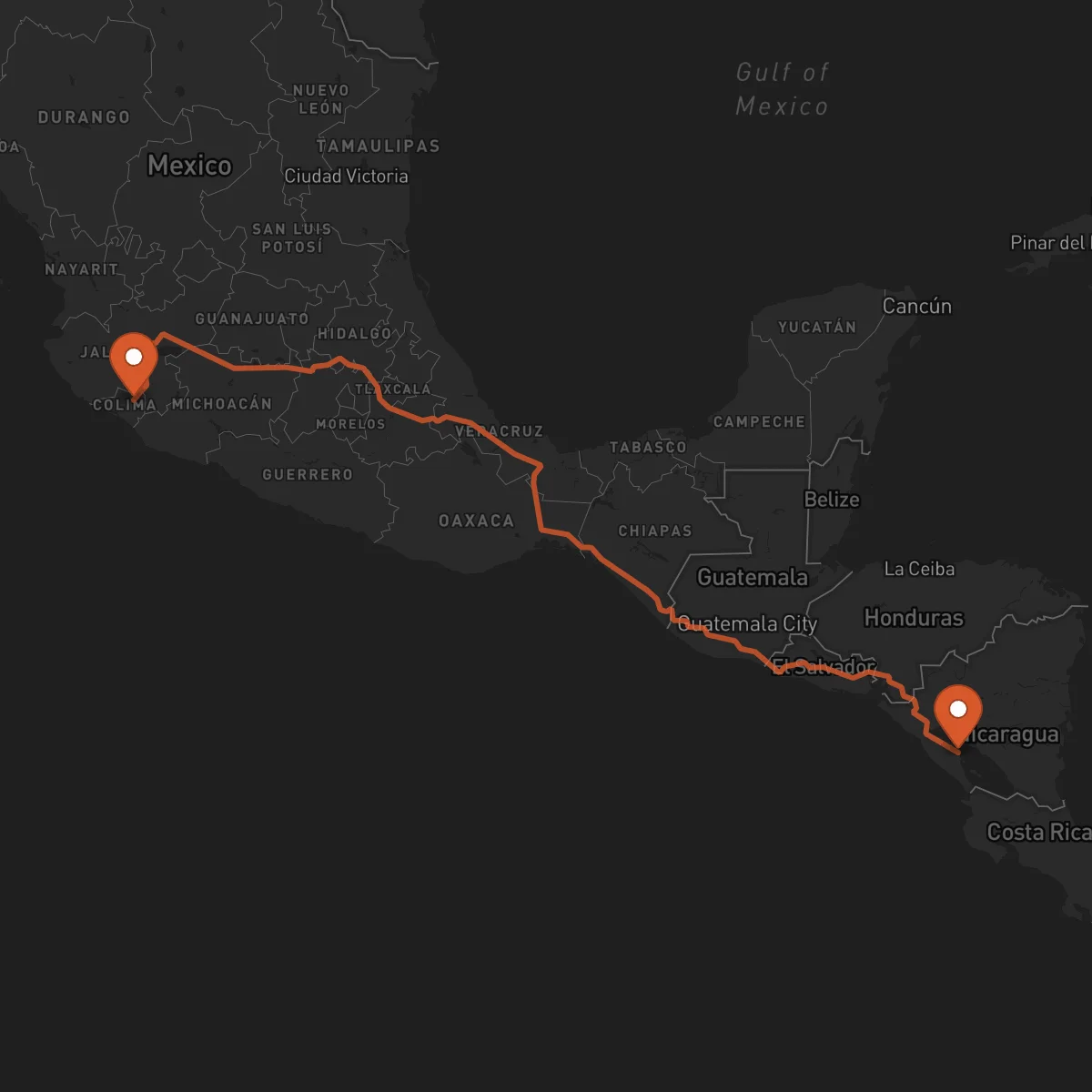
Granada to Colima
Colima → GranadaFTL freight transportation service between Granada and Colima. Reliable logistics solutions for your business.
Route Description
Everything you need to know about the corridor Granada - Colima
The Granada, Nicaragua to Colima, Mexico corridor is a vital north-south artery connecting Central America's economic heartland with Mexico's strategic Pacific coast. This cross-border route facilitates the movement of goods across approximately 2,067 kilometers, serving as a critical link for trade between Nicaragua and the broader Central American region and key industrial and port hubs in western Mexico. Its strategic importance lies in bridging agricultural and manufacturing sectors in Nicaragua with the export-oriented industries and world-class ports of the Colima region, enabling efficient supply chain integration across borders.
Economically, the corridor supports the flow of Nicaragua's primary exports, including coffee, beef, seafood, and agricultural products, alongside manufactured goods heading south. For Mexico's Colima state, a major economic driver is its port of Manzanillo, one of the busiest in Latin America, which handles a vast array of imports and exports. The corridor therefore underpins industries such as agribusiness, food and beverage processing, mining, and general manufacturing on both ends, requiring reliable, high-capacity transportation to maintain just-in-time inventory and market access.
The primary transportation infrastructure relies on a network of major highways. In Nicaragua, the route typically begins on the Pan-American Highway (CA-1) from Granada towards the border. In Mexico, Federal Highway 200 runs along the Pacific coast, providing the main connective tissue through states like Chiapas, Oaxaca, and Guerrero directly into Colima. Key border crossings, such as the Talisman (El Ceibo) crossing between Nicaragua and Honduras, and subsequently the border between Guatemala and Mexico (e.g., Ciudad Hidalgo/Tecún Umán), are critical chokepoints. Navigating customs and compliance requirements across multiple jurisdictions demands expertise in international documentation and regulations.
Control Terrestre facilitates seamless operations on this complex corridor through our alliance of certified transportation providers. Our partners hold essential credentials like C-TPAT, FAST, and BASC, which streamline customs processes and enhance security clearance at border crossings. We exclusively provide Full Truckload (FTL) solutions—including dedicated, expedited, and specialized options for refrigerated, oversized, or hazardous cargo—ensuring your shipment moves as a single, secure unit from origin to destination without consolidation delays. By managing the entire cross-border logistics chain with our network's expertise, we provide the reliability and local knowledge needed to optimize your supply chain across this international route.
Services for this Route
Available services for the corridor Granada - Colima
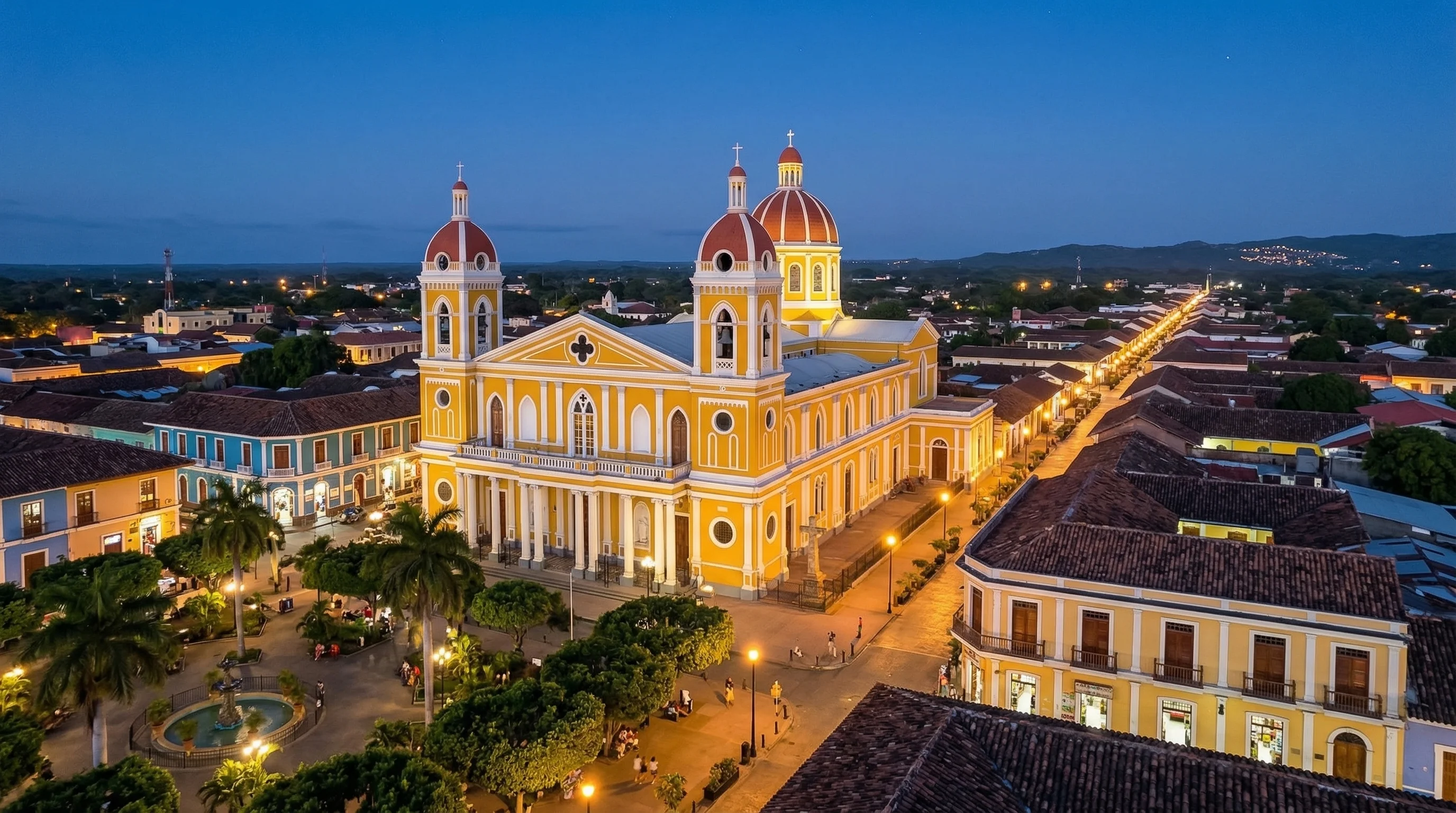 Origin
Granada, Nicaragua, is a strategically located logistics hub in southern Nicaragua, positioned near the shores of Lake Nicaragua and at the crossroads of the Pan-American Highway (CA-1). This location provides direct access to Nicaragua's primary north-south transportation corridor and connects efficiently to the country's Pacific ports, such as Corinto. The city and its surrounding region are economic powerhouses for agriculture and agribusiness, producing significant volumes of coffee, beef, sugarcane, and seafood. Manufacturing, particularly food processing and textiles, also contributes to the local economy. The available transportation infrastructure is robust for the region, centered on the well-maintained CA-1 highway, which supports heavy truck traffic moving towards the borders with Honduras and Costa Rica, making it an ideal origin point for cross-border freight.
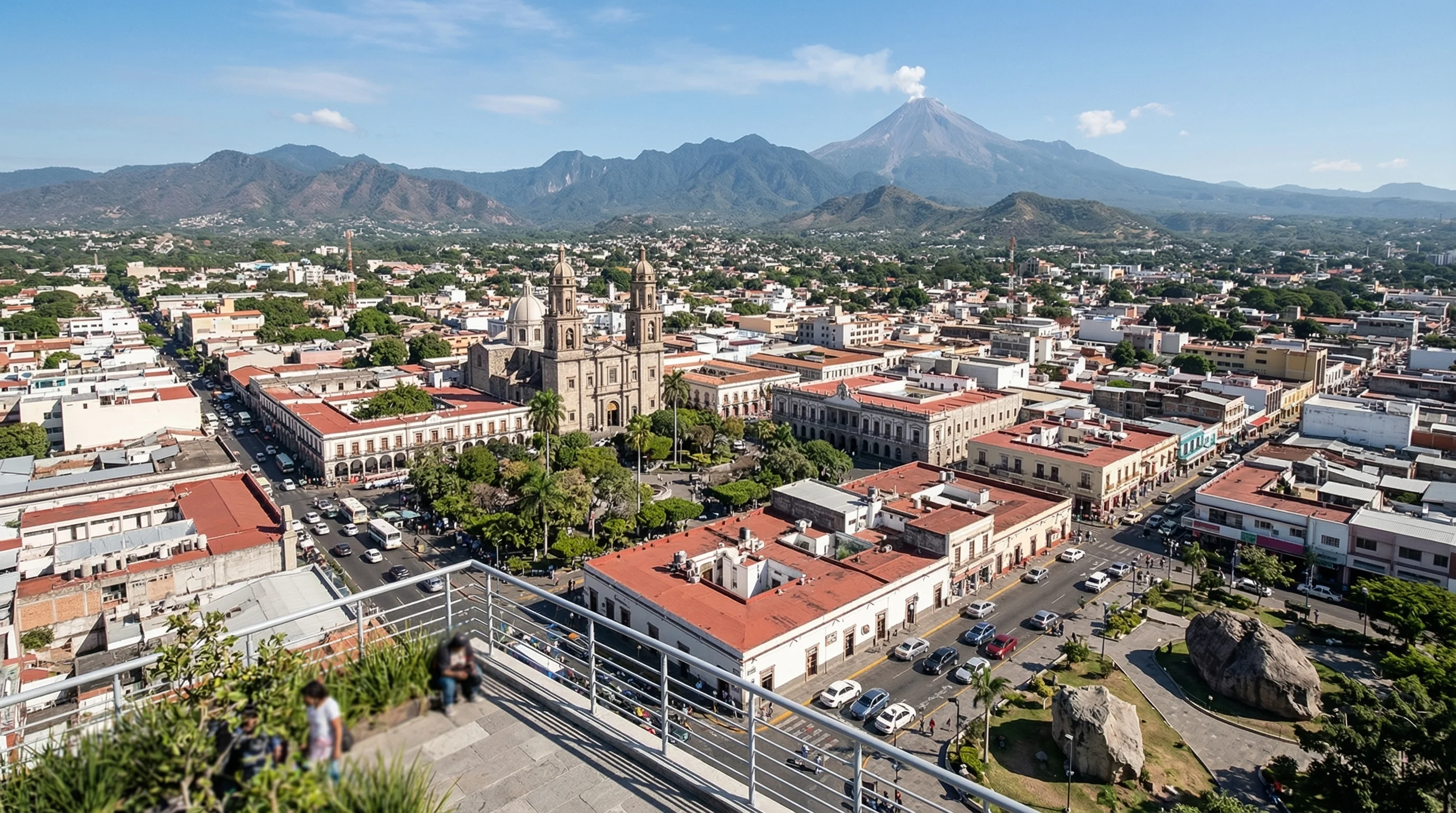 Destination
Colima, Mexico, is a strategically critical state on Mexico's Pacific coast, primarily due to the Port of Manzanillo, one of the nation's busiest and most important container ports. This provides direct maritime access to Asia, the US West Coast, and South America. The state's economy is heavily driven by logistics services supporting the port, alongside significant agriculture (citrus, coconut, mango), mining (especially non-ferrous minerals), and growing manufacturing sectors. The transportation infrastructure is highly developed, featuring Federal Highway 200 that runs the length of the state and connects directly to the port facilities. This highway also links to other major Mexican economic zones and border crossings further east, making Colima a pivotal distribution and consolidation point for goods entering and exiting Mexico via the Pacific.










