Fredericton to Topeka
Topeka → FrederictonFTL freight transportation service between Fredericton and Topeka. Reliable logistics solutions for your business.
Route Description
Everything you need to know about the corridor Fredericton - Topeka
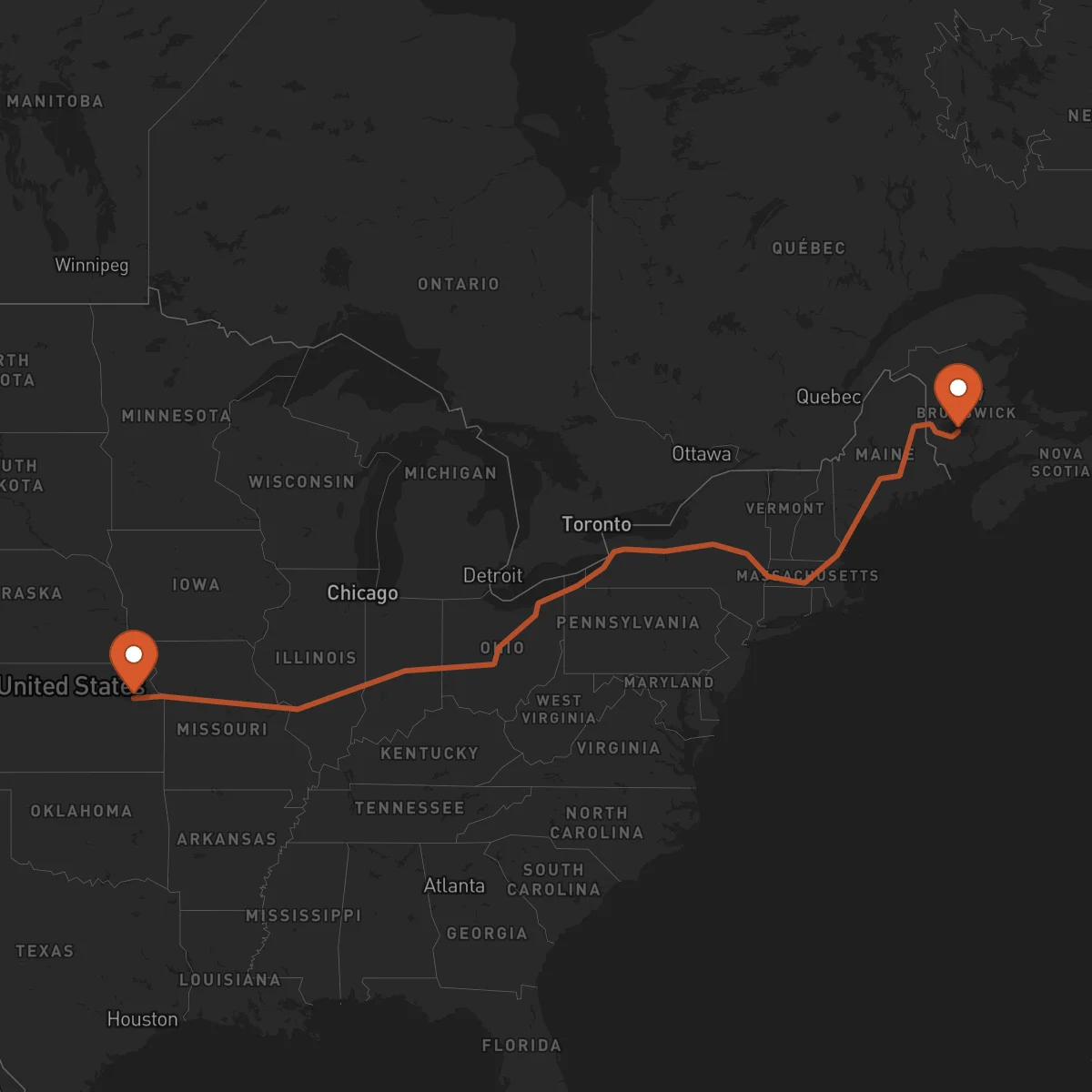
The cross-border corridor between Fredericton, New Brunswick, Canada, and Topeka, Kansas, United States, represents a vital logistics route connecting the Atlantic region of Canada with the central United States. Spanning approximately 2,485 kilometers, this corridor facilitates the movement of goods between two distinct economic regions, enabling businesses to optimize their supply chains across North America. The route traverses diverse landscapes and crosses international borders, requiring expertise in cross-border logistics and customs procedures to ensure seamless freight transportation.
This corridor serves as a critical link for industries on both sides of the border, connecting the manufacturing, agricultural, and technology sectors of New Brunswick with the industrial, agricultural, and distribution centers of Kansas. The economic relationship between these regions continues to strengthen, with increasing demand for efficient freight transportation solutions. Companies operating along this corridor benefit from the complementary nature of their economies, with Canadian exports including forest products, seafood, and manufactured goods, while imports from the United States include agricultural products, machinery, and consumer goods.
The transportation infrastructure along this corridor includes major highways such as the Trans-Canada Highway (Route 2) through New Brunswick, connecting to Interstate 81 and Interstate 70 in the United States, which lead directly to Topeka. Key border crossings include the Calais-St. Stephen crossing in Maine, which serves as the primary entry point for freight moving between these regions. Control Terrestre specializes in managing the complexities of this cross-border route, providing dedicated FTL services that ensure timely delivery while navigating customs requirements, documentation, and regulatory compliance for seamless freight movement between Canada and the United States.
Services for this Route
Available services for the corridor Fredericton - Topeka
 Origin
Fredericton
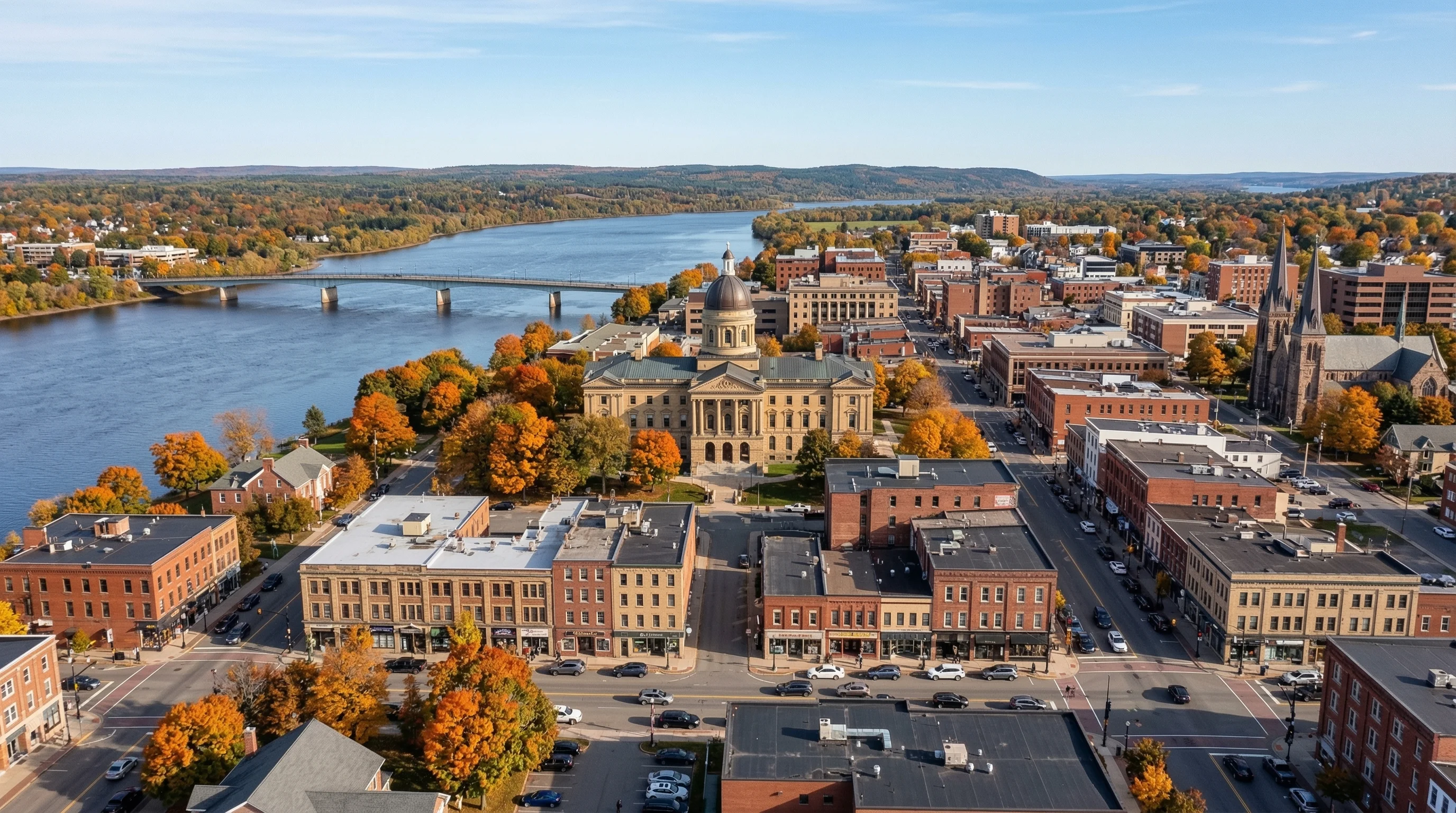
Fredericton, the capital city of New Brunswick, is strategically positioned along the Saint John River, serving as a major logistics hub for Atlantic Canada. The city's location provides excellent connectivity to major ports, including the Port of Saint John, and access to key transportation routes that extend throughout the Maritime provinces. Fredericton's economy is diverse, with strong sectors in government services, education, information technology, and advanced manufacturing. The presence of the University of New Brunswick and government institutions has fostered a knowledge-based economy that complements the region's traditional industries in forestry, agriculture, and fisheries.
The city boasts a well-developed transportation infrastructure, including the Trans-Canada Highway (Route 2) that provides direct access to the United States and other Canadian provinces. The Fredericton International Airport supports air cargo operations, while the nearby Port of Saint John offers maritime shipping capabilities. The region's road network is designed to handle heavy freight traffic, with specialized facilities for handling various types of cargo, including refrigerated goods, hazardous materials, and oversized equipment. This infrastructure makes Fredericton an ideal origin point for cross-border freight shipments to destinations throughout the United States.
 Destination
Topeka
Topeka, the capital city of Kansas, is strategically located in the northeastern part of the state, serving as a major logistics and distribution center for the Midwest region of the United States. The city's central location provides excellent access to major transportation networks, including Interstate 70, which connects the East and West coasts, and Interstate 470, which facilitates regional distribution. Topeka's economy is diverse, with strong sectors in government services, healthcare, education, and manufacturing. The presence of major employers such as the State of Kansas, Stormont Vail Health, and Hill's Pet Nutrition has created a robust economic environment that drives demand for efficient freight transportation solutions.
The city benefits from a comprehensive transportation infrastructure that includes the Topeka Regional Airport for air cargo operations, the Topeka Railway Company for rail freight services, and an extensive network of highways that facilitate truck transportation. The region's proximity to major distribution centers in Kansas City, Missouri, and other Midwestern hubs makes it an ideal destination for cross-border freight shipments. Topeka's industrial parks and commercial zones are equipped with modern warehousing and distribution facilities, capable of handling various types of cargo, including temperature-controlled goods, hazardous materials, and oversized equipment. This infrastructure supports the city's role as a key logistics hub for the central United States.










