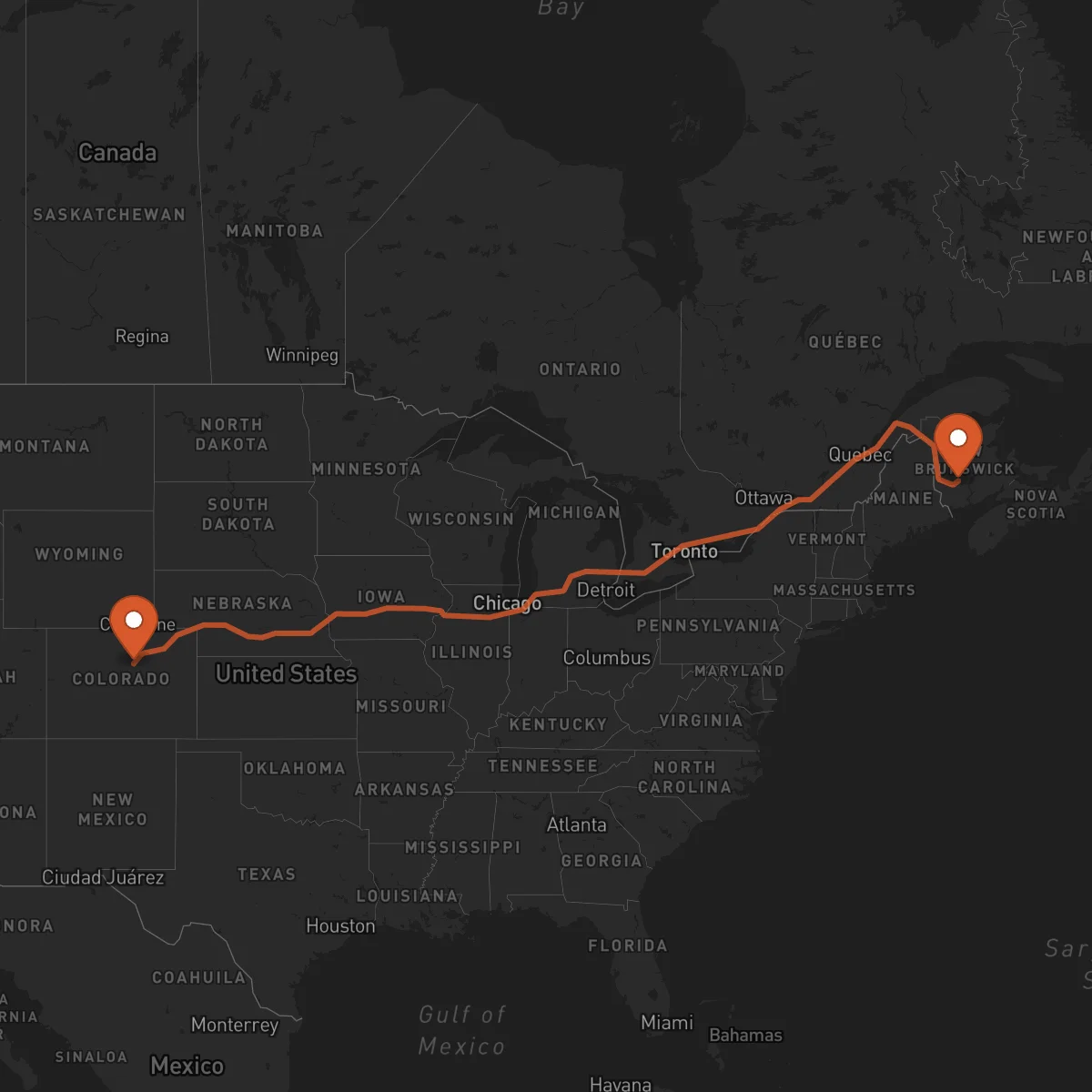
Fredericton to Denver
Denver → FrederictonFTL freight transportation service between Fredericton and Denver. Reliable logistics solutions for your business.
Route Description
Everything you need to know about the corridor Fredericton - Denver
The logistics corridor connecting Fredericton, New Brunswick to Denver, Colorado represents a vital cross-border freight transportation route spanning approximately 3,169 kilometers. This strategic corridor links the Atlantic region of Canada with the central United States, facilitating the movement of goods between two major economic zones. The route traverses diverse landscapes and crosses international borders, requiring expertise in customs procedures and cross-border logistics coordination.
The corridor serves as a critical link for industries on both sides of the border, connecting New Brunswick's manufacturing and forestry sectors with Colorado's aerospace, technology, and energy industries. The route passes through key transportation hubs including Montreal, Toronto, and Chicago, providing access to major distribution networks. Control Terrestre's specialized cross-border services ensure seamless freight movement through this corridor, handling all necessary documentation and customs clearance requirements.
Transportation infrastructure along this corridor includes major highways such as the Trans-Canada Highway (Route 2), Interstate 80, and Interstate 76. The primary border crossing is typically at Calais-St. Stephen or potentially through larger hubs like Montreal or Toronto, depending on specific routing needs. Control Terrestre's experienced team manages the complexities of cross-border transportation, ensuring compliance with all regulations while maintaining efficient transit times. Our dedicated FTL services provide reliable, direct transportation solutions for businesses requiring full truckload capacity along this important trade route.
Services for this Route
Available services for the corridor Fredericton - Denver
 Origin
Fredericton
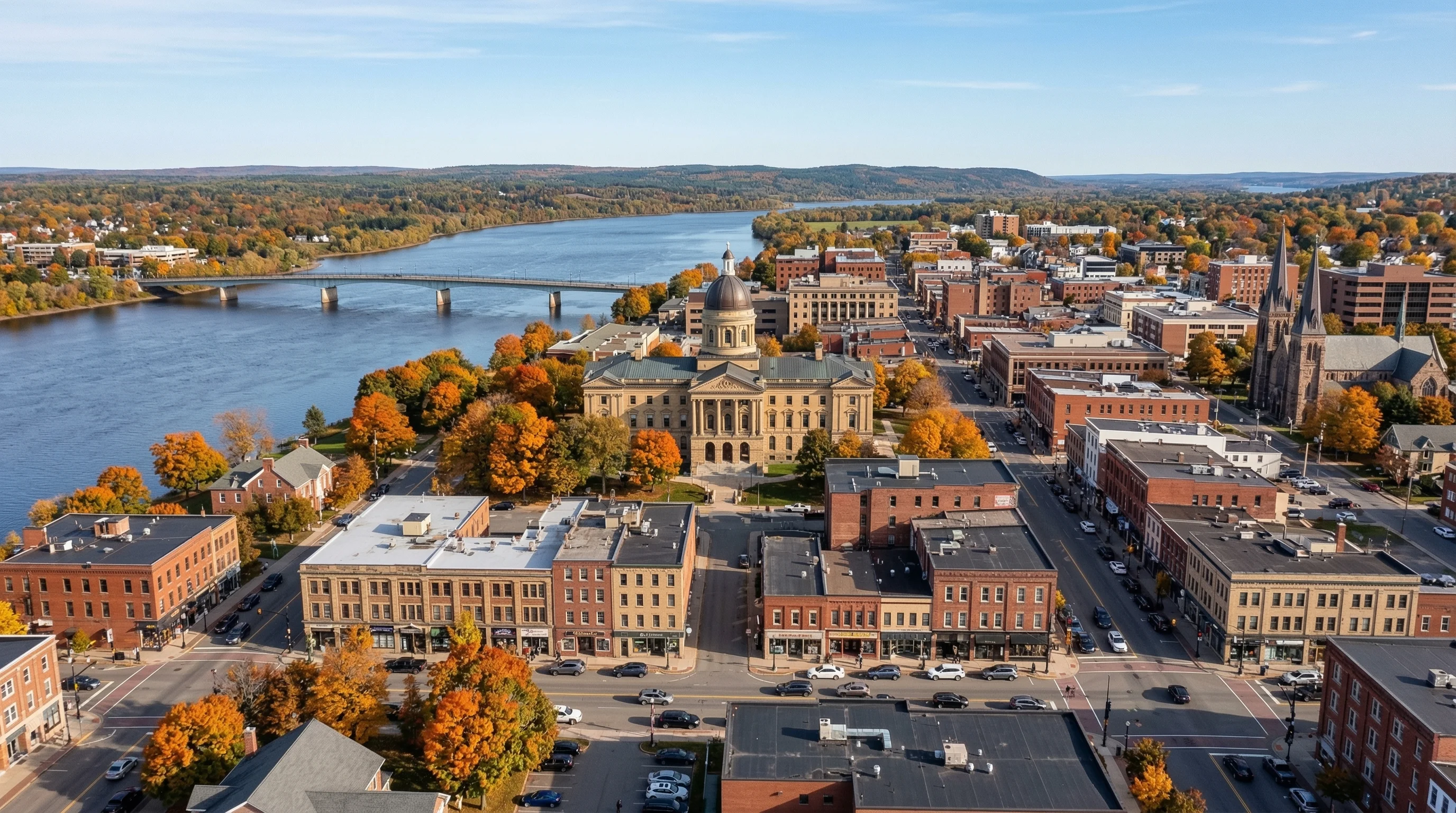
Fredericton, the capital city of New Brunswick, serves as a strategic logistics hub in Atlantic Canada. Located along the Saint John River, the city offers excellent access to major transportation routes connecting to the rest of Canada and the United States. The region's economy is anchored by the public sector, education, and a growing technology sector, with significant contributions from forestry, manufacturing, and distribution industries. Fredericton's central location within New Brunswick makes it an ideal starting point for cross-border freight movements.
The city benefits from well-developed transportation infrastructure, including the Trans-Canada Highway (Route 2) which provides direct access to major markets. The nearby Port of Saint John offers additional maritime shipping options, while the Fredericton International Airport supports air cargo operations. Local warehousing and distribution facilities are equipped to handle various types of freight, making Fredericton a comprehensive logistics center for businesses operating in Atlantic Canada.
 Destination
Denver
Denver, Colorado stands as a major logistics and transportation hub in the central United States, strategically positioned at the intersection of key freight corridors. Known as the "Mile High City," Denver's location provides unique advantages for distribution, offering direct access to both coastal markets and central U.S. regions. The city's economy is diverse, with strong presence in aerospace, technology, energy, healthcare, and manufacturing sectors, all requiring efficient freight transportation solutions.
The region boasts excellent transportation infrastructure, including Denver International Airport, one of the busiest cargo airports in the country. The city is served by major interstate highways including I-70, I-25, and I-76, creating a comprehensive road network for freight movement. Denver's central location makes it an ideal distribution point for companies serving the western and central United States. The area features numerous warehousing and logistics facilities, supported by a robust intermodal transportation system that includes rail connections through major freight rail lines.










