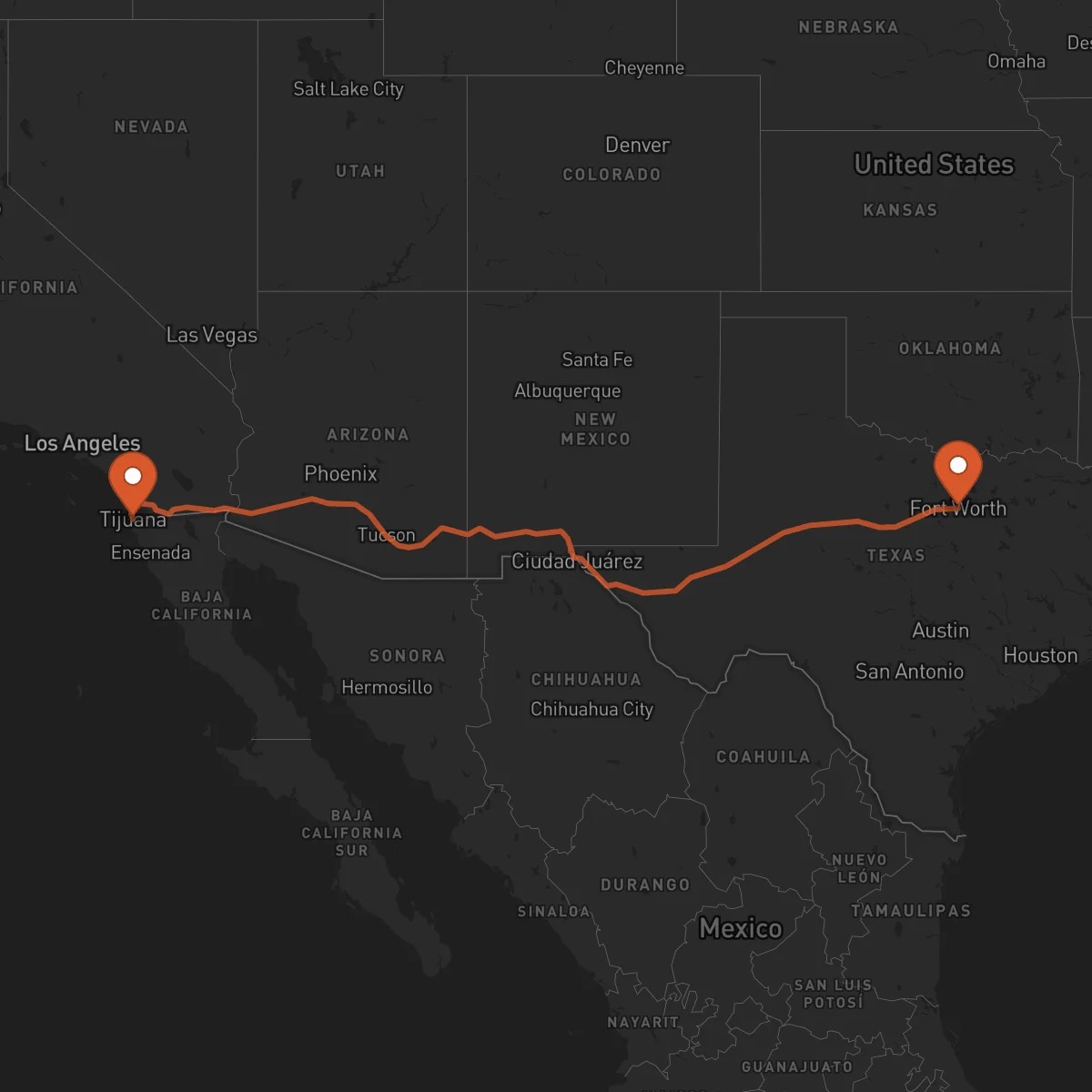
Fort Worth to Tijuana
Tijuana → Fort WorthFTL freight transportation service between Fort Worth and Tijuana. Reliable logistics solutions for your business.
Route Description
Everything you need to know about the corridor Fort Worth - Tijuana
The Fort Worth to Tijuana corridor represents a vital logistics connection between the industrial heartland of Texas and Mexico's leading manufacturing hub in Baja California. This 1,841 km cross-border route links the Dallas-Fort Worth metropolitan area, one of North America's largest economic centers, with Tijuana's thriving maquiladora industry and international trade zone. The corridor serves as a crucial artery for North American supply chains, facilitating the movement of goods between two major economic regions.
The transportation infrastructure along this route includes major highways such as I-35W from Fort Worth to Laredo, connecting with Mexico's Federal Highway 85D, and continuing through Mexicali to reach Tijuana. This well-established route passes through key industrial and commercial centers, offering multiple options for efficient freight movement. The corridor's strategic importance is enhanced by the presence of major border crossings, particularly at Laredo and Mexicali, which handle significant volumes of cross-border trade.
Control Terrestre specializes in managing the complexities of this cross-border corridor, providing seamless FTL transportation services that ensure cargo moves efficiently from origin to destination. Our expertise in customs procedures, documentation requirements, and border crossing protocols helps minimize delays and optimize transit times. We work with certified carriers who understand the specific requirements of this route, ensuring compliance with all regulations while maintaining the highest standards of service and security.
Services for this Route
Available services for the corridor Fort Worth - Tijuana
 Origin
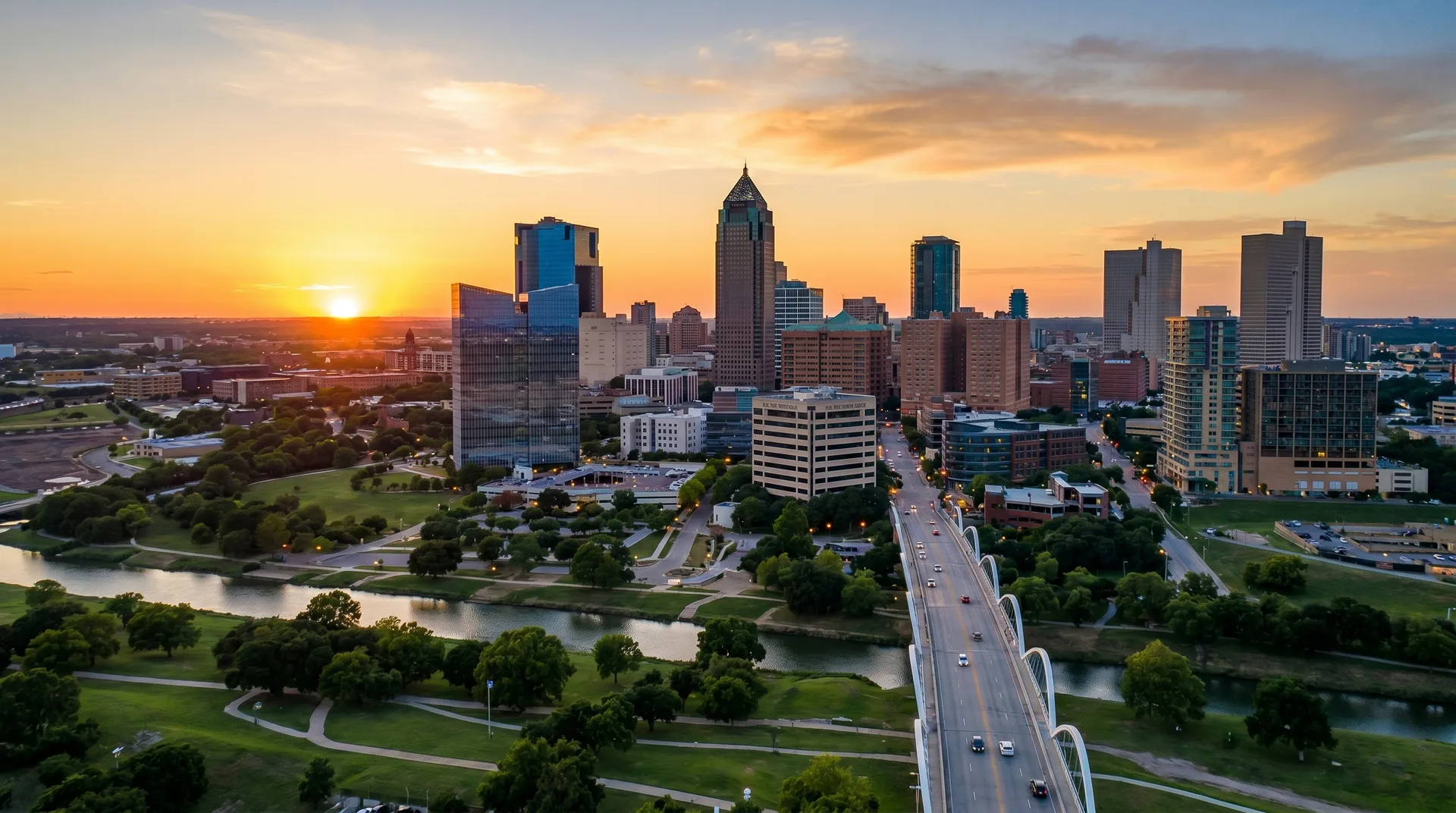
Fort Worth
Fort Worth, Texas serves as a strategic logistics hub in the Dallas-Fort Worth metropolitan area, offering excellent connectivity to major transportation networks. The city's central location in North Texas provides direct access to Interstate 35W and other major highways, facilitating efficient distribution throughout the region. Fort Worth's robust infrastructure includes multiple rail connections, an international airport, and proximity to the Port of Houston, making it an ideal origin point for freight transportation to Mexico and beyond.
The region's economy is diverse and growing, with strong presence in aerospace, manufacturing, and distribution sectors. Major employers in the area include American Airlines, Bell Textron, and numerous logistics and transportation companies. The city's industrial parks and warehousing facilities provide excellent infrastructure for freight consolidation and distribution, supporting the efficient movement of goods along cross-border corridors.
 Destination
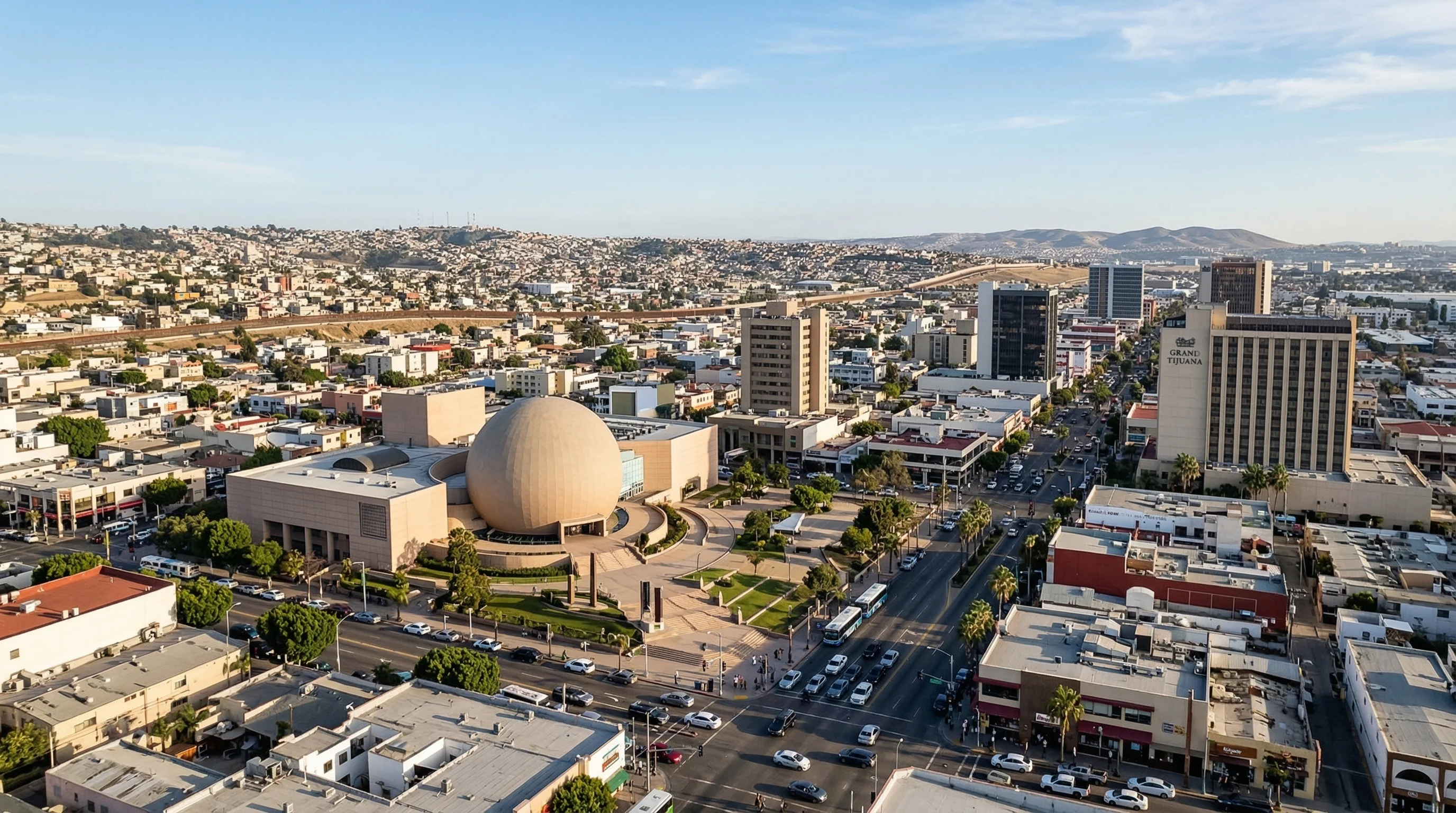
Tijuana
Tijuana, Baja California stands as Mexico's leading border city and a major manufacturing center, strategically positioned just south of California. The city's location offers direct access to the U.S. market while providing cost-effective manufacturing and assembly capabilities. Tijuana's industrial infrastructure includes numerous maquiladoras, technology parks, and specialized manufacturing facilities that serve various industries including aerospace, medical devices, and electronics.
The city's transportation infrastructure is well-developed, featuring modern highways connecting to the U.S. border at San Ysidro, Otay Mesa, and Tecate. Tijuana International Airport and the Port of Ensenada provide additional transportation options. The city's proximity to San Diego creates a unique binational economic zone, while its own industrial development continues to grow, making it an increasingly important destination for freight transportation from the United States.










