Fort Worth to Pierre
Pierre → Fort WorthFTL freight transportation service between Fort Worth and Pierre. Reliable logistics solutions for your business.
Route Description
Everything you need to know about the corridor Fort Worth - Pierre
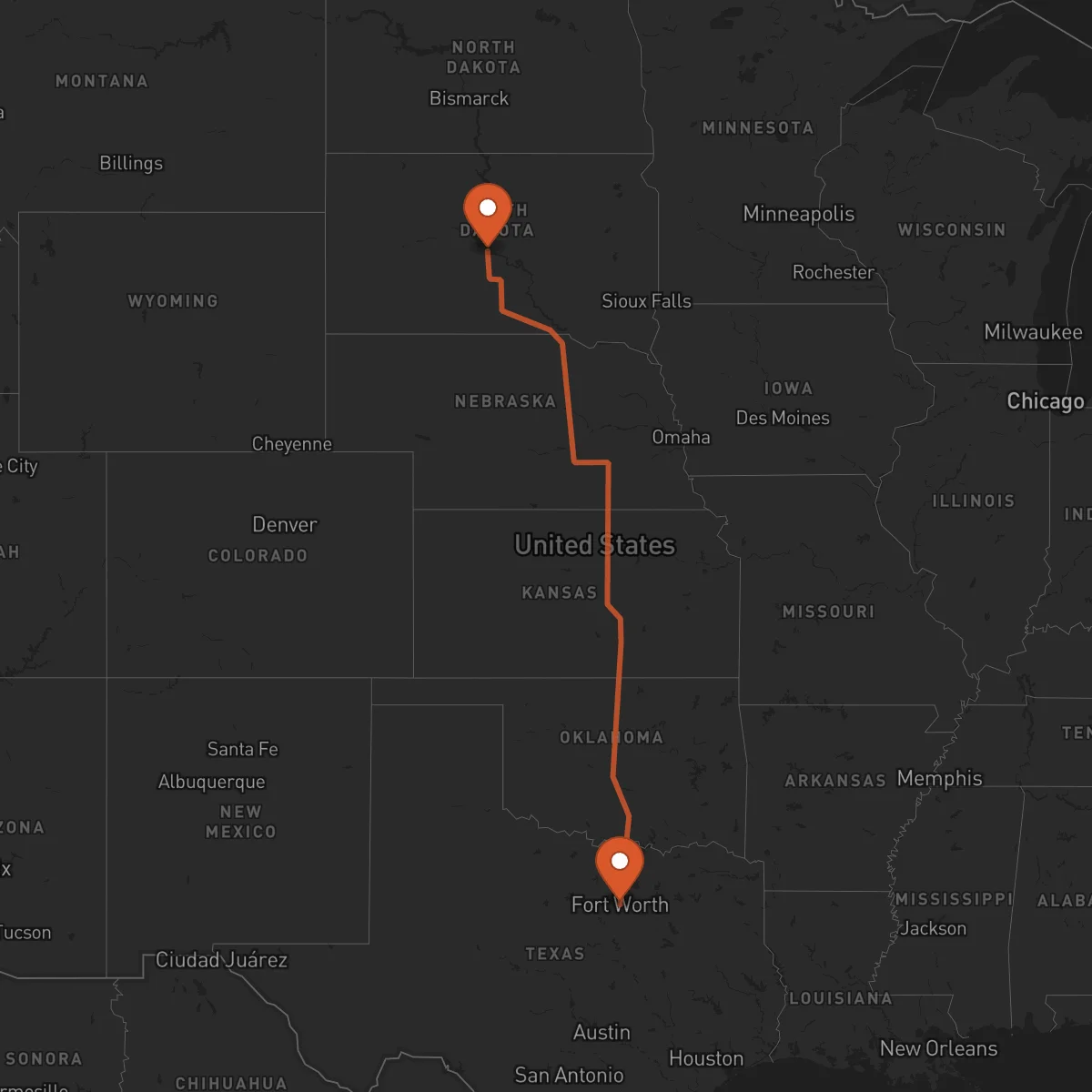
The logistics corridor connecting Fort Worth, Texas to Pierre, South Dakota represents a vital transportation link across the central United States. This north-south route spans approximately 1,317 kilometers through diverse landscapes and crosses multiple state lines, making it essential for companies operating across the heartland of America. The corridor connects major economic centers in Texas with the capital city of South Dakota, facilitating the movement of goods between distinct regional markets.
This transportation route traverses through key states including Texas, Oklahoma, Kansas, and South Dakota, passing through important industrial and agricultural regions. The corridor serves as a critical supply chain artery for numerous industries, particularly energy, agriculture, manufacturing, and retail distribution. Companies along this route benefit from access to major urban centers, rural production areas, and state capitals, creating a dynamic logistics environment that requires reliable transportation solutions.
The primary highway infrastructure supporting this corridor includes major interstate routes such as I-35 North from Fort Worth through Oklahoma, connecting to I-29 North through Kansas and into South Dakota, ultimately reaching I-90 East toward Pierre. This well-established network provides multiple routing options and ensures consistent freight movement throughout the year. Control Terrestre specializes in optimizing this corridor, offering dedicated FTL services that ensure your cargo moves efficiently from origin to destination without unnecessary stops or delays.
Services for this Route
Available services for the corridor Fort Worth - Pierre
 Origin
Fort Worth
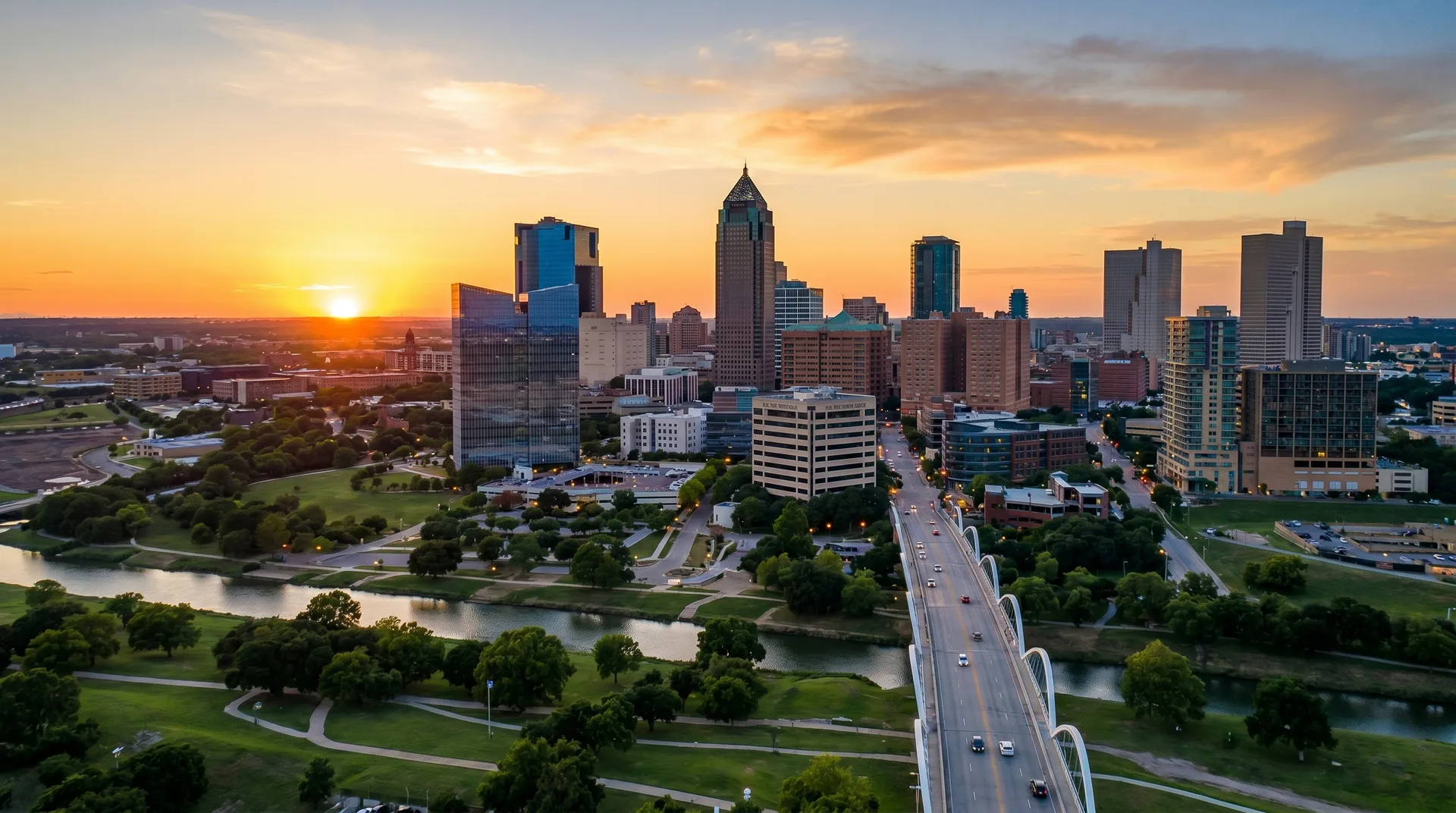
Fort Worth, Texas serves as a strategic logistics hub in the southern United States, positioned at the crossroads of major transportation networks. As part of the Dallas-Fort Worth metroplex, the city offers exceptional connectivity through multiple interstate highways, including I-35W and I-30, providing immediate access to national freight corridors. The city's location in North Texas places it within a day's drive of major markets across the southern and central United States.
The region's economy is diverse and robust, with strong presence in aerospace and defense, manufacturing, logistics, and energy sectors. Fort Worth hosts major corporate headquarters and distribution centers, benefiting from Texas's business-friendly environment and strategic international border proximity. The city's AllianceTexas development, one of the nation's premier inland ports, features extensive rail facilities, warehousing, and direct highway access, making it an ideal origin point for freight shipments heading north.
Transportation infrastructure in Fort Worth includes the Dallas/Fort Worth International Airport, multiple rail yards operated by major Class I railroads, and the Port of Fort Worth's inland port facilities. The city's central location in the southern United States provides excellent connectivity to both coastal ports and inland destinations, making it a preferred starting point for companies requiring reliable, full truckload transportation services to northern destinations like Pierre, South Dakota.
 Destination
Pierre
Pierre, South Dakota represents a unique logistics destination as the state capital located in the geographic center of South Dakota along the Missouri River. The city's strategic position provides access to the state's agricultural heartland and serves as a distribution point for goods throughout the region. While smaller than many state capitals, Pierre's role as a government center and its proximity to major agricultural production areas make it an important endpoint for freight transportation.
The local economy centers around state government operations, healthcare, education, and agriculture-related industries. South Dakota's significant agricultural production, including corn, soybeans, wheat, and livestock, creates consistent demand for inbound transportation of supplies and equipment, as well as outbound movement of processed agricultural products. The region's manufacturing sector, though smaller, includes food processing and agricultural equipment production, contributing to the area's freight activity.
Transportation infrastructure in Pierre includes US Highway 14 and US Highway 83, providing reliable road connections to the rest of the state and beyond. While the city lacks rail service directly, its road network connects efficiently to major interstate highways. The Missouri River also provides potential barge transportation options for certain cargo types. Control Terrestre's FTL services ensure that companies can reliably deliver full truckloads to Pierre and surrounding areas, overcoming the challenges of serving smaller markets while maintaining consistent delivery schedules for time-sensitive freight.










