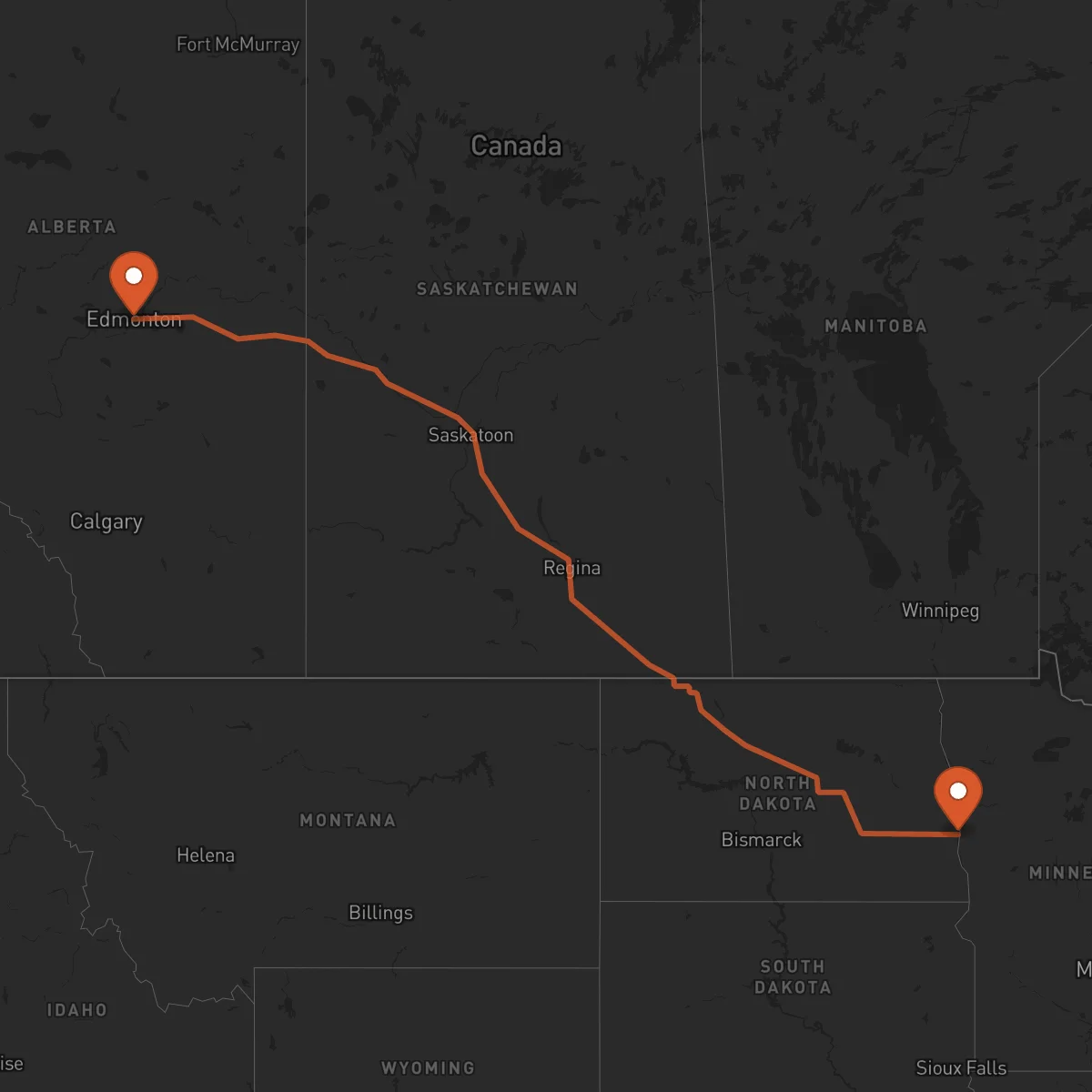
Fargo to Edmonton
Edmonton → FargoFTL freight transportation service between Fargo and Edmonton. Reliable logistics solutions for your business.
Route Description
Everything you need to know about the corridor Fargo - Edmonton
The Fargo-Edmonton corridor represents a vital cross-border freight transportation route connecting the heart of North Dakota with Alberta's capital city. This 1,396-kilometer corridor traverses diverse terrain and crosses the international border at multiple points, making it essential for businesses operating in both the United States and Canada. The route facilitates the movement of goods between the agricultural and industrial powerhouse of Fargo and Edmonton's thriving energy and manufacturing sectors.
This corridor serves as a critical link in North American supply chains, particularly for industries such as agriculture, energy, manufacturing, and retail. Fargo's strategic location in the Red River Valley provides access to extensive agricultural production, while Edmonton's position in Alberta's industrial heartland connects to oil and gas operations, forestry products, and advanced manufacturing. The economic synergy between these regions creates consistent freight demand throughout the year.
Major transportation infrastructure along this corridor includes Interstate 29 and Interstate 94 in the United States, connecting to Canadian Highway 17 and the Yellowhead Highway (Highway 16) in Alberta. Key border crossings include Pembina, North Dakota/Emerson, Manitoba, and other points along the North Dakota-Manitoba border. Control Terrestre's expertise in cross-border operations ensures seamless customs clearance and compliance with both US and Canadian regulations, providing reliable full truckload (FTL) transportation solutions that keep your supply chain moving efficiently across this important international corridor.
Services for this Route
Available services for the corridor Fargo - Edmonton
 Origin
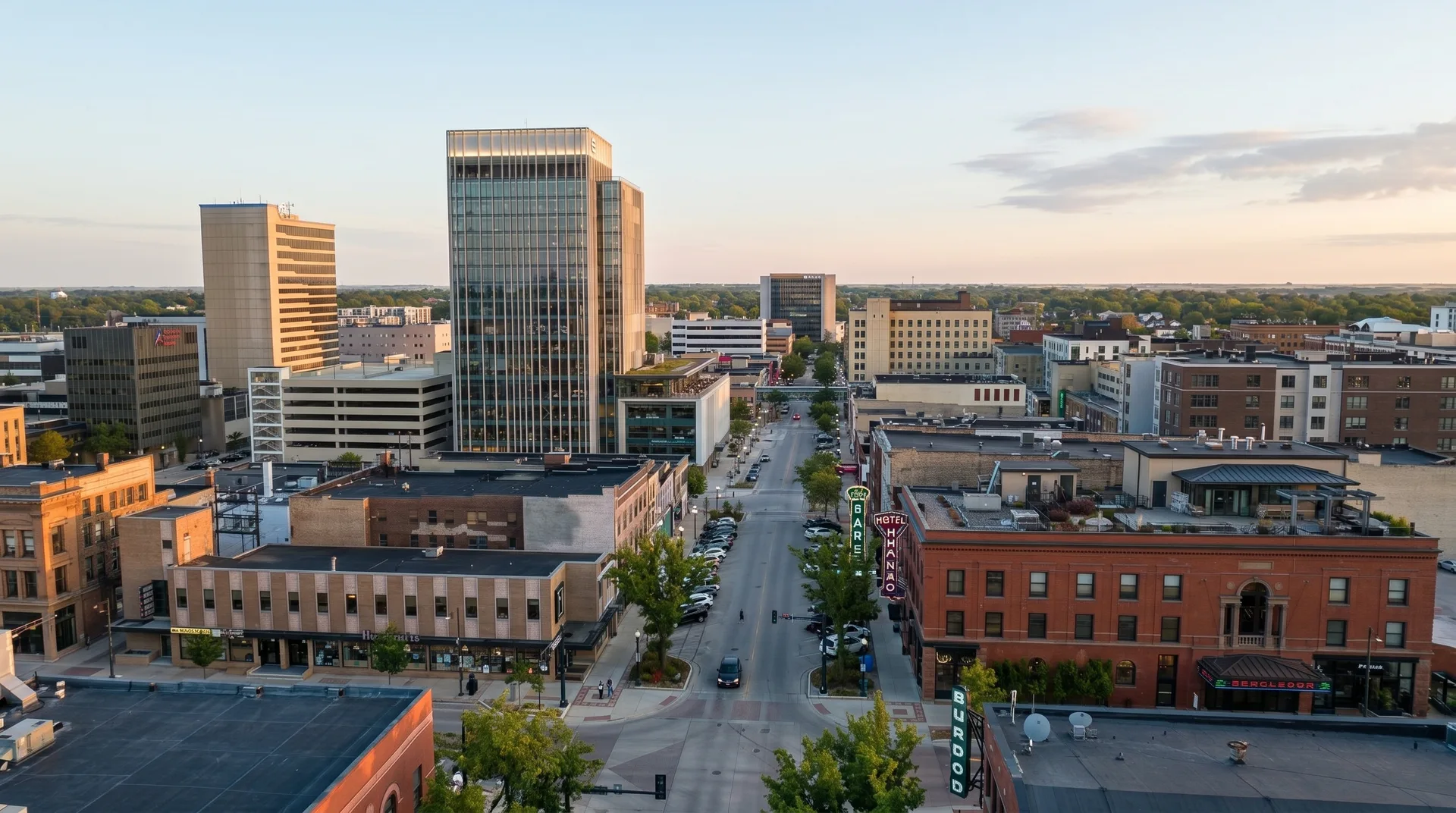
Fargo
Fargo, North Dakota serves as a strategic logistics hub in the Upper Midwest, positioned at the crossroads of major transportation networks. The city's location in the Red River Valley provides excellent access to agricultural production from North Dakota, Minnesota, and surrounding states. Fargo's economy is anchored by agriculture, food processing, manufacturing, technology, and healthcare sectors, creating diverse freight transportation needs. The city boasts robust transportation infrastructure including Interstate 29 and Interstate 94, providing direct connections to major markets in the Midwest and beyond. Hector International Airport and the nearby North Dakota Inland Port support air and intermodal freight operations, while the BNSF Railway network ensures comprehensive rail connectivity. These assets make Fargo an ideal origin point for full truckload shipments requiring efficient distribution throughout North America.
 Destination
Edmonton, Alberta stands as a strategic logistics center in Western Canada, serving as the gateway to northern Alberta's resource-rich regions. Located in the heart of Canada's energy sector, Edmonton's economy is driven by oil and gas, mining, forestry, manufacturing, and technology industries. The city's position along the North Saskatchewan River and its proximity to the Alberta oil sands make it a crucial distribution point for industrial goods and energy-related equipment. Edmonton benefits from excellent transportation infrastructure including the Yellowhead Highway (Highway 16), which connects to major Canadian markets, and the Edmonton International Airport for air freight. The city's extensive rail network through Canadian National Railway and Canadian Pacific Railway provides intermodal capabilities, while the Port Alberta initiative enhances the region's logistics capacity. These factors establish Edmonton as an ideal destination for full truckload freight requiring reliable delivery to Western Canada's industrial heartland.










