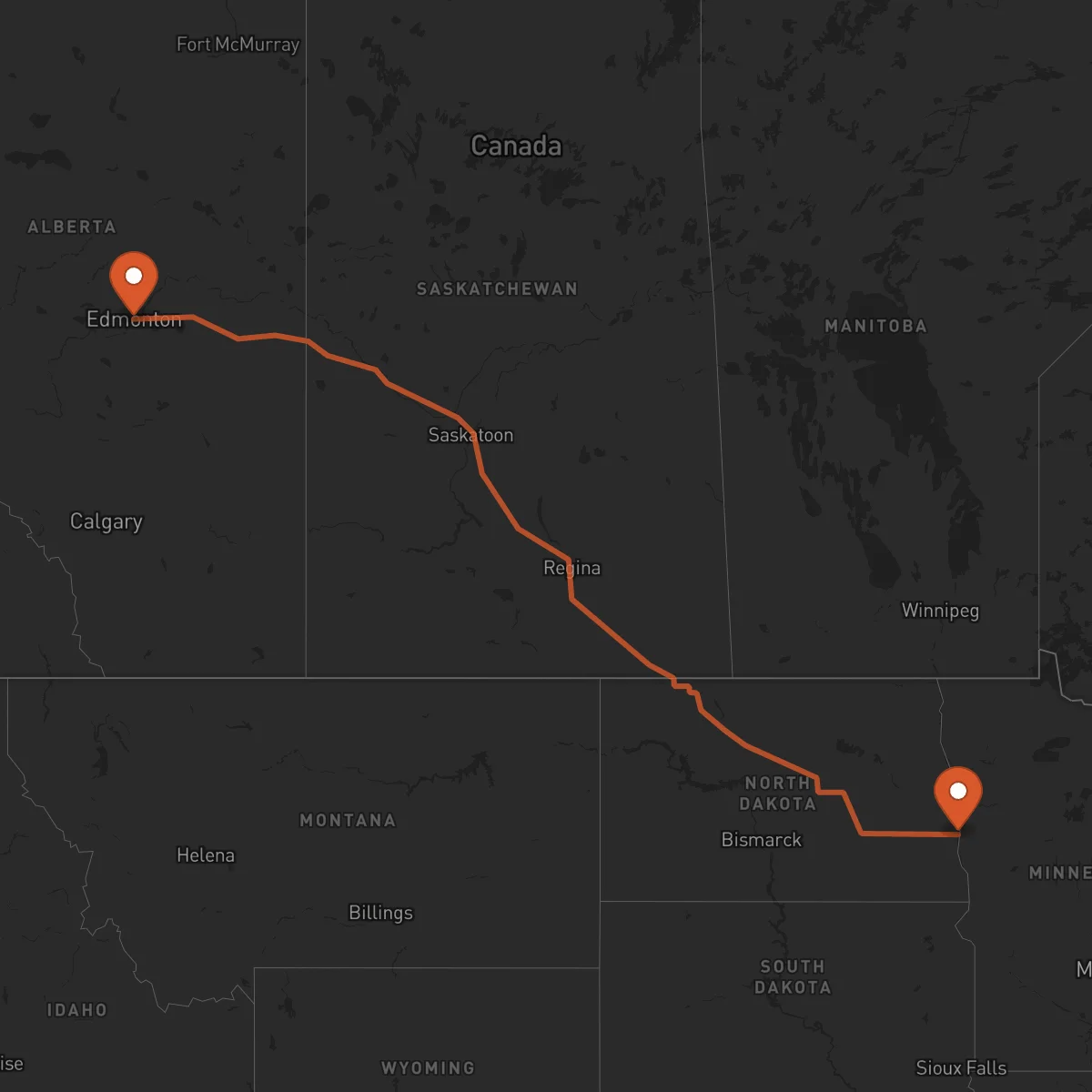
Edmonton to Fargo
Fargo → EdmontonFTL freight transportation service between Edmonton and Fargo. Reliable logistics solutions for your business.
Route Description
Everything you need to know about the corridor Edmonton - Fargo
The Edmonton to Fargo corridor represents a vital cross-border freight transportation link connecting the industrial heartland of Alberta with the agricultural and manufacturing center of North Dakota. This 1396 km route traverses diverse terrain and crosses the international border, facilitating the movement of goods between Canada and the United States. The corridor's strategic importance stems from its role in supporting the integrated North American supply chain, particularly for industries that operate across both countries.
The economic context of this corridor reflects the complementary strengths of both regions. Edmonton serves as a major hub for energy, manufacturing, and logistics, while Fargo anchors a region known for agricultural production, food processing, and advanced manufacturing. Together, these markets create significant freight demand for full truckload services, with shippers requiring reliable cross-border transportation solutions. The corridor benefits from the strong economic ties between Alberta and North Dakota, with many companies maintaining operations and supply chains that span the border.
Transportation infrastructure along this route includes major highways such as Alberta Highway 2 and Interstate 29, providing efficient connectivity between the two markets. The corridor crosses at Portal, North Dakota/Mantario, Saskatchewan, one of the primary commercial vehicle crossings between the two provinces. Control Terrestre facilitates seamless operations on this corridor by leveraging our network of certified carriers, ensuring compliance with cross-border regulations, and providing door-to-door FTL service that connects any point in Edmonton to any point in Fargo. Our expertise in handling customs documentation and our commitment to reliable, dedicated transportation make us the ideal partner for companies moving freight along this important cross-border route.
Services for this Route
Available services for the corridor Edmonton - Fargo
 Origin
Edmonton stands as a strategic logistics hub in western Canada, serving as the primary gateway to northern Alberta and the oil sands region. The city's location along the North Saskatchewan River and its proximity to major transportation routes make it an ideal origin point for freight distribution. Edmonton's economy is anchored by the energy sector, with significant activity in oil and gas extraction, refining, and petrochemical manufacturing. The city also hosts a robust manufacturing sector, including machinery, metals, and forest products, along with a growing technology and research cluster. Transportation infrastructure in Edmonton includes major highways such as the Yellowhead Highway (Highway 16) and Queen Elizabeth II Highway (Highway 2), extensive rail connections through Canadian National Railway and Canadian Pacific Railway, and Edmonton International Airport, which supports air cargo operations.
 Destination
Fargo
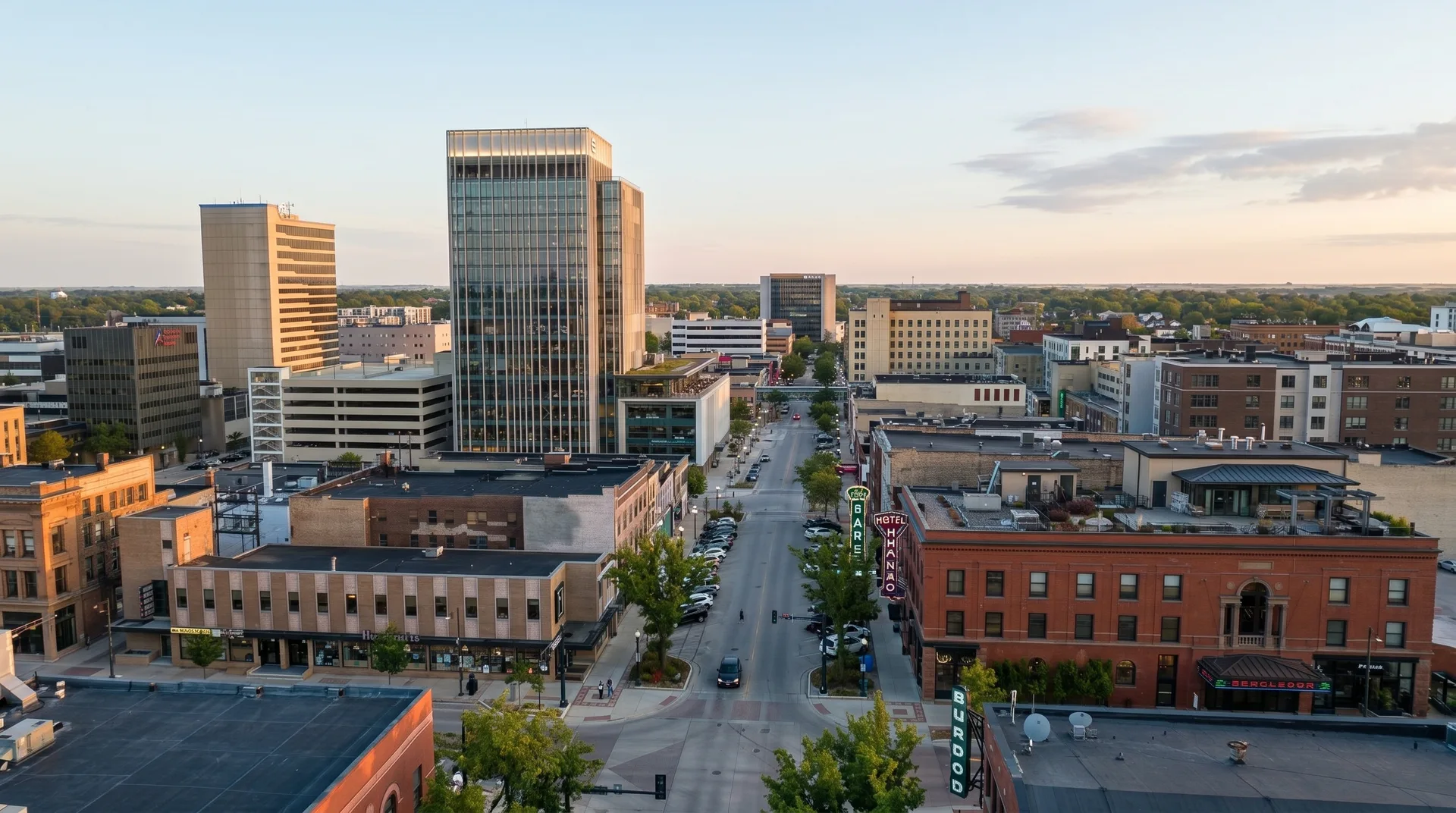
Fargo serves as a strategic logistics center in the Upper Midwest, positioned at the crossroads of major north-south and east-west transportation corridors. The city's location along the Red River and its proximity to the geographic center of North America make it an ideal distribution point for regional freight movement. Fargo's economy is characterized by strong agricultural roots, with significant activity in grain production, food processing, and agricultural equipment manufacturing. The region also hosts a growing technology sector, particularly in software development and agricultural technology, along with advanced manufacturing facilities producing everything from medical devices to industrial equipment. Transportation infrastructure in Fargo includes major highways such as Interstate 29 and Interstate 94, rail connections through BNSF Railway and Canadian Pacific Railway, and Hector International Airport, which supports both passenger and cargo operations.










