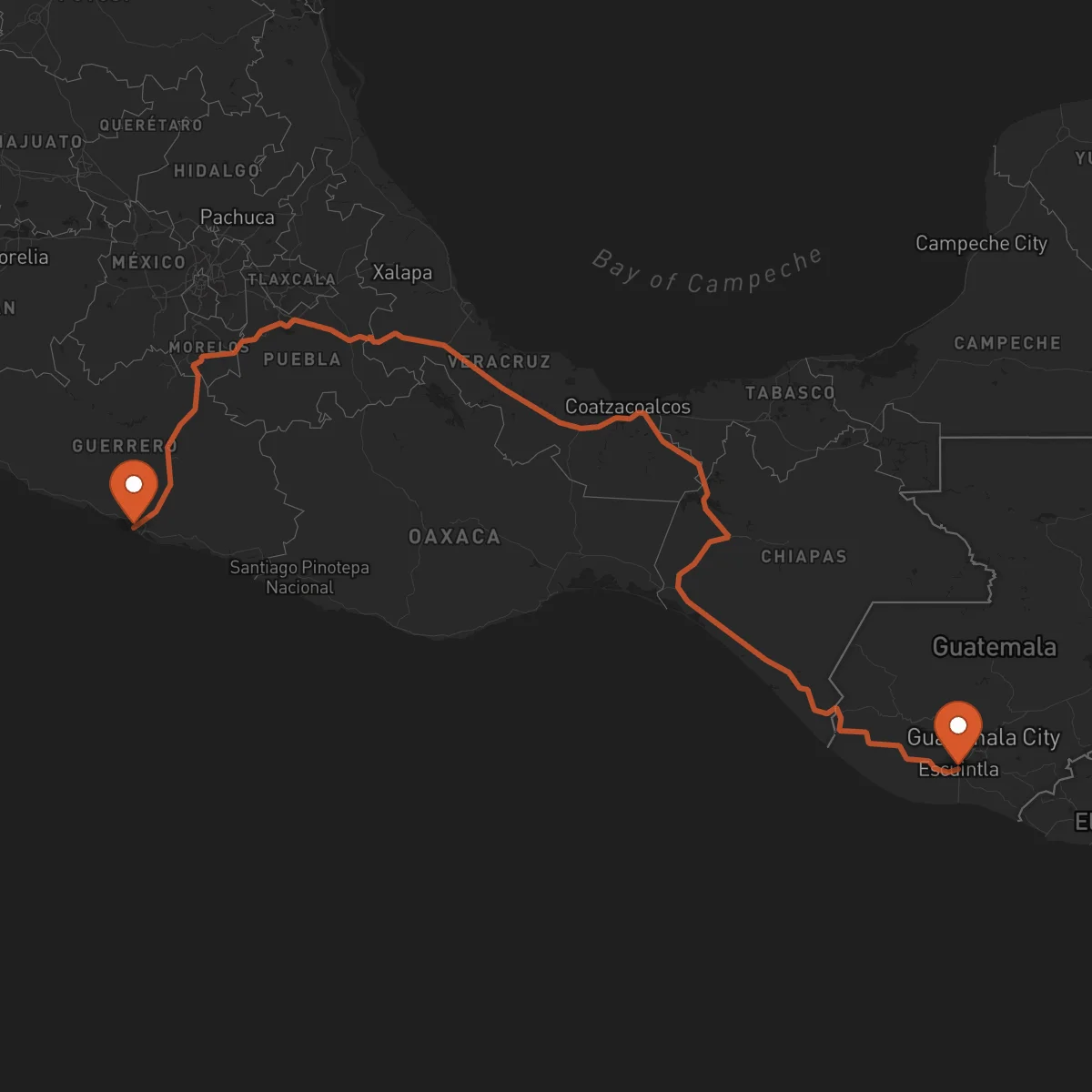
Escuintla to Acapulco
Acapulco → EscuintlaFTL freight transportation service between Escuintla and Acapulco. Reliable logistics solutions for your business.
Route Description
Everything you need to know about the corridor Escuintla - Acapulco
The Escuintla to Acapulco corridor is a vital cross-border logistics artery connecting Guatemala's industrial heartland with Mexico's strategic Pacific coast. This approximately 1015-kilometer route facilitates the movement of critical goods between Central America and one of Mexico's key port cities, supporting regional trade and supply chain integration. The corridor's importance is amplified by its role in linking agricultural and manufacturing zones in southern Guatemala with the distribution and tourism hubs of Guerrero, Mexico. Economically, the region is defined by robust agricultural output, including coffee, sugar, and tropical fruits from Guatemala's Escuintla province, and a diverse manufacturing sector that produces textiles, food products, and consumer goods. Acapulco serves as a major export gateway and a center for tourism-related commerce, creating a dynamic flow of both inbound raw materials and outbound finished products. The primary industries leveraging this corridor include agribusiness, food and beverage processing, textile manufacturing, and retail distribution. The transportation infrastructure relies on a network of major highways: in Guatemala, the CA-9 (from Guatemala City to Puerto Barrios) and CA-1 (the Pacific Coast Highway) form the backbone, connecting Escuintla to the Mexican border. On the Mexican side, Federal Highway 200 provides the coastal link from the border through Guerrero to Acapulco. The principal border crossing is at Tecún Umán, Guatemala / Ciudad Hidalgo, Mexico, a bustling port of entry. Navigating customs and regulatory requirements here demands expertise in cross-border documentation, compliance with programs like C-TPAT and FAST, and an understanding of both Guatemalan and Mexican import/export protocols. Control Terrestre facilitates seamless operations on this corridor through our strategic alliance of certified transportation providers. Our network includes carriers with C-TPAT, FAST, and BASC certifications, ensuring compliant and secure transit. We exclusively offer Full Truckload (FTL) solutions—from dedicated and refrigerated to specialized and oversized cargo—providing direct, non-stop service that optimizes transit integrity and supply chain predictability for our clients' most critical shipments.
Services for this Route
Available services for the corridor Escuintla - Acapulco
 Origin
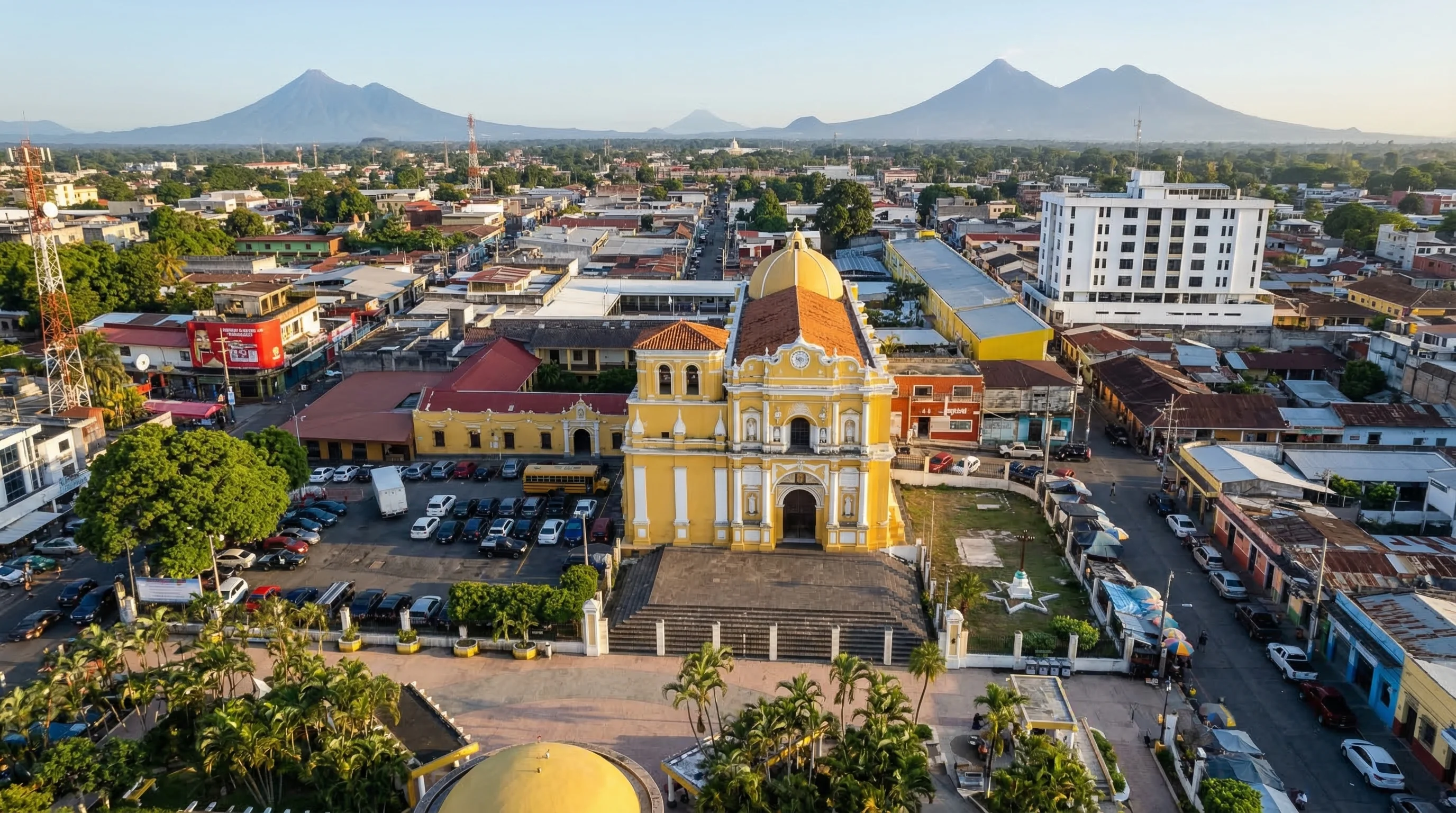
Escuintla, Guatemala, is a strategic logistics powerhouse located just 45 kilometers from Guatemala City and the major port of Santo Tomás de Castilla. Its position on the Pacific coastal plain offers direct access to the CA-9 and CA-1 highways, creating a natural launchpad for northbound freight into Mexico and southbound into Central America. The province is Guatemala's agricultural and industrial epicenter, often called the 'breadbasket' for its vast production of sugar cane, coffee, bananas, and rubber. A significant manufacturing base, particularly in food processing, textiles, and fertilizers, further drives outbound freight demand. The presence of the Port of Santo Tomás de Castilla, one of Central America's busiest, provides multimodal connectivity, though Control Terrestre's FTL services focus on the direct highway corridor to the Mexican border. The well-maintained highway infrastructure from Escuintla to the Tecún Umán border crossing enables efficient land transit, making it a preferred origin for time-sensitive and high-volume shipments requiring dedicated truck capacity.
 Destination
Acapulco, Guerrero, Mexico, is a pivotal Pacific port city and a major economic hub for southern Mexico. Its strategic value in logistics stems from its deep-water port, the Port of Acapulco, which handles a diverse cargo mix including containerized goods, bulk liquids, and general cargo, serving as a critical node for maritime-to-land distribution. The city's economy, historically anchored in tourism, has diversified to include manufacturing, particularly in apparel and food products, and robust agricultural exports like tropical fruits and coffee from the surrounding Guerrero highlands. For inbound logistics, Acapulco is a key consumption center. The city is the southern terminus of Mexican Federal Highway 200, the main coastal artery that connects it to the border with Guatemala via routes through states like Oaxaca and Chiapas. This highway corridor is essential for moving goods between the Mexican interior and this vital Pacific gateway. Control Terrestre's FTL services leverage this infrastructure, providing direct door-to-door connections to and from Acapulco's industrial zones and port facilities, supporting both import distribution and export consolidation for businesses in the region.










