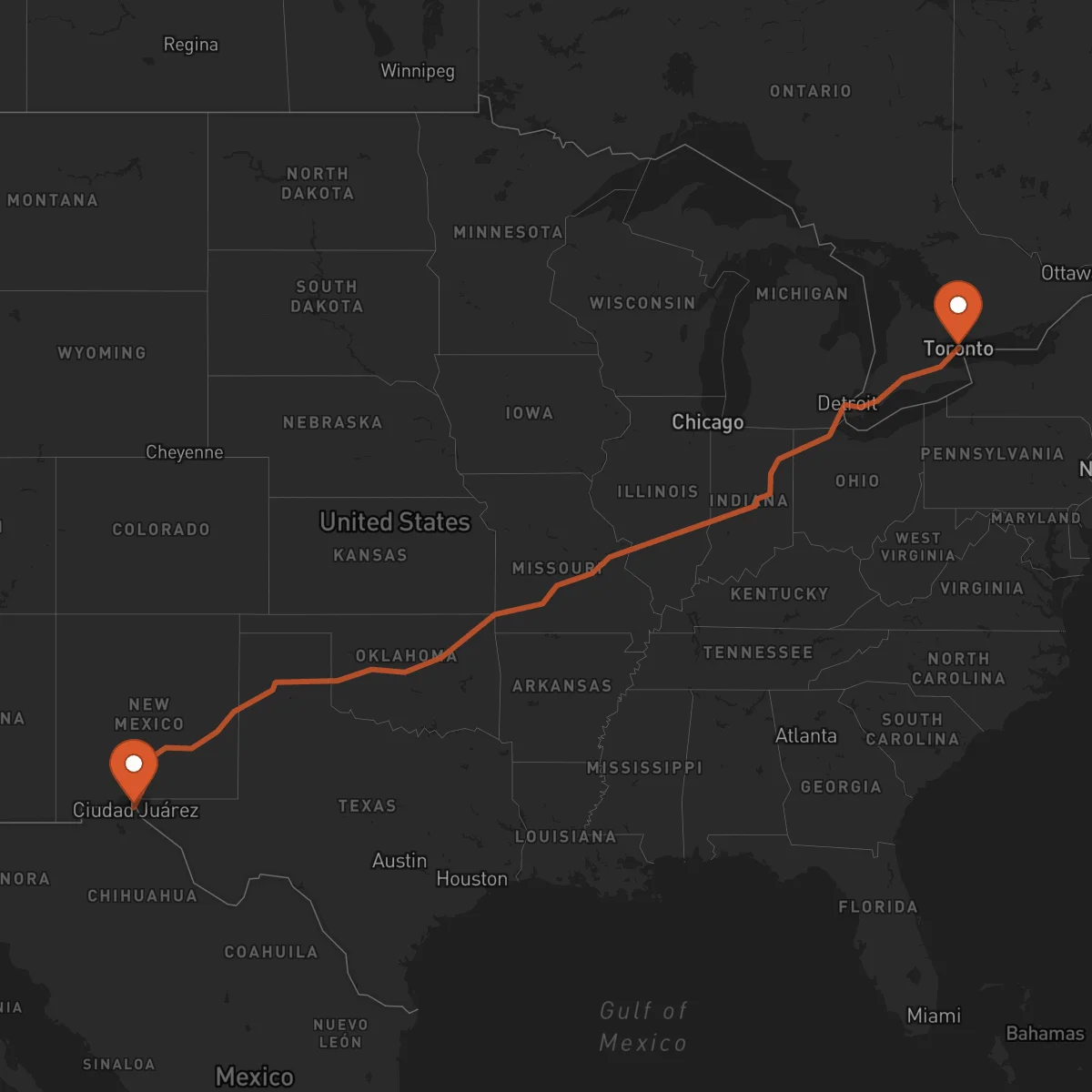
El Paso to Toronto
Toronto → El PasoFTL freight transportation service between El Paso and Toronto. Reliable logistics solutions for your business.
Route Description
Everything you need to know about the corridor El Paso - Toronto
The logistics corridor between El Paso, Texas, and Toronto, Ontario, represents a vital cross-border transportation route connecting the United States and Canada. This 2,708 km corridor serves as a crucial link for freight moving between the southern and northern regions of North America, facilitating trade and economic integration across the continent. The route traverses diverse geographic and economic zones, connecting major industrial centers and crossing key border points that are essential for international commerce.
The economic significance of this corridor is substantial, supporting industries ranging from automotive manufacturing to technology and consumer goods. The region benefits from strong manufacturing sectors in both El Paso and Toronto, with numerous companies relying on efficient cross-border transportation to maintain their supply chains. The corridor's importance has grown with increasing trade between the US and Canada, particularly in sectors such as automotive parts, electronics, and agricultural products.
Transportation infrastructure along this route includes major highways such as I-35, I-29, and the Trans-Canada Highway, providing reliable connections between key cities and industrial zones. The corridor crosses several important border crossings, including those near Detroit and Buffalo, which are among the busiest commercial crossings between the US and Canada. Control Terrestre facilitates seamless operations on this corridor through our network of certified carriers and expertise in cross-border documentation, customs clearance, and regulatory compliance, ensuring your freight moves efficiently between El Paso and Toronto.
Services for this Route
Available services for the corridor El Paso - Toronto
 Origin
El Paso
El Paso, Texas, serves as a strategic logistics hub due to its unique location at the US-Mexico border and proximity to major transportation networks. The city's economy is diverse, with strong manufacturing, logistics, and international trade sectors benefiting from its position as a gateway between the United States and Mexico. El Paso's industrial base includes automotive, electronics, and consumer goods manufacturing, supported by a robust transportation infrastructure that includes interstate highways, rail connections, and the El Paso International Airport.
The city's logistics infrastructure is particularly well-developed, featuring multiple industrial parks, warehousing facilities, and distribution centers that cater to cross-border operations. El Paso's strategic location allows for efficient distribution to both US and Mexican markets, making it an ideal origin point for freight moving north to Canada or east to other US destinations. The presence of major transportation corridors such as I-10 and connections to Mexican Federal Highway 45 further enhance El Paso's role as a critical logistics node in North American supply chains.
 Destination
Toronto, Ontario, stands as Canada's largest city and a major economic powerhouse, making it a crucial destination for freight transportation. The Greater Toronto Area (GTA) is home to a diverse industrial base that includes automotive manufacturing, technology, financial services, and advanced manufacturing. Toronto's strategic location in southern Ontario provides excellent access to both Canadian and US markets, with the city serving as a primary gateway for international trade through the Port of Toronto and major airports.
The city's transportation infrastructure is comprehensive and well-integrated, featuring extensive highway networks including the 400-series highways, rail connections through CN and CP rail lines, and major air cargo facilities at Toronto Pearson International Airport. Toronto's logistics ecosystem includes numerous warehousing and distribution centers, particularly in surrounding areas like Mississauga and Brampton, which serve the needs of both local and cross-border freight operations. The city's position near major US border crossings and its role as a manufacturing and distribution center make it a key node in North American supply chains, particularly for industries requiring reliable cross-border transportation solutions.










