Edmonton to Lansing
Lansing → EdmontonFTL freight transportation service between Edmonton and Lansing. Reliable logistics solutions for your business.
Route Description
Everything you need to know about the corridor Edmonton - Lansing
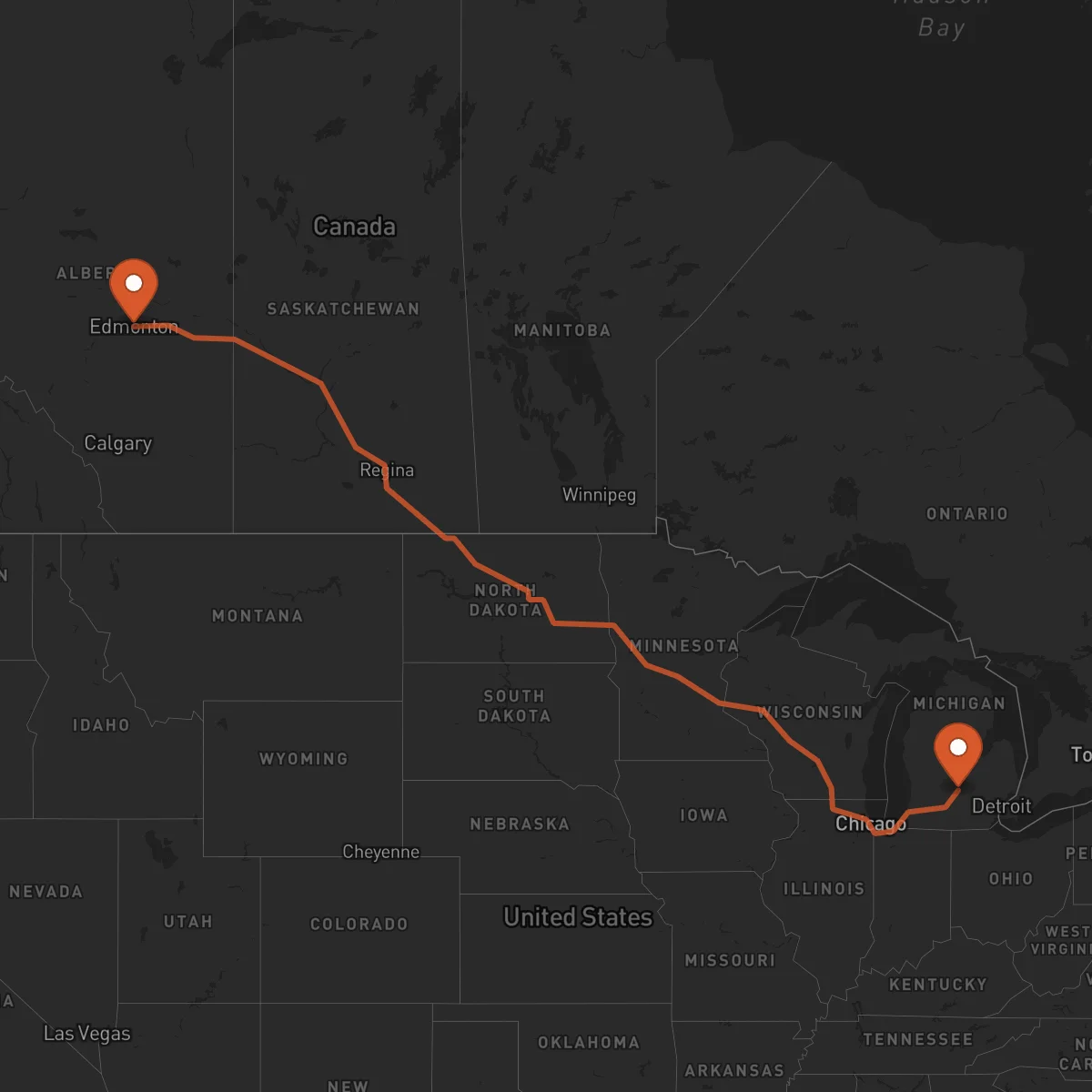
The Edmonton to Lansing corridor represents a vital cross-border freight transportation link between Alberta, Canada, and Michigan, United States. This strategic route spans approximately 2,437 kilometers and connects two important industrial and economic regions. The corridor facilitates the movement of goods between Canada's western energy and manufacturing hub and Michigan's automotive and manufacturing center, creating essential supply chain connections for North American commerce.
The transportation infrastructure along this route includes major highways such as the Trans-Canada Highway (Highway 1), which connects to US Interstate systems including I-94 and I-69. The primary border crossing used for this corridor is typically the Blue Water Bridge connecting Port Huron, Michigan with Sarnia, Ontario, though other options exist depending on specific routing needs. Control Terrestre's expertise in cross-border operations ensures seamless customs clearance and compliance with all regulatory requirements for shipments moving between Canada and the United States.
This corridor serves numerous industries including automotive parts manufacturing, energy equipment, industrial machinery, and agricultural products. The route is particularly important for automotive supply chains, as Lansing is a major automotive manufacturing center while Edmonton provides industrial equipment and components. Control Terrestre facilitates efficient full truckload (FTL) transportation along this corridor, offering dedicated services, cross-border expertise, and reliable door-to-door delivery solutions that keep supply chains moving smoothly between these two strategic locations.
Services for this Route
Available services for the corridor Edmonton - Lansing
 Origin
Edmonton, located in Alberta, Canada, serves as a strategic logistics hub for western Canada. The city benefits from its position along the Trans-Canada Highway and proximity to major rail networks, making it an ideal origin point for freight distribution. Edmonton's economy is diverse, with strong sectors in energy (particularly oil and gas), manufacturing, technology, and logistics. The city hosts numerous distribution centers and warehouses, supported by Edmonton International Airport and the Port Alberta initiative, which aims to enhance the region's role in international trade. The city's infrastructure includes extensive highway networks connecting to major Canadian and US markets, making it a logical starting point for cross-border freight movements.
 Destination
Lansing
Lansing, Michigan, is strategically positioned in the heart of the American Midwest, serving as a key logistics and manufacturing center. The city's location provides excellent access to major US markets through an extensive network of interstate highways, including I-96, I-69, and I-496. Lansing is part of Michigan's robust automotive manufacturing corridor, hosting numerous automotive suppliers, assembly plants, and related industries. The region benefits from the Port of Lansing and proximity to major rail terminals, facilitating efficient freight movement. The city's infrastructure supports diverse industries including automotive, manufacturing, healthcare, and education, making it a critical destination for various types of freight shipments moving from Canadian origins.










