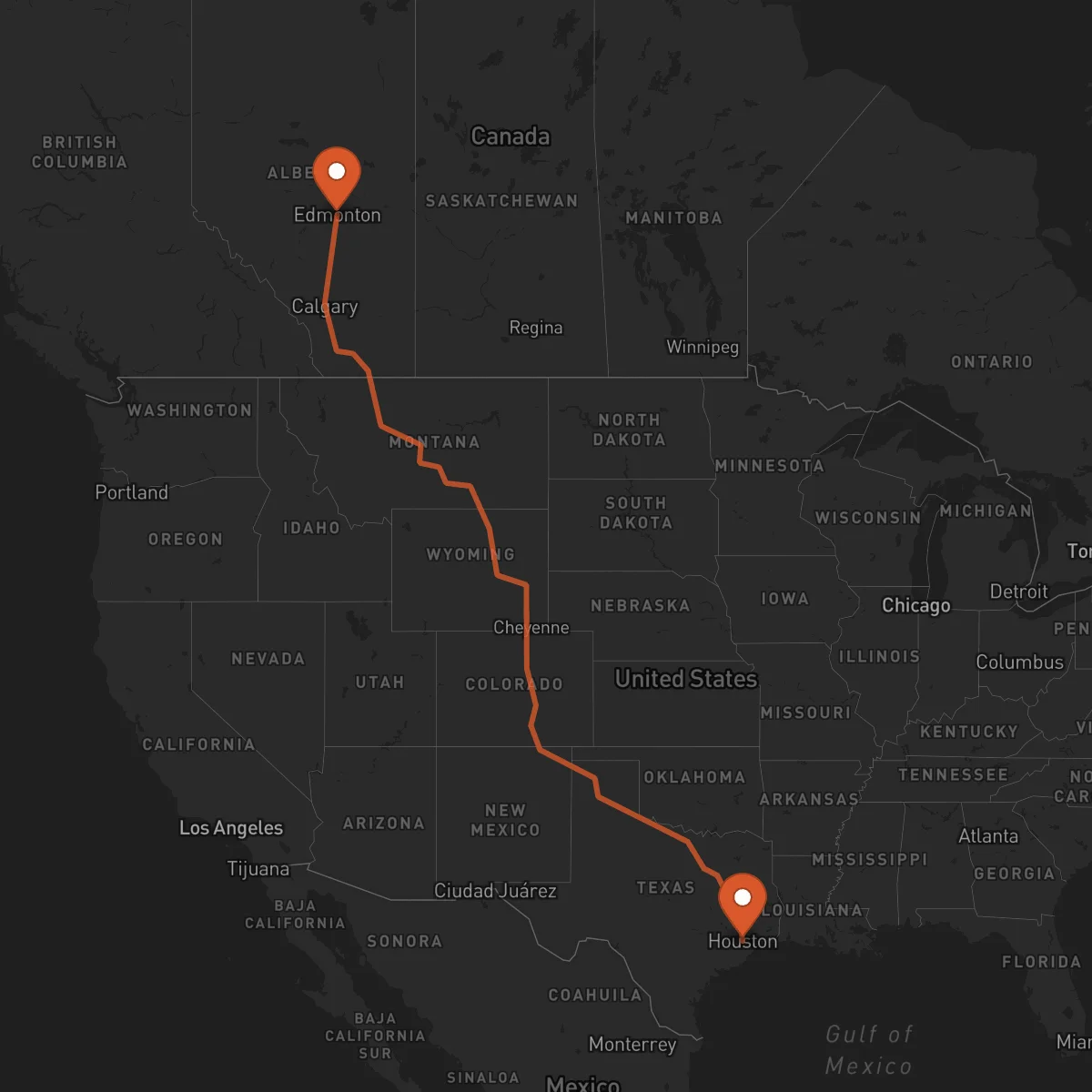
Edmonton to Houston
Houston → EdmontonFTL freight transportation service between Edmonton and Houston. Reliable logistics solutions for your business.
Route Description
Everything you need to know about the corridor Edmonton - Houston
The Edmonton-Houston corridor represents a vital North American logistics route connecting Canada's Alberta province with the energy capital of the United States. This 3,024 km cross-border route facilitates the movement of critical goods between two major industrial centers, traversing diverse landscapes from the Canadian prairies through the American Midwest to the Gulf Coast. The corridor serves as a strategic link for industries requiring reliable full truckload transportation between these economic powerhouses.
The route's significance stems from the complementary industrial strengths of both regions. Edmonton serves as a major hub for Canada's oil sands industry and manufacturing sector, while Houston dominates in energy production, petrochemicals, and international trade through the Port of Houston. This creates substantial freight demand for specialized cargo, equipment, and industrial supplies moving in both directions. The corridor particularly benefits from the robust trade relationship between Canada and the United States, with numerous companies relying on efficient cross-border logistics solutions.
Transportation along this corridor primarily utilizes Interstate 35 South from the U.S. entry point through major cities including Minneapolis, Kansas City, and Dallas before reaching Houston. The route includes key border crossings such as the Pembina-Emerson crossing in North Dakota, which offers efficient processing for commercial freight. Control Terrestre's expertise in cross-border operations ensures seamless customs clearance and compliance with all regulatory requirements, minimizing delays and optimizing transit times for full truckload shipments between Edmonton and Houston.
Services for this Route
Available services for the corridor Edmonton - Houston
 Origin
Edmonton stands as a strategic logistics hub in Western Canada, offering exceptional connectivity for freight transportation. Located in Alberta's geographic center, the city provides access to major transportation networks including the Yellowhead Highway (Highway 16) and proximity to the Edmonton International Airport. The city's logistics infrastructure features extensive warehousing facilities, intermodal yards, and specialized handling capabilities for industrial cargo. Edmonton's position as a gateway to northern Canada and its role in the oil sands industry make it a critical origin point for diverse freight movements requiring reliable transportation solutions.
 Destination
Houston
Houston represents one of America's most important logistics and industrial centers, strategically positioned near the Gulf of Mexico. The city boasts the Port of Houston, one of the busiest ports in the United States, providing ocean freight connectivity alongside an extensive highway network including I-10, I-45, and I-69. Houston's logistics infrastructure includes multiple intermodal facilities, warehousing districts, and specialized terminals for energy sector equipment. The city's role as the energy capital of the world, combined with its diverse manufacturing base, creates substantial demand for efficient inbound and outbound freight transportation services.










