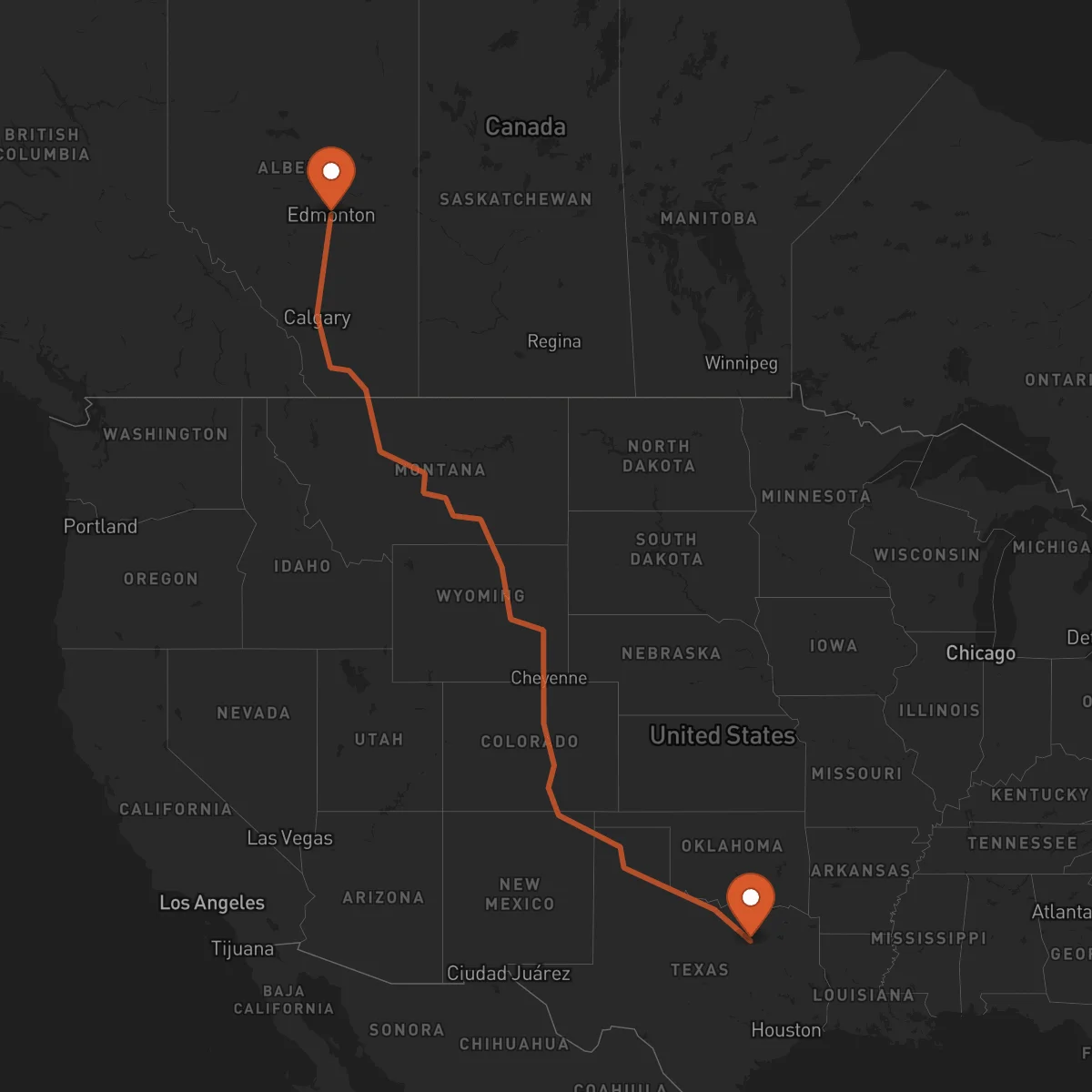
Edmonton to Dallas
Dallas → EdmontonFTL freight transportation service between Edmonton and Dallas. Reliable logistics solutions for your business.
Route Description
Everything you need to know about the corridor Edmonton - Dallas
The Edmonton to Dallas corridor represents a vital cross-border freight route connecting Canada's Alberta province with one of the United States' most dynamic economic centers. This 2,662 km transportation artery facilitates the movement of goods between Canada's energy capital and Texas's industrial powerhouse, serving as a crucial link in North American supply chains. The route traverses diverse landscapes and crosses international borders, requiring specialized logistics expertise to ensure seamless cargo movement.
The corridor's economic significance stems from the complementary industrial strengths of both regions. Edmonton serves as a major hub for energy production, particularly oil sands operations, while Dallas anchors a diverse economic ecosystem including technology, telecommunications, manufacturing, and aerospace sectors. This creates substantial freight demand moving in both directions, with energy equipment, industrial machinery, and raw materials flowing south, while finished goods, electronics, and consumer products move north.
Key transportation infrastructure along this corridor includes major highways such as I-35E connecting Dallas with the US-Mexico border region, and various Canadian and US interstate routes linking Edmonton to cross-border points. The corridor typically crosses at international border points where customs clearance and documentation requirements must be expertly managed. Control Terrestre's specialized cross-border capabilities ensure efficient customs processing, proper documentation handling, and compliance with all regulatory requirements for both Canadian and US jurisdictions.
Services for this Route
Available services for the corridor Edmonton - Dallas
 Origin
Edmonton stands as Alberta's capital and a strategic logistics hub in Western Canada. Located along the North Saskatchewan River, the city serves as a gateway to Canada's northern resources and energy sector. Edmonton's strategic position provides access to major transportation networks including the Yellowhead Highway (Highway 16) and proximity to the Edmonton International Airport. The city's robust infrastructure supports heavy industrial operations, with extensive rail connections and highway systems facilitating efficient cargo movement. Edmonton's economy centers on energy production, particularly oil sands operations, petrochemical refining, and related industries, creating consistent demand for specialized freight transportation services.
 Destination
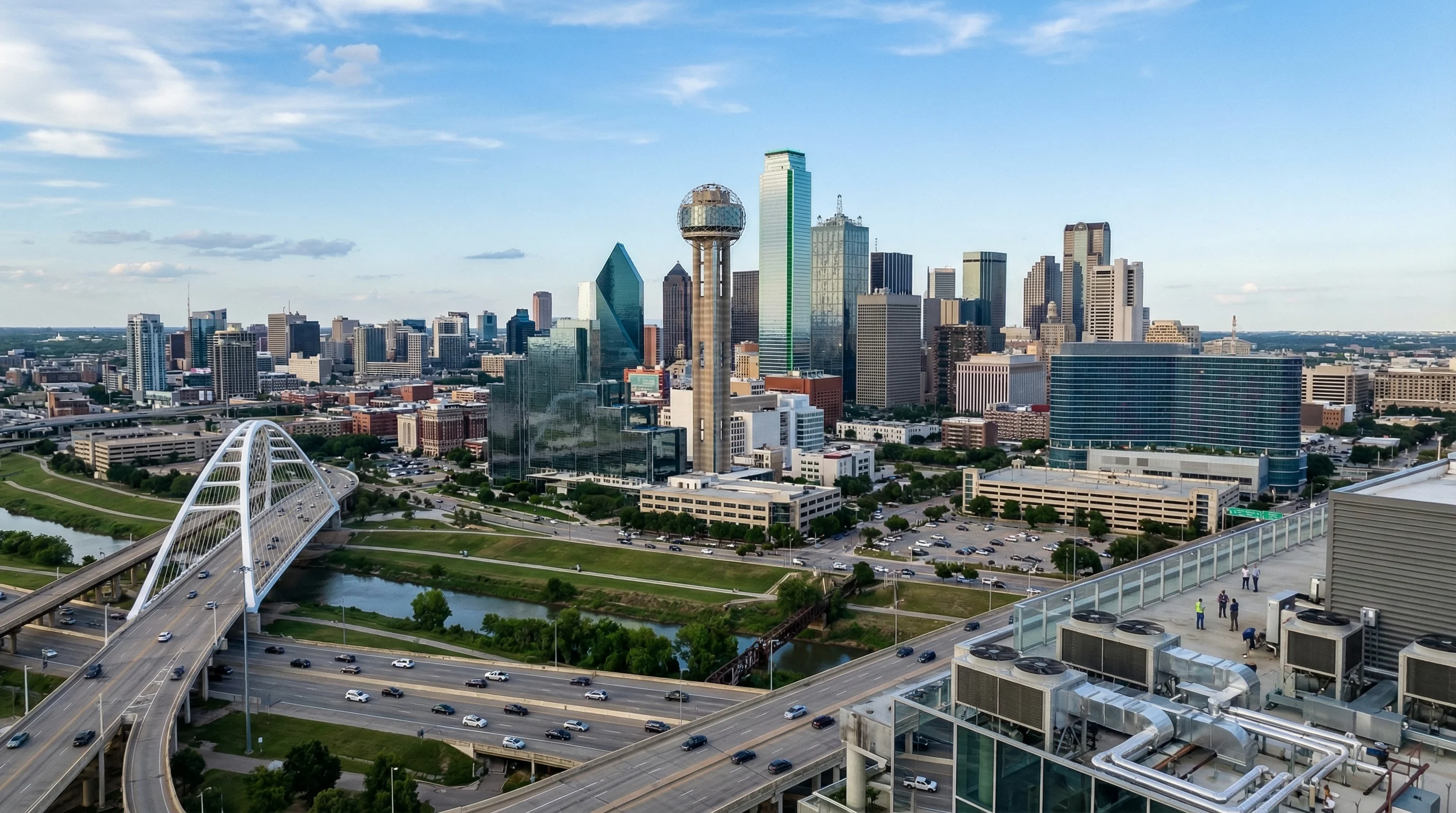
Dallas
Dallas represents a major economic and logistics center in the southern United States, strategically positioned in the Dallas-Fort Worth metroplex. The city benefits from excellent transportation infrastructure including multiple interstate highways (I-20, I-30, I-35E, I-45) that converge in the region, providing seamless connectivity to major markets. Dallas/Fort Worth International Airport serves as one of the world's busiest cargo hubs, while extensive rail networks and port access via the Gulf Coast enhance multimodal capabilities. The Dallas economy encompasses technology, telecommunications, healthcare, manufacturing, and aerospace sectors, creating diverse freight transportation needs. The region's central location within the US enables efficient distribution to major markets across the country.










