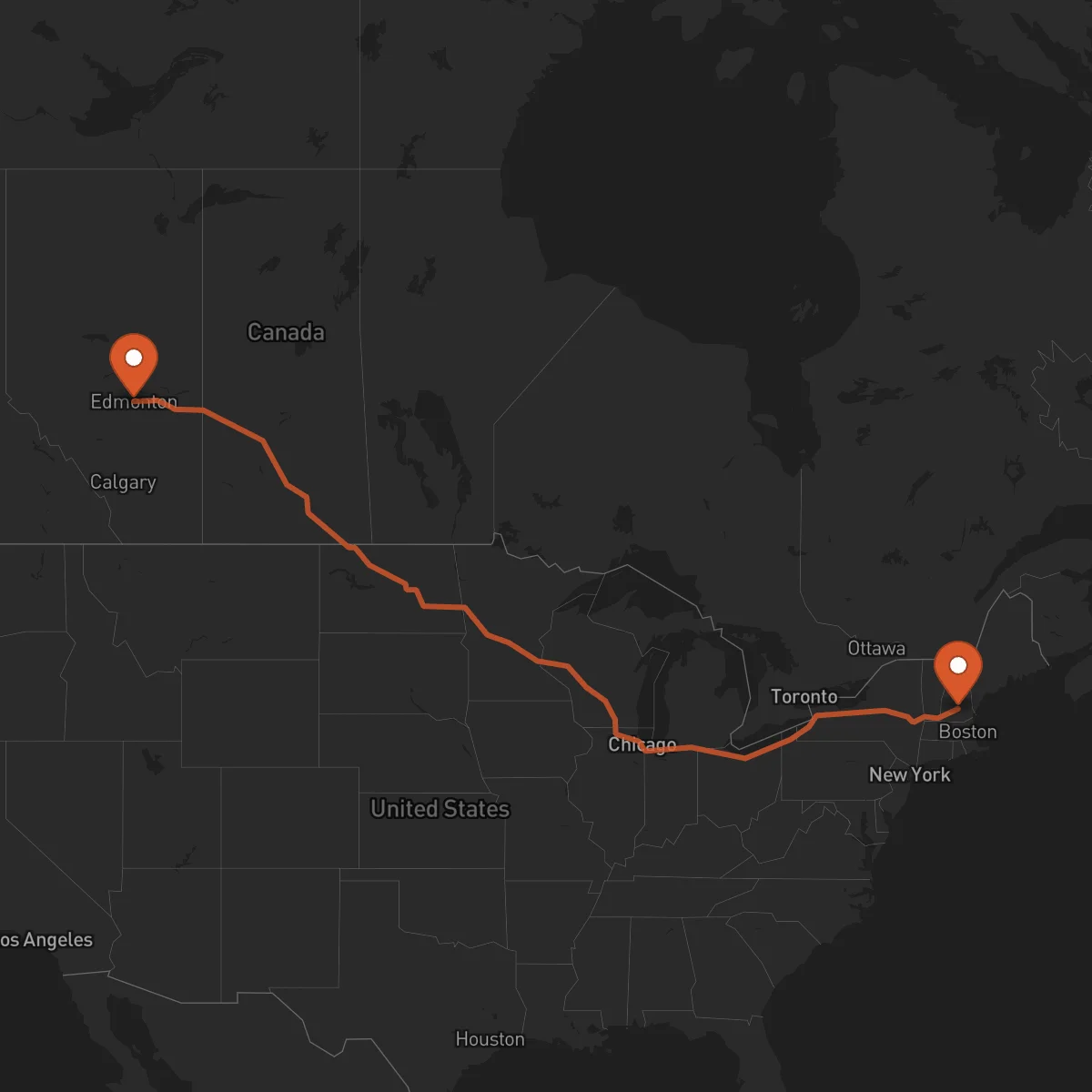
Edmonton to Concord
Concord → EdmontonFTL freight transportation service between Edmonton and Concord. Reliable logistics solutions for your business.
Route Description
Everything you need to know about the corridor Edmonton - Concord
The Edmonton to Concord corridor represents a vital cross-border freight route connecting the industrial heartland of Alberta with the strategic markets of the northeastern United States. This 3,249 km transportation corridor traverses diverse terrain and crosses international borders, serving as a critical link in the North American supply chain. The route connects Canada's energy and manufacturing powerhouse with New England's industrial and distribution centers, facilitating the movement of goods between two major economic regions.
This corridor serves numerous industries including energy equipment, manufacturing components, automotive parts, and consumer goods. The route primarily utilizes major highways such as Alberta's Highway 16 and 43, connecting to US Interstate 94 and 90, before reaching New Hampshire via Interstate 93. Key border crossings include Coutts/Sweetgrass and Pembina/Emerson, with customs considerations requiring expertise in cross-border documentation and compliance. The corridor's strategic importance has grown with increasing trade between Canada and the northeastern US markets.
Control Terrestre provides specialized FTL services along this corridor, offering dedicated transportation solutions that ensure your cargo moves efficiently across international borders. Our experienced team manages all aspects of cross-border logistics, from customs documentation to regulatory compliance, providing seamless door-to-door service. With our network of certified carriers and strategic partnerships, we optimize transit times and maintain the highest standards of cargo security and reliability throughout this critical trade route.
Services for this Route
Available services for the corridor Edmonton - Concord
 Origin
Edmonton serves as a major logistics hub in western Canada, strategically positioned for freight distribution across North America. The city's location in Alberta's industrial corridor provides excellent access to major transportation networks, including the Yellowhead Highway (Highway 16) and Queen Elizabeth II Highway (Highway 2). Edmonton's economy is driven by energy, manufacturing, and technology sectors, with the city serving as a key distribution center for Alberta's oil and gas industry. The city's industrial areas feature modern warehousing facilities and intermodal yards that support efficient freight handling and distribution operations.
 Destination
Concord
Concord, as the capital of New Hampshire, represents a strategic logistics point in the northeastern United States. The city's location provides excellent access to major markets in New England, including Boston, Manchester, and Portland. Concord's economy includes manufacturing, healthcare, and government services, with a growing emphasis on technology and advanced manufacturing. The city is well-connected to major transportation routes, including Interstate 93, which provides direct access to the broader New England market and international trade routes. Concord's proximity to major ports and distribution centers makes it an ideal destination for cross-border freight operations.










