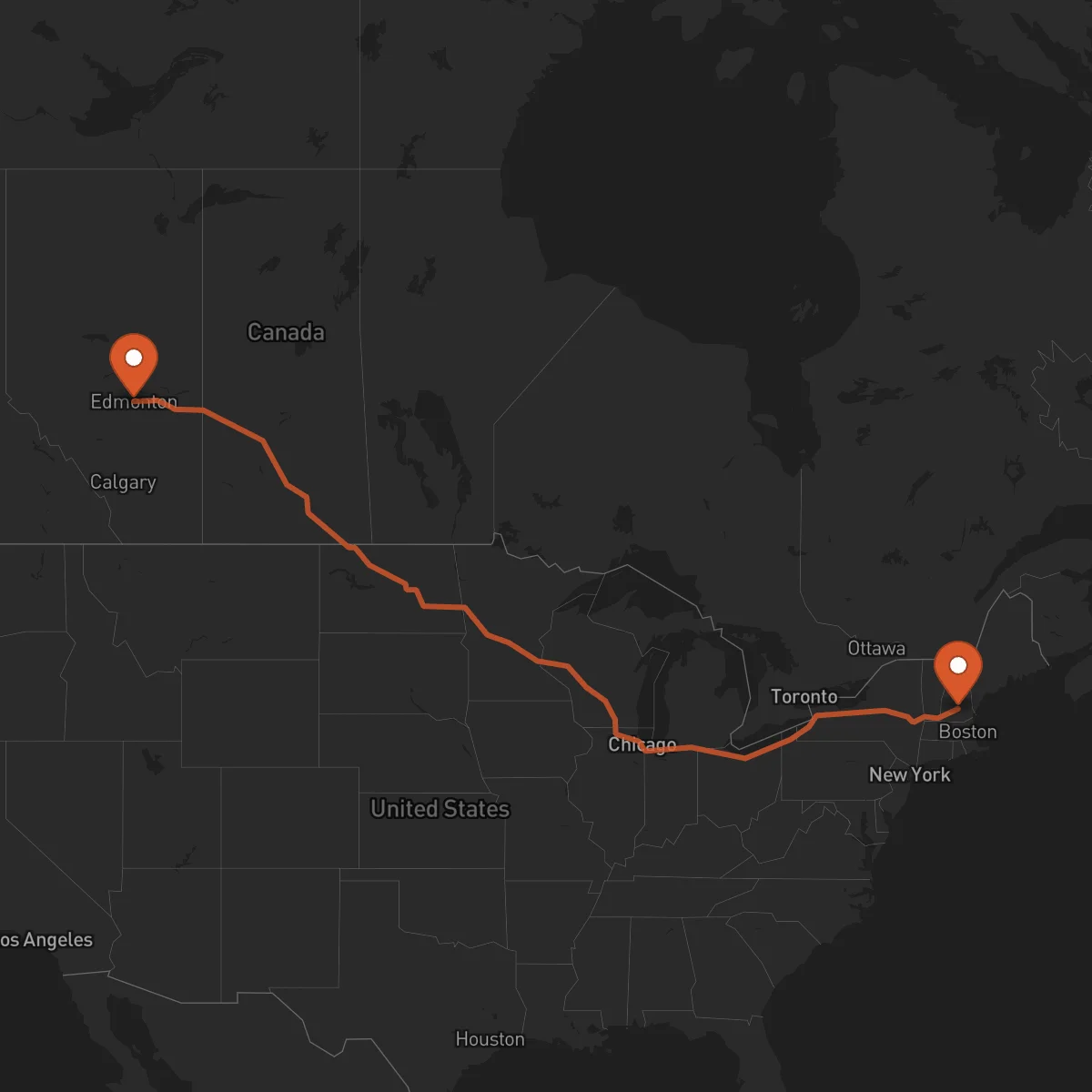
Concord to Edmonton
Edmonton → ConcordFTL freight transportation service between Concord and Edmonton. Reliable logistics solutions for your business.
Route Description
Everything you need to know about the corridor Concord - Edmonton
The logistics corridor between Concord, New Hampshire and Edmonton, Alberta represents a vital cross-border transportation route connecting the northeastern United States with western Canada. This 3,249 km route traverses diverse terrains and crosses multiple jurisdictions, making it essential for businesses requiring reliable freight transportation between these regions. The corridor serves as a critical link in the North American supply chain, facilitating the movement of goods from New England's industrial centers to Alberta's energy and manufacturing hubs.
The economic significance of this route extends beyond simple transportation, as it connects regions with complementary industrial strengths. Concord's proximity to Boston's port and manufacturing centers creates a steady flow of goods destined for western Canada, while Edmonton's role as a distribution center for northern Alberta's resource industries generates substantial outbound freight volumes. This bidirectional flow supports various sectors including automotive parts, industrial equipment, consumer goods, and specialized cargo requiring temperature-controlled transportation.
Major transportation infrastructure along this corridor includes Interstate 93 and Interstate 89 in New Hampshire, connecting to Interstate 89 in Vermont, which leads to Interstate 89 in Quebec. From there, the route continues through Montreal and connects to major Canadian highways including Autoroute 20 and Autoroute 40, eventually linking to the Trans-Canada Highway system. The corridor crosses the Canada-US border at various points, with the most common being the Highgate Springs-Sainte-Marie crossing in Vermont, though alternative border crossings may be utilized based on specific routing requirements and customs considerations.
Control Terrestre facilitates seamless operations along this corridor through our network of certified transportation providers who understand the complexities of cross-border logistics. Our expertise in customs documentation, regulatory compliance, and efficient routing ensures that freight moves smoothly between Concord and Edmonton, regardless of seasonal weather challenges or border processing requirements. We coordinate with our strategic partners to provide reliable full truckload services that meet the specific needs of each shipment, whether it involves standard dry van transportation, refrigerated goods, or specialized cargo requiring special handling.
Services for this Route
Available services for the corridor Concord - Edmonton
 Origin
Concord
Concord, New Hampshire serves as a strategic logistics hub in the northeastern United States, offering excellent connectivity to major markets along the East Coast. Located approximately 70 miles north of Boston, Concord benefits from its proximity to major transportation infrastructure including Interstate 93, which provides direct access to northern New England and connects to the broader Interstate highway network. The city's location near Boston's port facilities creates opportunities for efficient distribution of imported goods throughout New England and beyond.
The region's economy is diverse, with strong presence in healthcare, education, government services, and light manufacturing. Concord and the surrounding Merrimack County area host numerous small to medium-sized manufacturing facilities producing everything from precision instruments to consumer goods. The area's skilled workforce and business-friendly environment have attracted companies in technology, biotechnology, and advanced manufacturing sectors. Additionally, the presence of state government offices and educational institutions creates consistent demand for various goods and services, supporting year-round freight transportation needs.
 Destination
Edmonton, Alberta stands as a major logistics and distribution center in western Canada, strategically positioned to serve both the province of Alberta and northern regions. Located along the North Saskatchewan River, Edmonton benefits from its position on the Trans-Canada Highway network and proximity to major rail corridors. The city's location provides efficient access to the oil sands regions of northern Alberta, making it a crucial hub for the energy sector's supply chain operations.
The Edmonton economy is heavily influenced by the energy industry, with oil and gas extraction, refining, and related services forming the backbone of the regional economy. Beyond energy, the city has developed strong manufacturing, technology, and logistics sectors. Edmonton's International Airport and extensive road network support its role as a distribution center for northern Canada, while the Port Alberta initiative has enhanced the region's capabilities for international trade. The city's diverse industrial base, including construction, agriculture, and retail distribution, creates consistent demand for various freight transportation services throughout the year.










