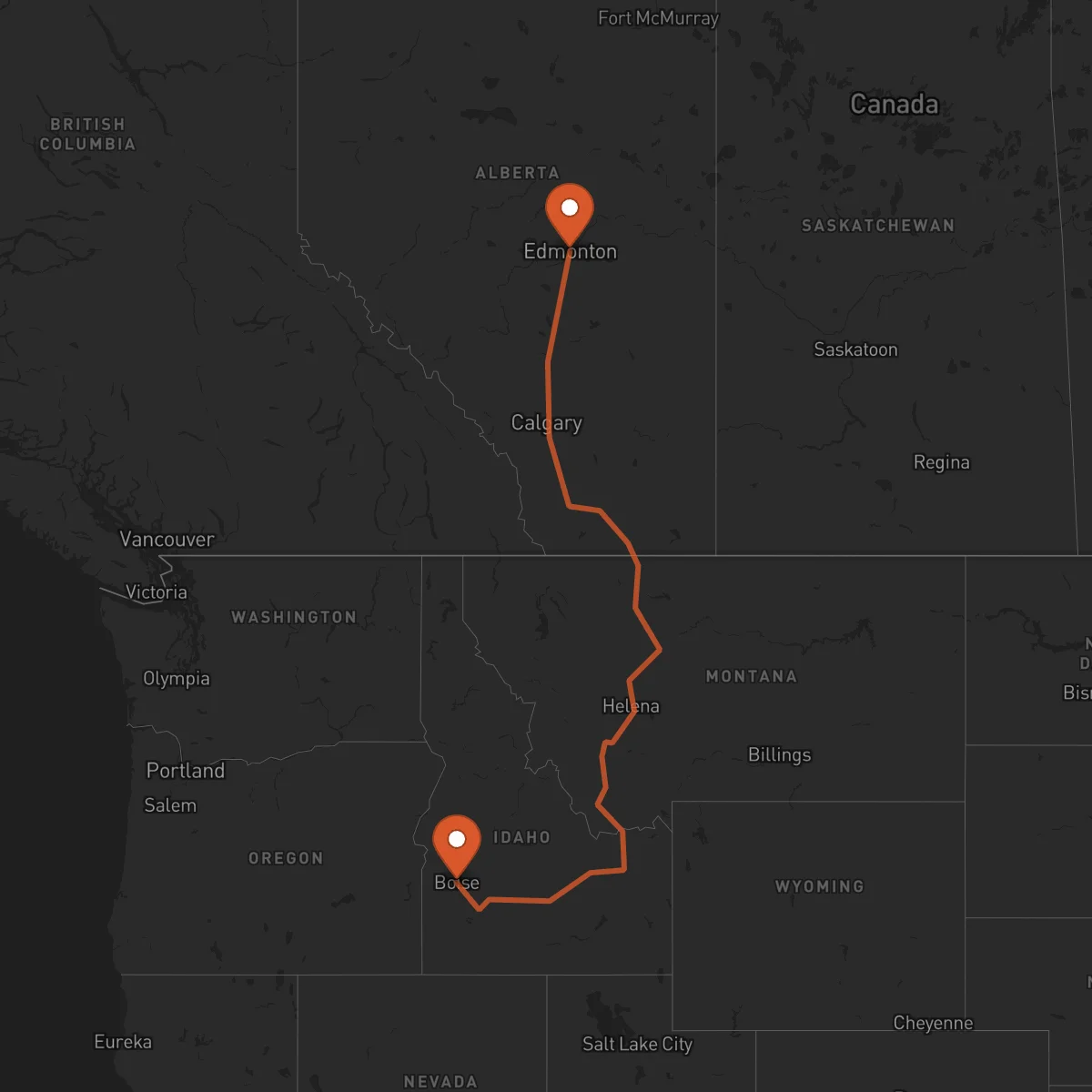
Edmonton to Boise
Boise → EdmontonFTL freight transportation service between Edmonton and Boise. Reliable logistics solutions for your business.
Route Description
Everything you need to know about the corridor Edmonton - Boise
The Edmonton to Boise corridor represents a vital cross-border freight transportation route connecting Alberta, Canada with Idaho, USA. This strategic north-south corridor spans approximately 1,122 kilometers and serves as a critical link for trade between these two important North American markets. The route facilitates the movement of goods between Canada's energy and agricultural powerhouse and Idaho's growing technology and manufacturing sectors.
The corridor primarily utilizes major transportation infrastructure including Alberta Highway 2 (Queen Elizabeth II Highway) connecting Edmonton to the U.S. border, then continuing through Montana and Idaho via Interstate 15 and Interstate 84. The main border crossing at Sweetgrass, Montana/Coutts, Alberta provides efficient customs processing for commercial freight. This well-established transportation network ensures reliable transit times for cross-border shipments.
Key industries driving freight demand on this corridor include energy and natural resources from Alberta, agricultural products from both regions, manufacturing goods, and technology equipment. Boise's growing tech sector and Edmonton's diverse industrial base create complementary trade opportunities. Control Terrestre facilitates seamless cross-border operations by leveraging our C-TPAT and FAST certifications, ensuring expedited customs clearance and compliance with all regulatory requirements. Our experienced team manages the complexities of cross-border documentation, duties, and regulations, providing customers with reliable full truckload (FTL) service between these strategic locations.
Services for this Route
Available services for the corridor Edmonton - Boise
 Origin
Edmonton serves as a major logistics hub in Western Canada, strategically positioned for freight distribution across North America. Located in Alberta's capital region, Edmonton benefits from its proximity to major oil sands operations, agricultural centers, and manufacturing facilities. The city's Yellowhead Highway and Queen Elizabeth II Highway provide excellent connectivity to both east-west and north-south freight corridors. Edmonton's industrial sectors include energy, agriculture, forestry, and manufacturing, creating consistent demand for freight transportation services. The city's transportation infrastructure includes Edmonton International Airport, extensive rail connections through CN and CPKC railways, and major highway networks that facilitate efficient cargo movement throughout the region.
 Destination
Boise
Boise, Idaho's capital and largest city, has emerged as a significant logistics and distribution center in the Pacific Northwest. The city's strategic location provides access to major markets in the western United States while offering cost advantages compared to coastal ports. Boise's growing technology sector, known as the "Silicon Slopes," drives demand for specialized freight services, while traditional industries including agriculture, food processing, and manufacturing maintain steady freight volumes. The city benefits from excellent transportation infrastructure including Interstate 84, which connects Boise to major West Coast markets, and Boise Airport's cargo facilities. The surrounding Treasure Valley region's agricultural production also contributes to consistent freight demand through this corridor.










