Boise to Edmonton
Edmonton → BoiseFTL freight transportation service between Boise and Edmonton. Reliable logistics solutions for your business.
Route Description
Everything you need to know about the corridor Boise - Edmonton
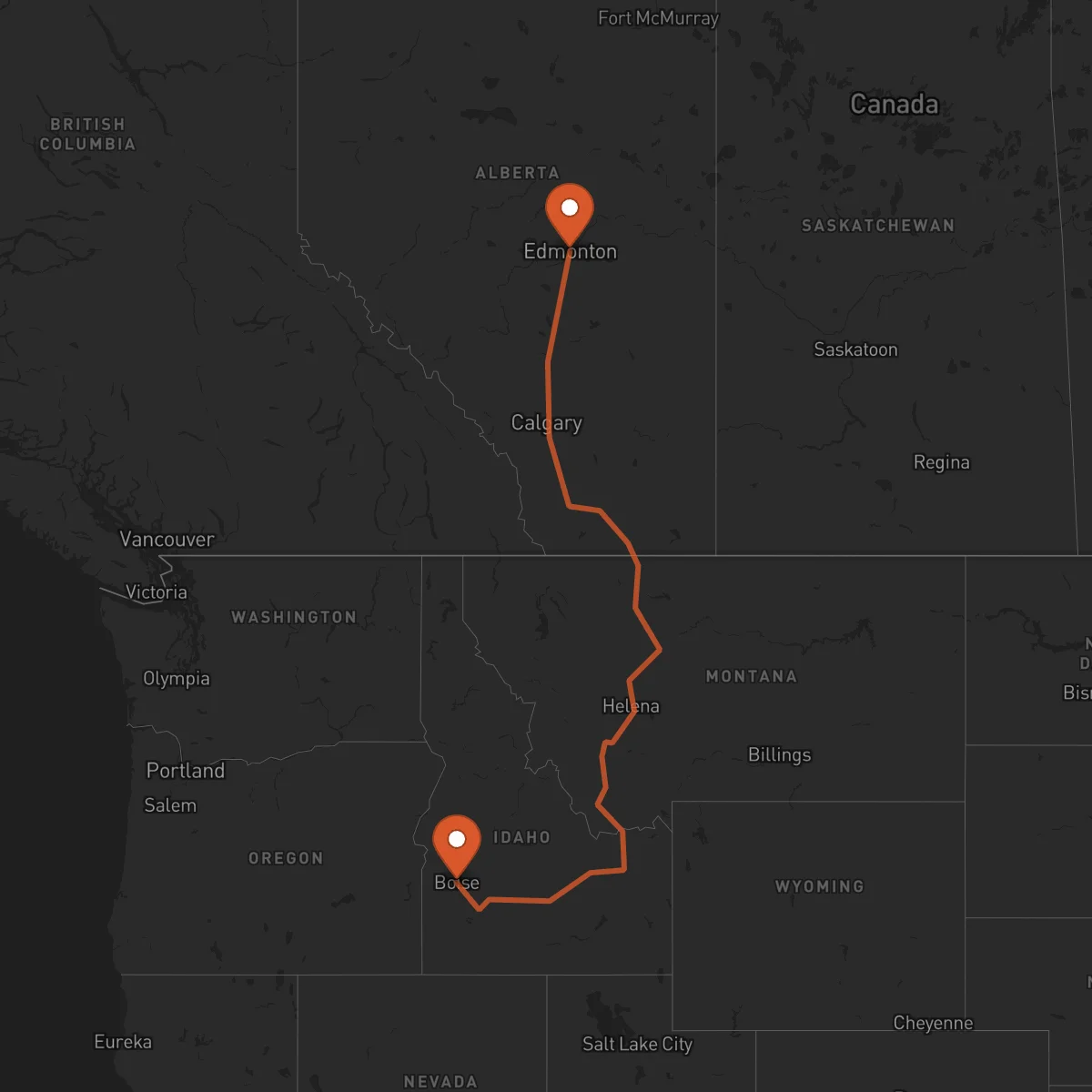
The Boise-Edmonton corridor represents a vital cross-border freight transportation route connecting the heart of Idaho's technology and agricultural sector with Alberta's energy and industrial hub. This 1,122 km corridor traverses diverse terrain and crosses the US-Canada border, facilitating the movement of high-value goods between two major North American markets. The route primarily utilizes Interstate 84 and Interstate 15 in the United States, connecting to Alberta Highway 2 (Queen Elizabeth II Highway) in Canada, providing efficient access through major transportation nodes.
The economic significance of this corridor cannot be overstated, as it links Boise's growing tech industry and agricultural exports with Edmonton's robust energy sector, manufacturing base, and logistics infrastructure. Key industries utilizing this route include technology hardware, agricultural products, petroleum and chemical products, industrial machinery, and automotive parts. The corridor experiences consistent freight volume throughout the year, with seasonal peaks during harvest periods and energy project cycles.
Cross-border operations on this corridor require careful coordination, with the most common border crossing at Sweetgrass, Montana/Coutts, Alberta, which offers dedicated FAST lanes for pre-cleared shipments. Control Terrestre's expertise in cross-border logistics ensures seamless customs clearance and compliance with both US and Canadian regulations. Our C-TPAT and FAST-certified carrier network provides expedited processing, while our dedicated team manages all documentation requirements, including NAFTA/USMCA certificates of origin, customs bonds, and specialized permits for regulated commodities.
Services for this Route
Available services for the corridor Boise - Edmonton
 Origin
Boise
Boise, Idaho serves as a strategic logistics hub in the Pacific Northwest, combining technological innovation with agricultural strength. The city's location provides excellent access to major transportation networks, including Interstate 84, which connects to Portland, Oregon to the west and Salt Lake City, Utah to the east. Boise's growing economy is anchored by a strong technology sector, often referred to as the "Silicon Slopes," alongside traditional agricultural industries including potatoes, dairy products, and food processing. The city benefits from multiple transportation options, including Boise Airport for air freight, Union Pacific Railroad for rail services, and comprehensive highway infrastructure that supports efficient ground transportation throughout the region.
 Destination
Edmonton, Alberta stands as a critical logistics and economic center in Western Canada, strategically positioned as the northernmost major city in North America with a population exceeding one million. Known as the "Gateway to the North," Edmonton serves as a vital distribution point for goods moving throughout Alberta, British Columbia, and the northern territories. The city's economy is heavily influenced by the energy sector, particularly oil sands operations, but also encompasses manufacturing, technology, and agricultural processing industries. Edmonton benefits from exceptional transportation infrastructure, including Edmonton International Airport, extensive rail connections via CN and CP rail lines, and major highway networks including the Yellowhead Highway and Queen Elizabeth II Highway, which provide direct connections to Calgary, Vancouver, and cross-border routes to the United States.










