Edmonton to Annapolis
Annapolis → EdmontonFTL freight transportation service between Edmonton and Annapolis. Reliable logistics solutions for your business.
Route Description
Everything you need to know about the corridor Edmonton - Annapolis
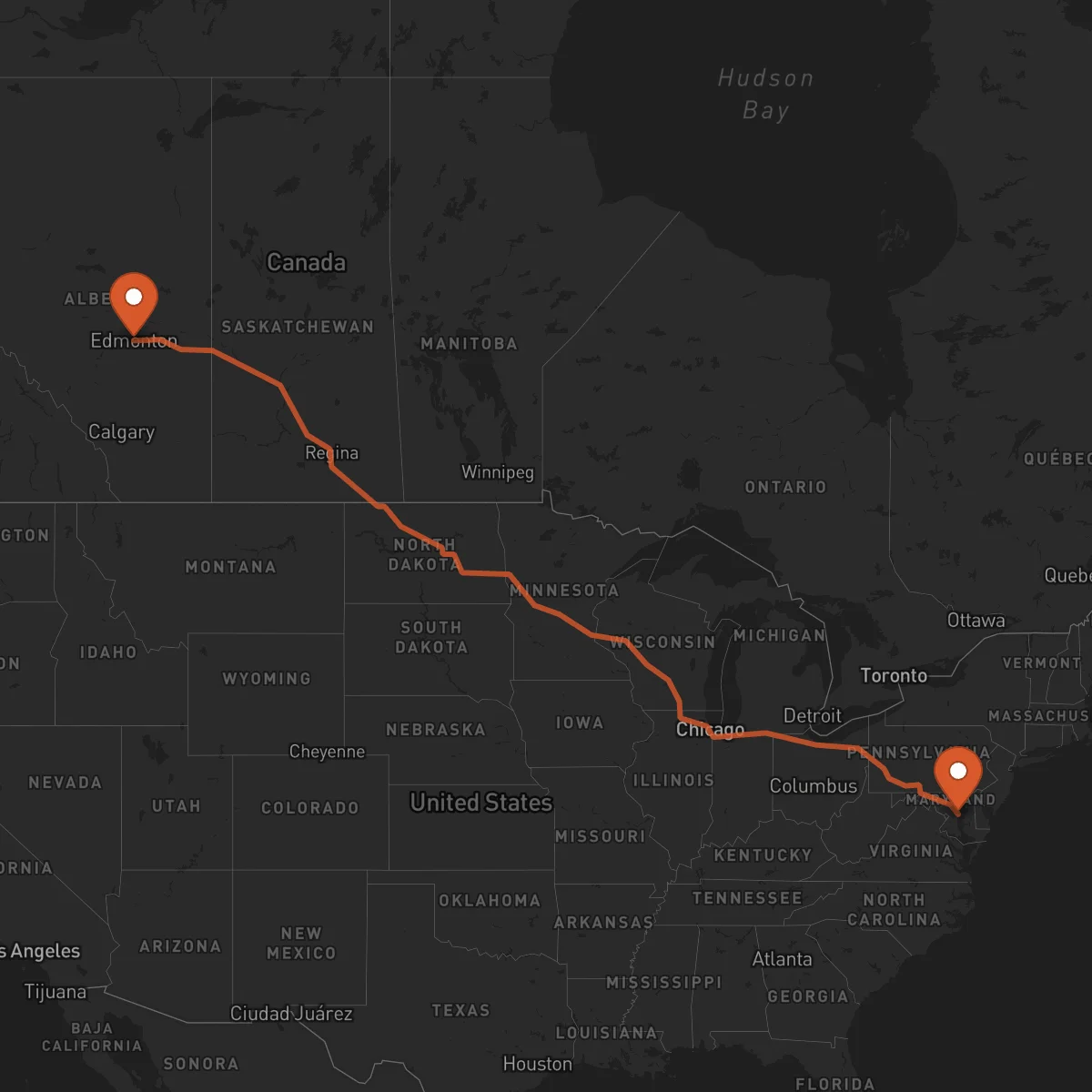
The logistics corridor connecting Edmonton, Alberta, Canada to Annapolis, Maryland, United States represents a critical cross-border freight route spanning approximately 3,222 kilometers. This strategic corridor links Canada's western energy and industrial hub with the Mid-Atlantic region of the United States, facilitating the movement of diverse cargo types between two major economic zones. The route traverses multiple provinces and states, crossing the international border at key points such as Coutts-Sweetgrass or other major crossings, depending on the specific shipping requirements and cargo characteristics.
The corridor serves as a vital artery for industries including energy, manufacturing, agriculture, and technology. Edmonton's position as a major energy center in Canada's oil sands region creates significant outbound freight volumes, while Annapolis's proximity to Washington D.C. and Baltimore generates diverse import and export demands. The route passes through major transportation hubs including Calgary, Regina, Minneapolis, and Pittsburgh, offering multiple routing options to optimize transit times and costs.
Transportation infrastructure along this corridor includes major highways such as Alberta Highway 2, Interstate 94, and Interstate 70, providing reliable all-season connectivity. Control Terrestre specializes in managing cross-border operations on this route, offering expertise in customs documentation, border clearance procedures, and compliance with both Canadian and U.S. regulations. Our dedicated FTL services ensure that your cargo moves efficiently across this extensive corridor with minimal handling and maximum security.
Services for this Route
Available services for the corridor Edmonton - Annapolis
 Origin
Edmonton, Alberta, serves as a strategic logistics hub in western Canada, positioned at the crossroads of major transportation networks. As the capital of Alberta and a key center for Canada's energy sector, Edmonton provides access to the oil sands operations in northern Alberta and connects to major ports via rail and road networks. The city's Yellowhead Highway and proximity to the Edmonton International Airport create multiple transportation options for freight movement. Edmonton's industrial base includes energy, manufacturing, and technology sectors, generating substantial freight volumes that require reliable cross-border transportation solutions to U.S. markets.
 Destination
Annapolis
Annapolis, Maryland, occupies a strategic location in the Mid-Atlantic region, providing access to major East Coast markets including Washington D.C., Baltimore, and Philadelphia. The city's proximity to the Port of Baltimore and major interstate highways (I-97, I-695, I-95) creates excellent connectivity for freight distribution throughout the eastern United States. Annapolis serves as a gateway to government, defense, and technology industries concentrated in the Washington metropolitan area. The region's diverse economy generates consistent demand for cross-border freight services, particularly for time-sensitive and specialized cargo requiring reliable transportation from Canadian origins.










