Durham to Tulsa
Tulsa → DurhamFTL freight transportation service between Durham and Tulsa. Reliable logistics solutions for your business.
Route Description
Everything you need to know about the corridor Durham - Tulsa
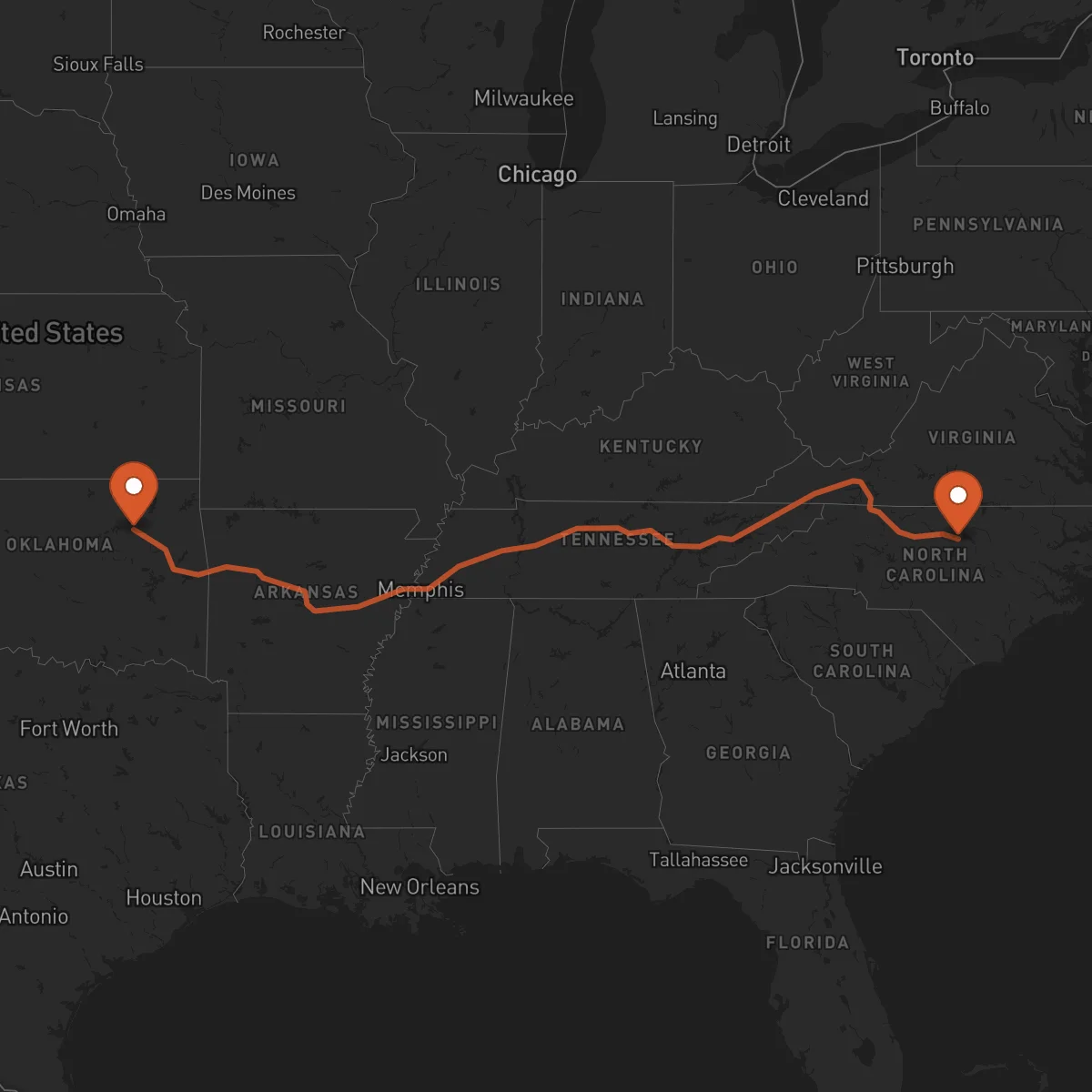
The logistics corridor connecting Durham, North Carolina, to Tulsa, Oklahoma, spans approximately 1,534 kilometers and represents a vital transportation link between the East Coast and the Midwest. This domestic route traverses diverse terrain and crosses multiple states, making it a crucial artery for freight movement in the United States. The corridor serves as a strategic connection between North Carolina's Research Triangle and Oklahoma's industrial heartland, facilitating the movement of goods between two economically significant regions.
The economic importance of this corridor cannot be overstated. Durham, located in North Carolina's Research Triangle, is a hub for technology, healthcare, and education, while Tulsa stands as a major center for energy, aerospace, and manufacturing in Oklahoma. The route connects these diverse economic ecosystems, enabling the seamless flow of specialized equipment, raw materials, and finished products. Key industries utilizing this corridor include biotechnology, pharmaceuticals, advanced manufacturing, energy equipment, and automotive parts.
Transportation infrastructure along this corridor is well-developed, with major highways including I-40, I-81, and I-44 forming the backbone of freight movement. These interstate highways provide reliable and efficient transportation options for full truckload (FTL) services. Control Terrestre leverages this robust infrastructure to offer comprehensive FTL solutions, ensuring timely and secure delivery of cargo between Durham and Tulsa. Our experienced network of carriers and advanced logistics capabilities enable us to navigate this extensive route effectively, providing our clients with dependable transportation services that support their supply chain needs.
Services for this Route
Available services for the corridor Durham - Tulsa
 Origin
Durham
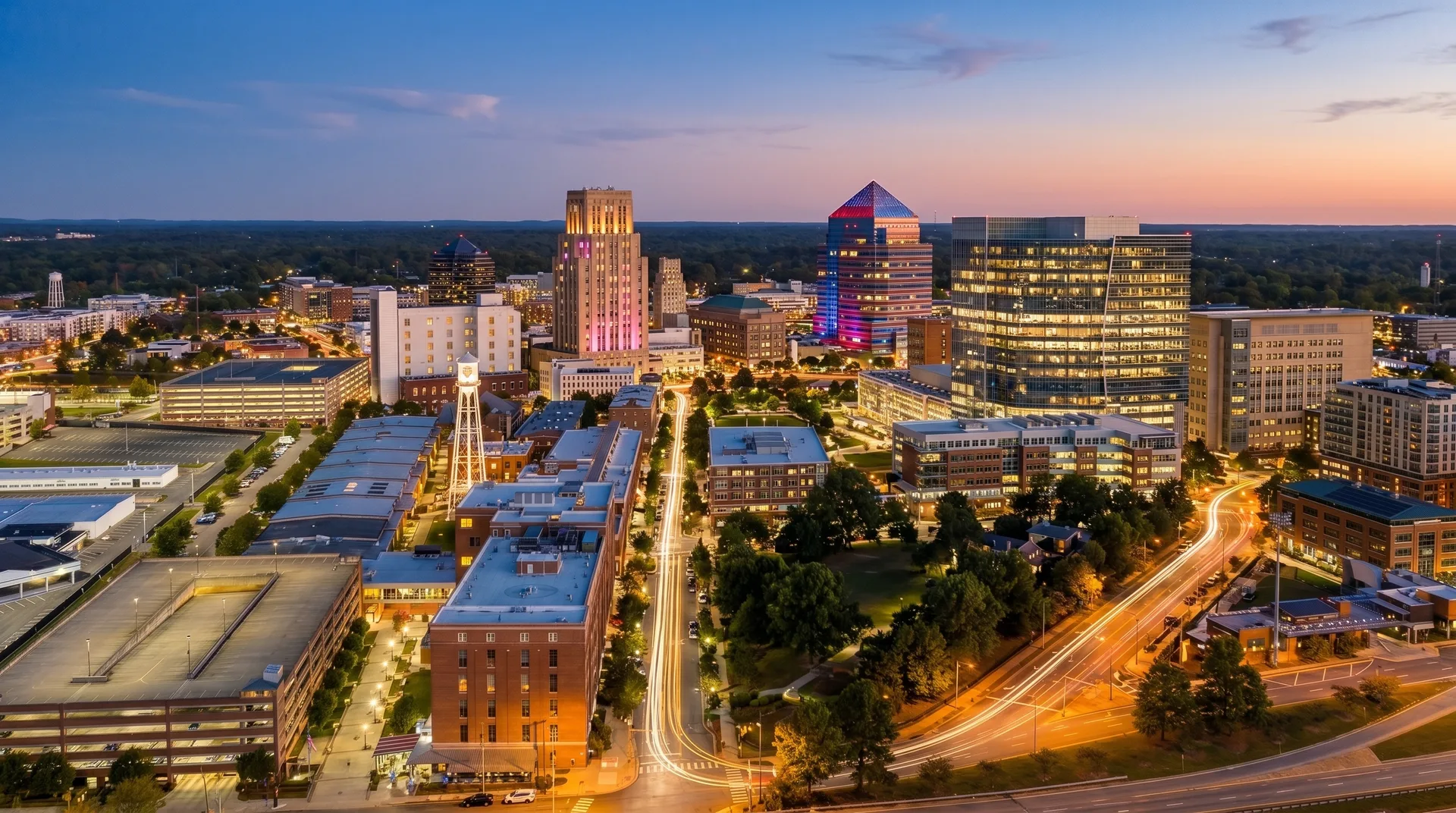
Durham, North Carolina, serves as a strategic logistics hub in the southeastern United States. Located in the heart of the Research Triangle, Durham benefits from its proximity to major urban centers like Raleigh and Chapel Hill, creating a dynamic economic region. The city's location provides excellent access to East Coast ports and major distribution networks, making it an ideal origin point for freight transportation. Durham's infrastructure includes the Raleigh-Durham International Airport and several major highways, including I-40 and I-85, which facilitate efficient cargo movement.
The economic landscape of Durham is characterized by its strong presence in technology, healthcare, and education sectors. Home to Duke University and the Research Triangle Park, the city attracts numerous biotechnology and pharmaceutical companies, creating a high demand for specialized logistics services. The manufacturing sector, particularly in advanced materials and medical devices, also contributes significantly to the local economy. This diverse industrial base requires reliable and flexible transportation solutions, especially for time-sensitive and high-value cargo that demands full truckload (FTL) services.
 Destination
Tulsa
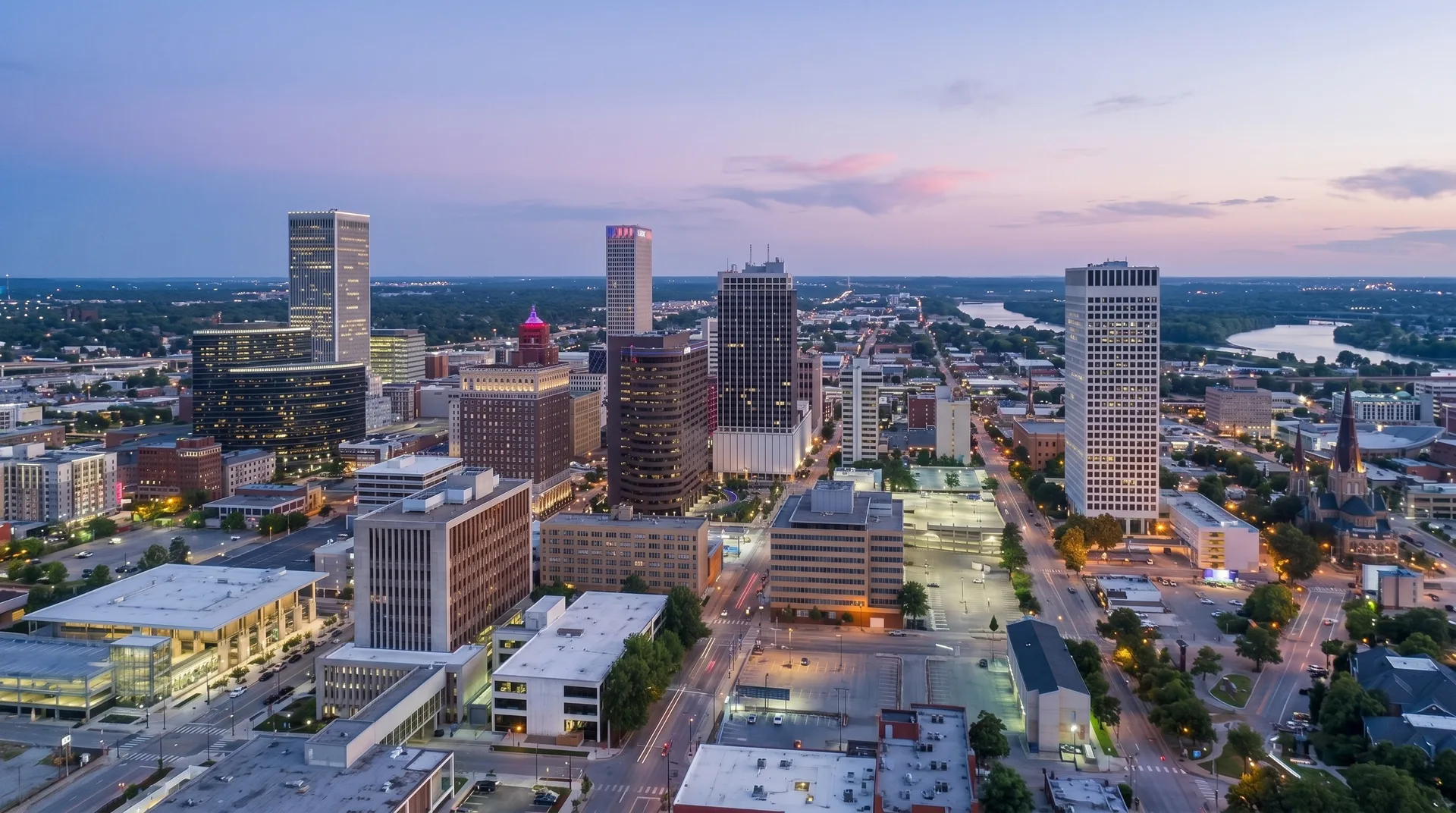
Tulsa, Oklahoma, stands as a strategic logistics destination in the south-central United States. Located near the geographic center of the country, Tulsa offers excellent connectivity to major markets across the nation. The city's position along the I-44 corridor provides direct access to both East and West Coast destinations, making it a crucial node in the national freight network. Tulsa International Airport and the Tulsa Port of Catoosa on the McClellan-Kerr Arkansas River Navigation System further enhance the city's multimodal transportation capabilities.
The economic profile of Tulsa is dominated by the energy sector, with numerous oil and gas companies maintaining significant operations in the area. The city has also diversified into aerospace, manufacturing, and logistics industries. Major employers include American Airlines, which operates a large maintenance base in Tulsa, and various energy service companies. This industrial diversity creates a substantial demand for full truckload (FTL) transportation services, particularly for heavy equipment, industrial parts, and time-sensitive materials. Tulsa's central location makes it an ideal distribution point for companies serving the Midwest and beyond.










