Durham to Kansas City
Kansas City → DurhamFTL freight transportation service between Durham and Kansas City. Reliable logistics solutions for your business.
Route Description
Everything you need to know about the corridor Durham - Kansas City
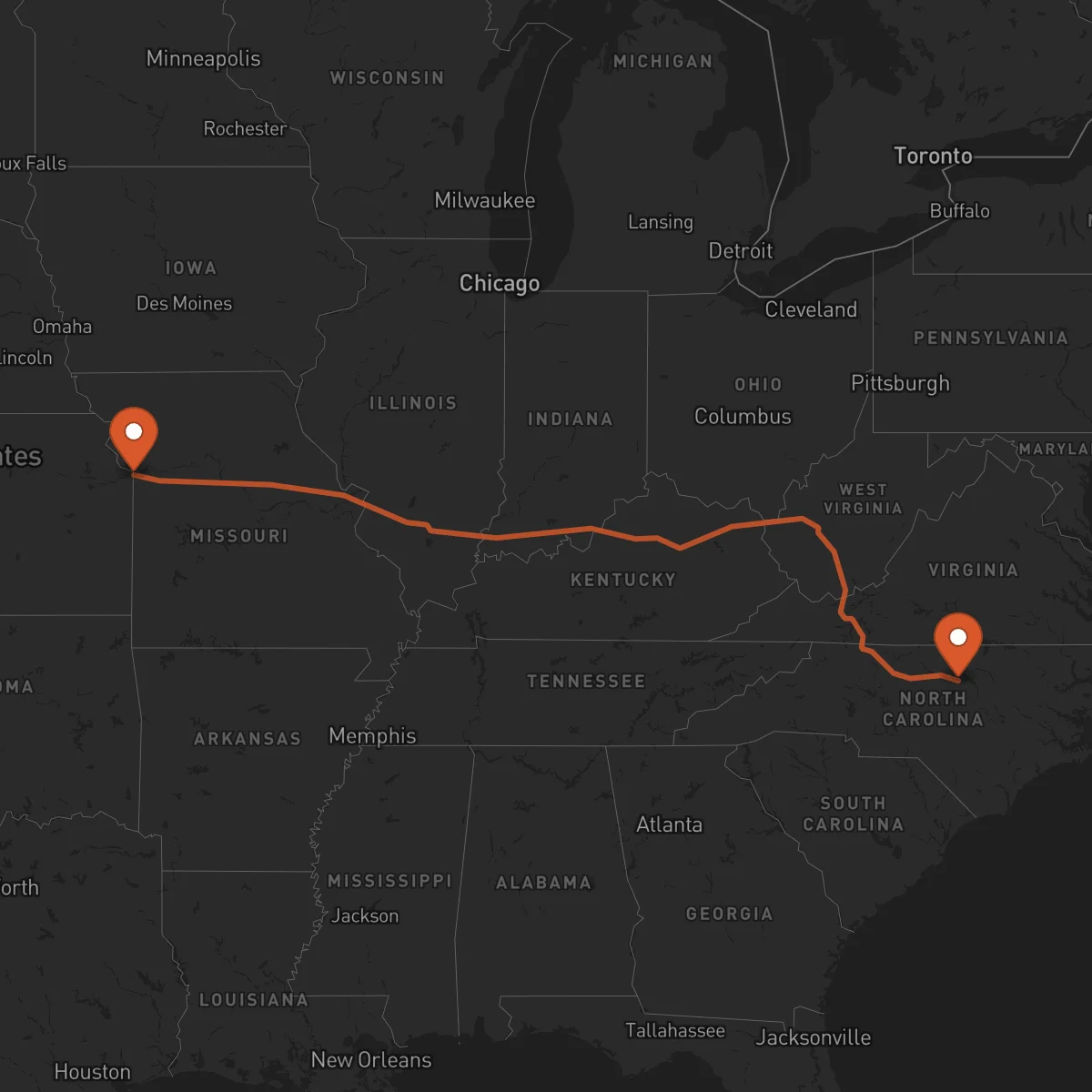
The logistics corridor between Durham, North Carolina, and Kansas City, Missouri, represents a vital freight transportation route connecting the Southeast to the Midwest of the United States. Spanning approximately 1,423 kilometers, this corridor facilitates the movement of goods between two dynamic economic regions, enabling businesses to optimize their supply chain operations across the country. The route traverses diverse landscapes and connects major industrial hubs, making it essential for companies seeking efficient domestic transportation solutions.
The economic significance of this corridor is underscored by the complementary industrial strengths of both regions. Durham, part of North Carolina's Research Triangle, is a center for technology, pharmaceuticals, and advanced manufacturing, while Kansas City serves as a major logistics hub with strengths in agriculture, automotive, and distribution. This complementary economic structure creates substantial freight movement in both directions, supporting a robust and balanced flow of goods along the route.
Control Terrestre facilitates seamless operations on this corridor through our network of certified transportation providers and specialized equipment. Our dedicated FTL services ensure that your cargo moves efficiently between Durham and Kansas City, whether you're shipping pharmaceuticals, automotive parts, or agricultural products. With our commitment to reliability and our strategic partnerships with carriers holding C-TPAT, FAST, and other key certifications, we provide the secure, timely transportation solutions that businesses need to maintain their competitive edge in today's market.
Services for this Route
Available services for the corridor Durham - Kansas City
 Origin
Durham
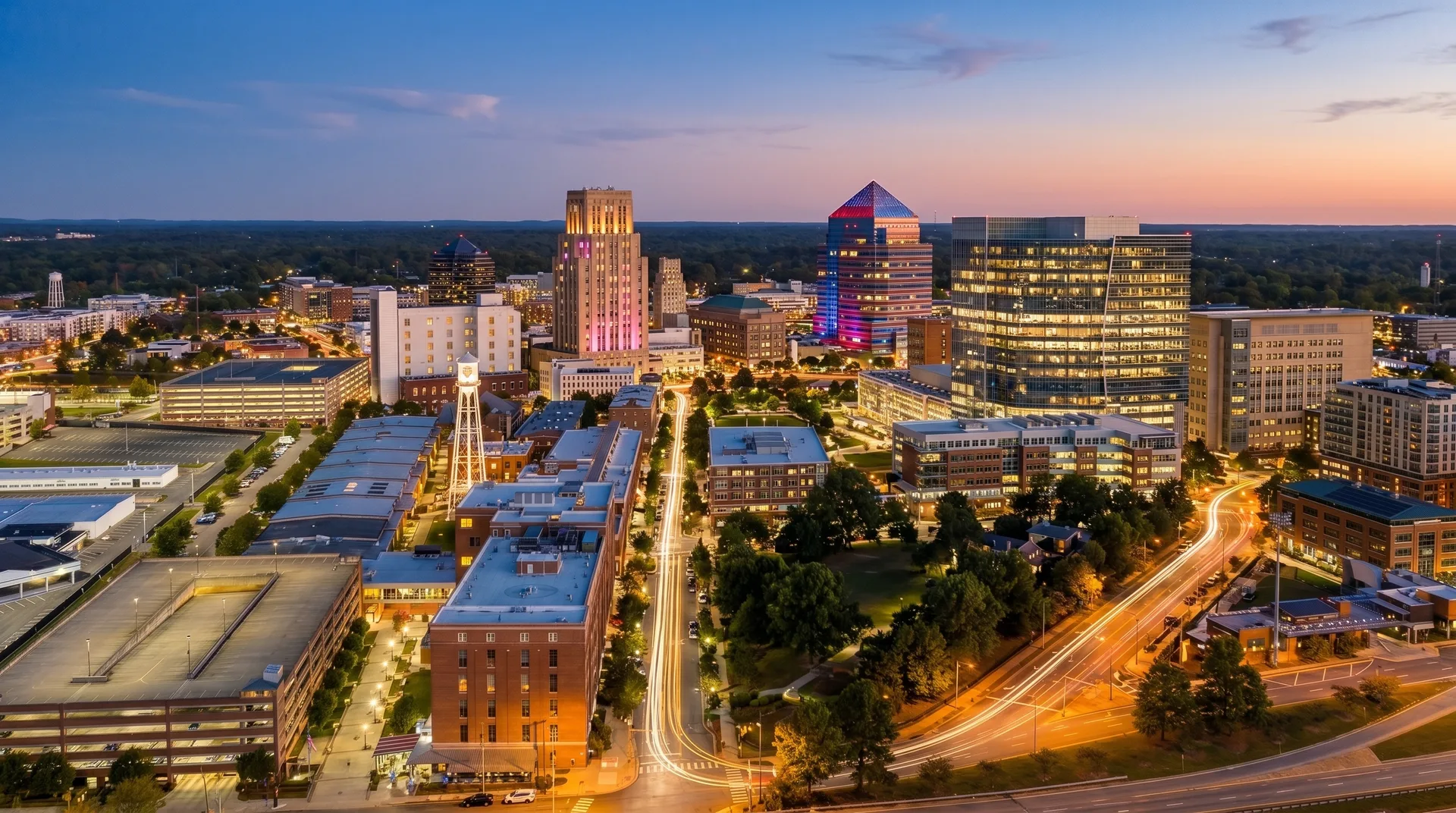
Durham, North Carolina, strategically positioned in the heart of the Research Triangle, serves as a crucial logistics hub for the Southeast United States. The city's location provides excellent access to major transportation networks, including Interstates 85 and 40, facilitating efficient connections to both coastal ports and inland destinations. Durham's proximity to Raleigh-Durham International Airport and the Port of Virginia enhances its multimodal transportation capabilities, making it an ideal origin point for freight shipments heading west.
The region's economy is driven by technology, healthcare, and education, with major employers including IBM, GlaxoSmithKline, and Duke University. The presence of numerous research facilities and pharmaceutical companies creates consistent demand for specialized freight services, particularly for temperature-controlled and high-value shipments. Durham's industrial parks and distribution centers are equipped with modern warehousing facilities, supporting the efficient handling and preparation of goods for long-haul transportation.
 Destination
Kansas City
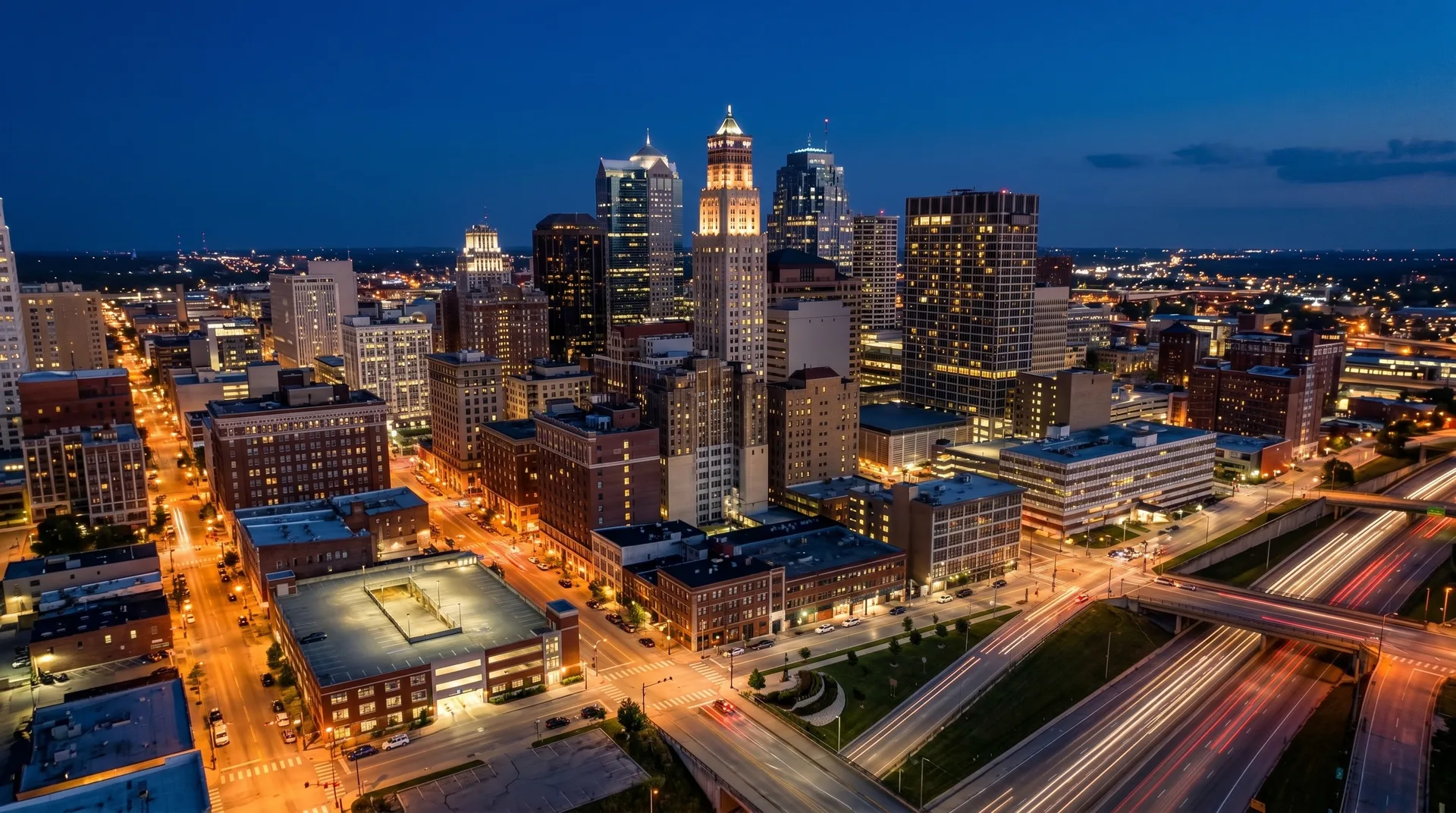
Kansas City, Missouri, stands as a premier logistics hub in the Midwest, offering unparalleled advantages for freight distribution. The city's central location provides access to a vast network of highways, including I-70, I-35, and I-29, creating efficient connections to major markets across the United States. Kansas City International Airport and the region's extensive rail infrastructure complement the highway system, establishing the city as a true intermodal transportation center.
The economic landscape of Kansas City is diverse, with strong presences in agriculture, automotive manufacturing, and distribution. The city is home to the second-largest rail classification yard in the country and numerous corporate headquarters, creating a constant flow of freight in and out of the region. Kansas City's extensive warehouse and distribution center network, combined with its favorable business climate, makes it an ideal destination for companies seeking to establish or expand their distribution operations in the central United States.










