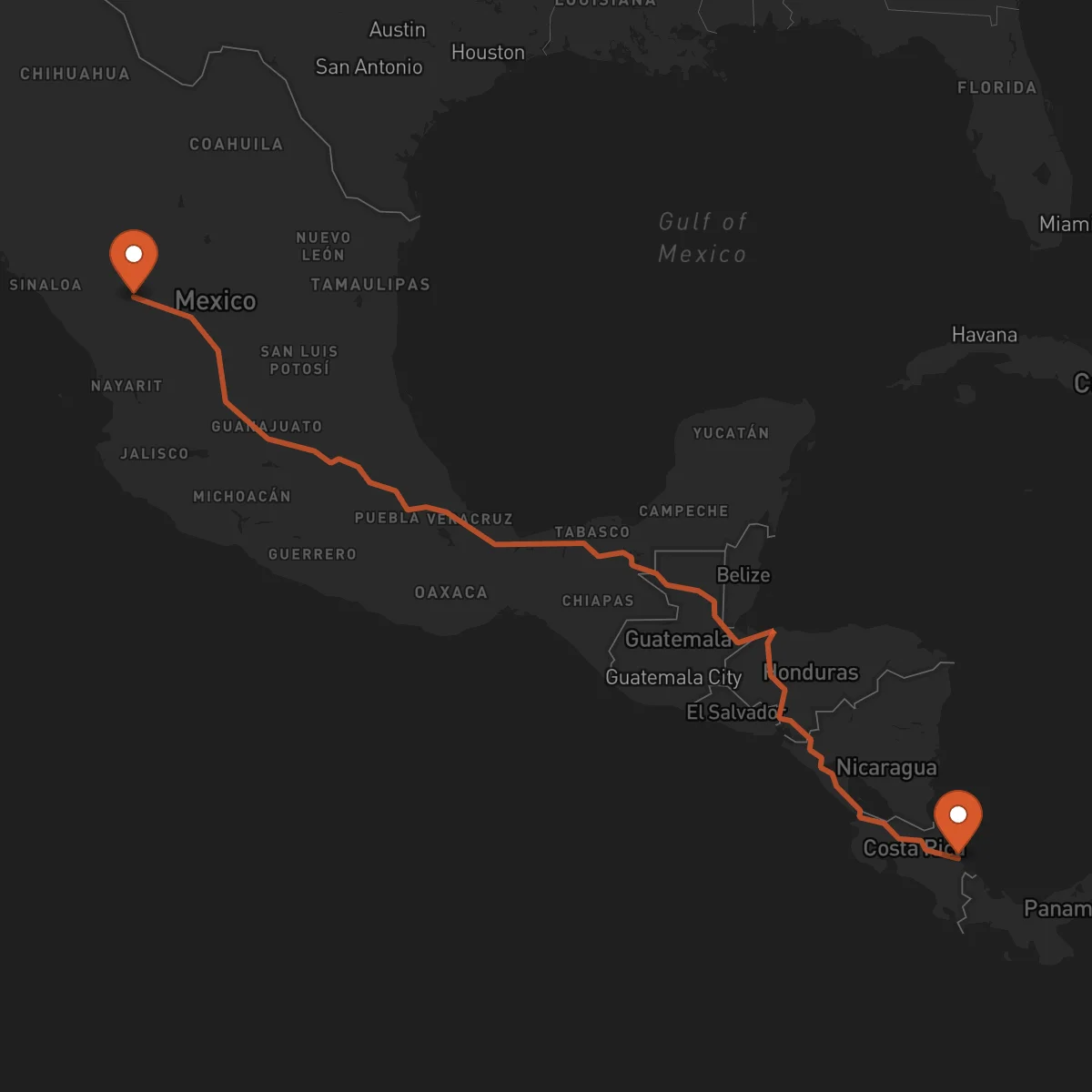
Durango to Limón
Limón → DurangoFTL freight transportation service between Durango and Limón. Reliable logistics solutions for your business.
Route Description
Everything you need to know about the corridor Durango - Limón
The Durango, México to Limón, Costa Rica corridor represents a vital north-south logistics artery connecting the industrial heartland of northern Mexico with the primary Caribbean port of Costa Rica. This strategic cross-border route facilitates the movement of goods across multiple national boundaries, serving as a critical link for supply chains spanning North and Central America. Its importance lies in enabling efficient trade between Mexico's manufacturing and mining sectors and Central America's export-driven agricultural and industrial markets, while also providing a gateway to Caribbean and Atlantic shipping lanes.
Economically, the corridor bridges distinct but complementary regions. Durango is a major hub for mining (particularly silver and gold), forestry, and emerging manufacturing, producing goods that require efficient export pathways. Limón is Costa Rica's principal port for containerized cargo, handling the nation's exports of bananas, pineapples, coffee, and other agricultural products, alongside imports of manufactured goods and raw materials. Key industries utilizing this corridor include mining equipment and materials suppliers, agricultural exporters and importers, furniture and wood product manufacturers, and general industrial suppliers seeking to optimize their regional distribution networks.
The primary transportation infrastructure relies on Mexico's federal highway network, notably the toll road (autopista) system connecting Durango to the southern border. From there, the route traverses the highway systems of Guatemala, Honduras, Nicaragua, and Costa Rica. Critical border crossings include the Mexico-Guatemala frontier (e.g., Ciudad Hidalgo/El Carmen) and subsequent Central American customs points. Navigating these crossings requires expertise in diverse customs regulations, documentation (like the T1 document for intra-Central America transit), and compliance programs such as C-TPAT and FAST, which our provider network holds.
At Control Terrestre, we facilitate seamless operations on this complex corridor through our alliance of experienced carriers. We coordinate dedicated and expedited full truckload (FTL) services, managing the intricacies of multi-country transit, customs clearance support, and specialized cargo handling—including oversized and refrigerated loads. Our focus is on providing a single, reliable point of contact to manage your entire door-to-door shipment across this international corridor, leveraging our providers' certifications to ensure security, efficiency, and regulatory compliance throughout the journey.
Services for this Route
Available services for the corridor Durango - Limón
 Origin
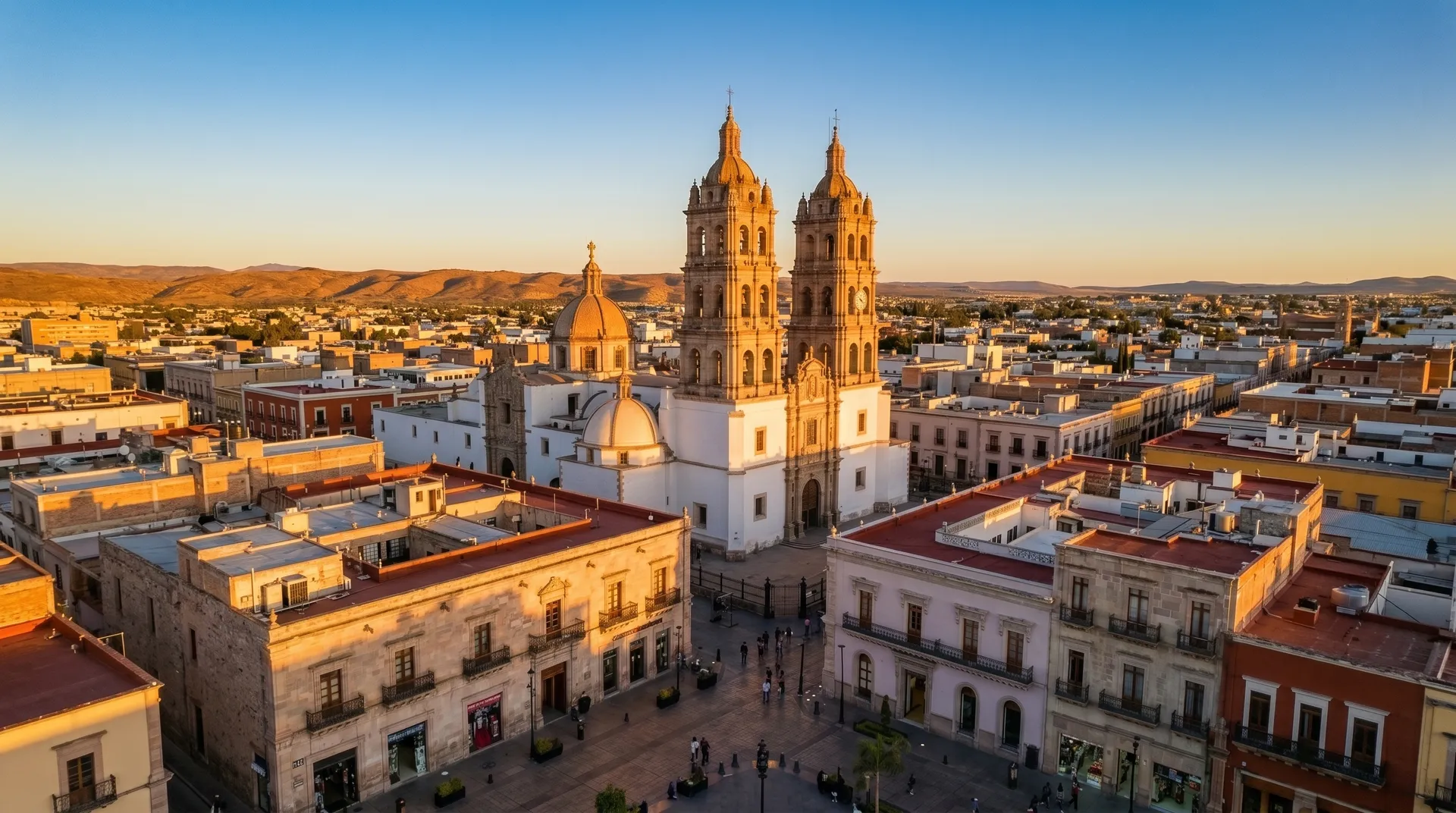
Durango, the capital of the state of Durango, México, is a strategically located inland logistics hub situated in the northern region of the country. Its position provides direct access to major industrial centers in northern Mexico, such as Monterrey and Chihuahua, while serving as a gateway to the Pacific coast via connected highway networks. The city's economy is historically anchored by silver mining, which remains a significant sector, alongside robust forestry, timber processing, and a growing manufacturing base that includes automotive parts and furniture production. This industrial diversity generates consistent demand for outbound freight transportation of raw materials, intermediate goods, and finished products.
The available transportation infrastructure is well-developed for land-based freight. Durango is a key node on Mexico's federal highway system, with excellent connectivity via major toll roads (autopistas) that facilitate rapid movement south towards Mexico City and to the Pacific port of Manzanillo, as well as north to the U.S. border. The city hosts significant industrial parks and warehousing facilities, supporting logistics operations. For cross-border corridors like the one to Limón, Durango serves as a crucial consolidation and dispatch point, leveraging its central location within Mexico's industrial corridor to efficiently gather cargo for the long southbound journey into Central America.
 Destination
Limón
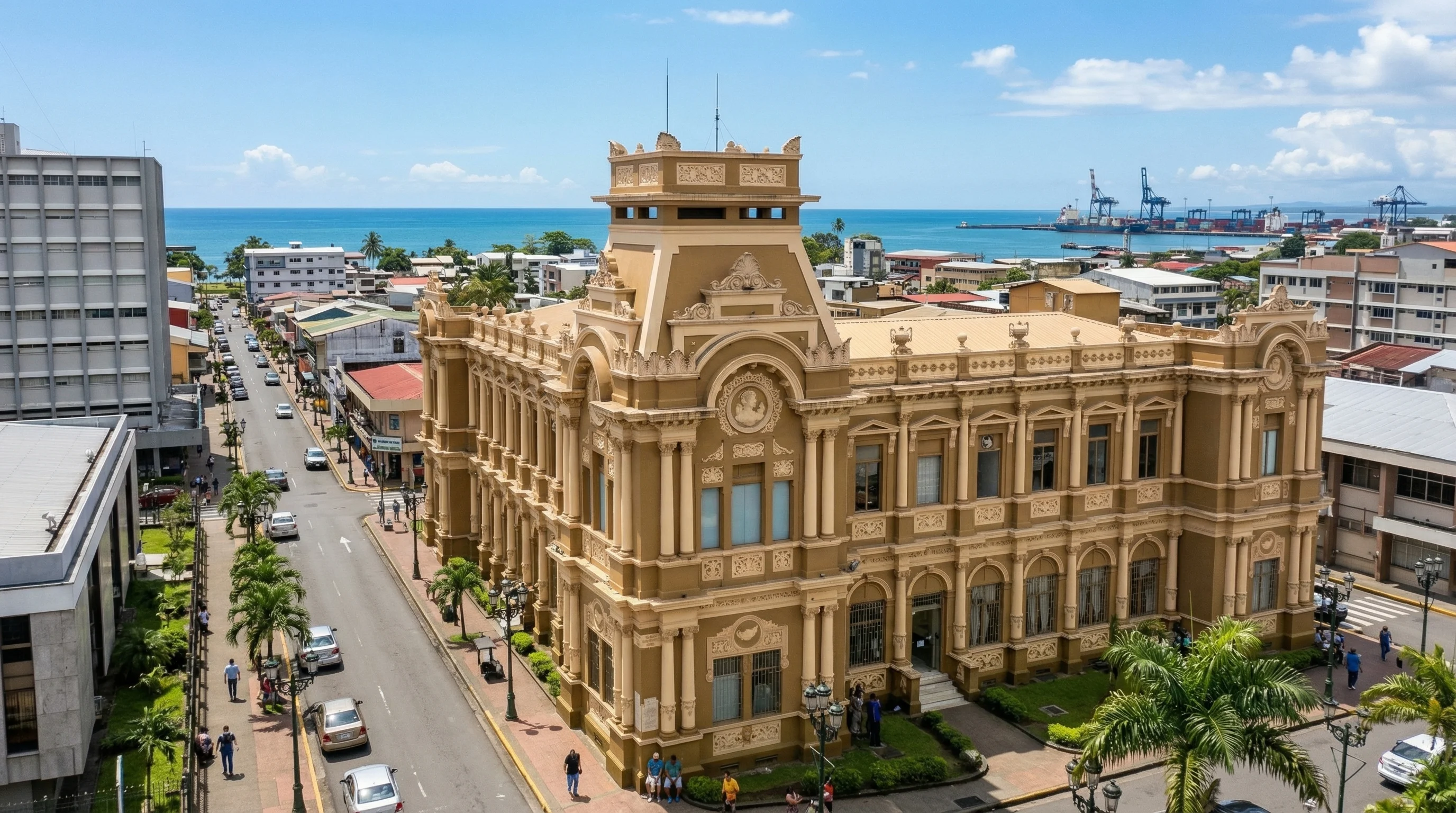
Limón, the capital of the Limón province on Costa Rica's Caribbean coast, is a strategically critical logistics destination as the nation's primary seaport for containerized cargo. Its location provides direct maritime access to the Atlantic Ocean and the Caribbean Sea, making it the essential gateway for Costa Rica's international trade. The port of Limón (and the adjacent Moín container terminal) handles the vast majority of the country's imports and exports, underpinning Costa Rica's economy. The surrounding region is the heart of the nation's agricultural export industry, with vast banana and pineapple plantations, as well as significant production of coffee, cocoa, and tropical fruits, all requiring efficient port access.
The local transportation infrastructure is tailored to support this port-centric economy. Limón is the terminus of Costa Rica's primary highway artery, Route 32, which connects the port to the Central Valley and the capital, San José. This highway is a critical freight corridor for moving export containers from inland production zones to the port and distributing imported goods nationwide. While the port itself is the main infrastructure asset, the city also contains warehousing and logistics facilities that support pre-shipment and distribution activities. For international freight forwarders, Limón represents the final Caribbean terminus where cargo from North America is discharged for local consumption or transshipped, and where Costa Rican exports originate for the northbound journey.










