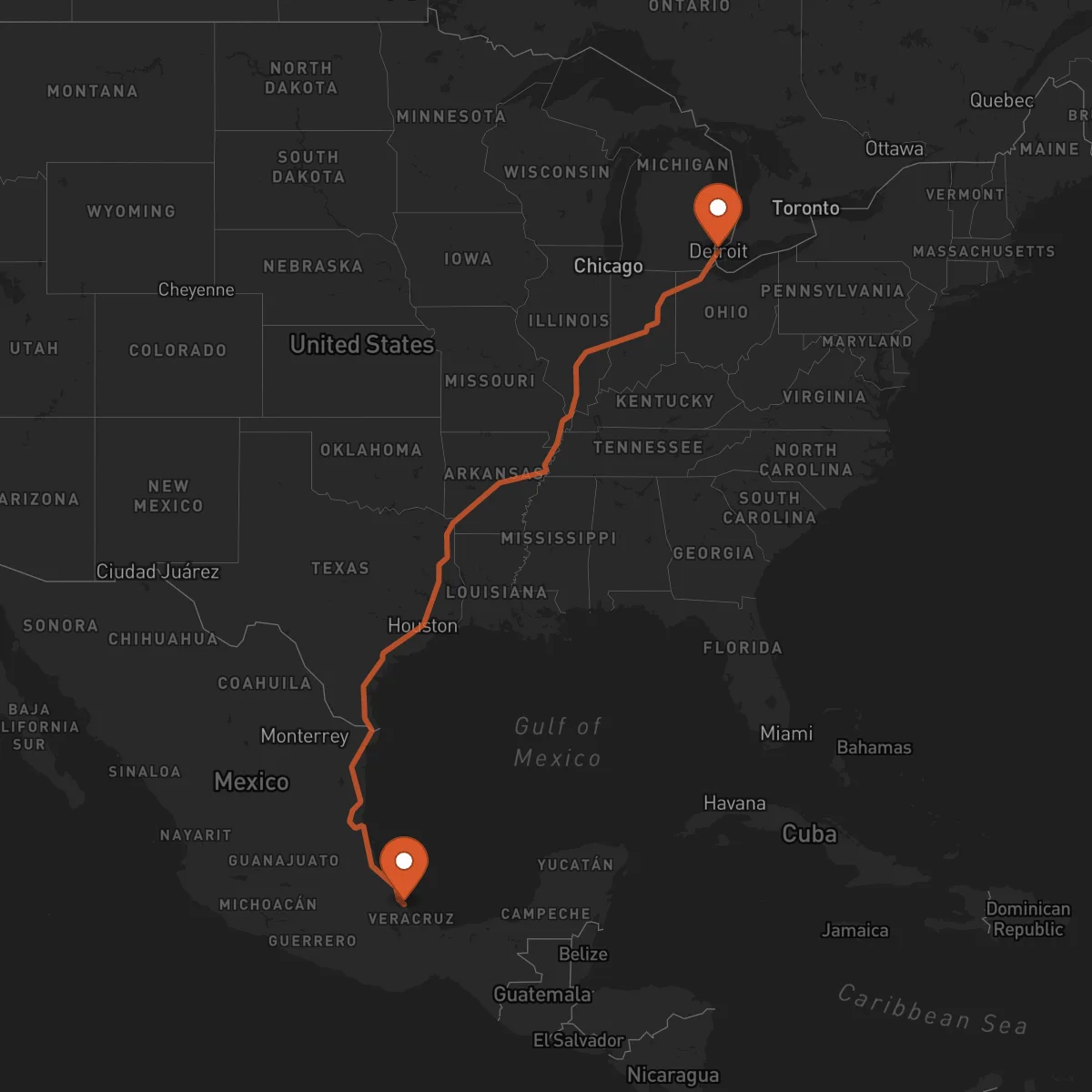
Detroit to Veracruz
Veracruz → DetroitFTL freight transportation service between Detroit and Veracruz. Reliable logistics solutions for your business.
Route Description
Everything you need to know about the corridor Detroit - Veracruz
The logistics corridor between Detroit, Michigan, and Veracruz, Veracruz, represents a vital trade route connecting the industrial heartland of the United States with one of Mexico's most important ports on the Gulf of Mexico. This 2,855-kilometer cross-border route facilitates the movement of goods between the automotive manufacturing capital of North America and a strategic maritime gateway for international trade. The corridor serves as a crucial link in the North American supply chain, enabling efficient transportation of automotive parts, industrial equipment, and consumer goods.
The economic significance of this corridor is underscored by the strong industrial presence in both regions. Detroit, known as the Motor City, is home to major automotive manufacturers and their extensive supplier networks. Veracruz, meanwhile, hosts Mexico's largest port complex, handling millions of tons of cargo annually and serving as a critical entry point for imports and exports. The route supports industries including automotive, electronics, agriculture, and manufacturing, with a particular focus on just-in-time delivery requirements for automotive production.
Transportation along this corridor primarily utilizes Interstate highways in the United States, transitioning to Mexican Federal Highways upon crossing the border. The main border crossing points include Laredo and Nuevo Laredo, which offer extensive customs facilities and processing capabilities. Control Terrestre facilitates seamless operations on this corridor through our network of certified carriers, ensuring compliance with cross-border regulations and providing reliable FTL transportation services that connect these two strategic economic centers.
Services for this Route
Available services for the corridor Detroit - Veracruz
 Origin
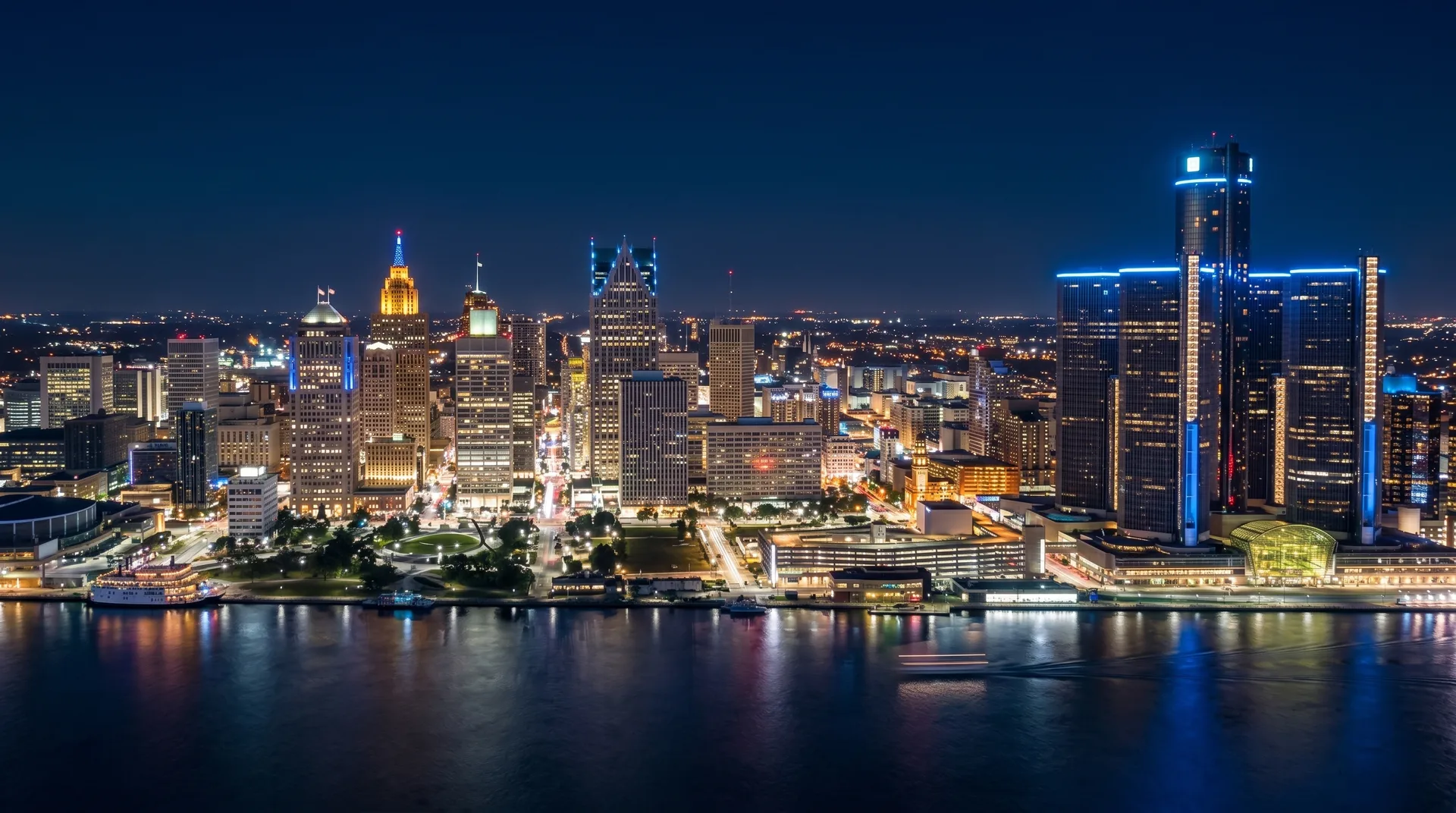
Detroit
Detroit, Michigan, stands as a strategic logistics hub in the Midwest, offering exceptional connectivity through its comprehensive transportation infrastructure. The city's location provides direct access to major interstate highways including I-75, I-94, and I-96, creating efficient connections to other industrial centers across the United States. Detroit's extensive rail network, operated by major carriers like CSX and Norfolk Southern, complements its highway system, while the Port of Detroit on the Detroit River facilitates water transportation for certain cargo types. The region's logistics infrastructure is further enhanced by multiple airports, including Detroit Metropolitan Airport, which handles significant air cargo volumes.
The economic foundation of Detroit is deeply rooted in the automotive industry, with General Motors, Ford, and Stellantis maintaining significant operations in the area. This industrial base has fostered a robust network of automotive suppliers, parts manufacturers, and related industries. Beyond automotive, Detroit's economy includes aerospace, defense, and advanced manufacturing sectors, all of which generate substantial freight transportation needs. The concentration of manufacturing facilities and distribution centers in the Detroit metropolitan area creates a high demand for reliable FTL transportation services to support just-in-time production schedules and inventory management requirements.
 Destination
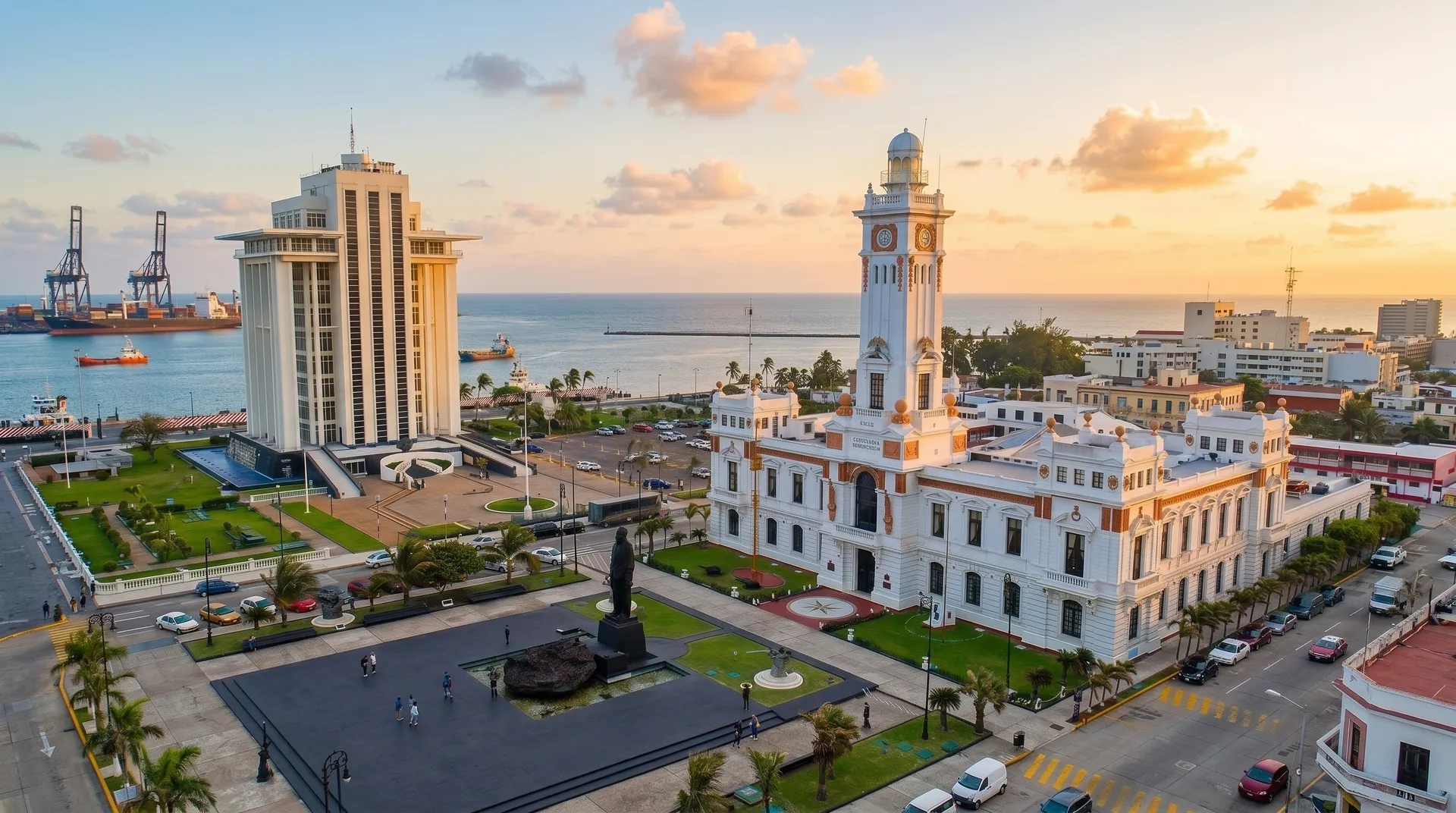
Veracruz, Veracruz, serves as Mexico's primary Gulf Coast port and a strategic gateway for international trade, offering exceptional logistical advantages for freight transportation. The Port of Veracruz complex, which includes the ports of Veracruz, Anton Lizardo, and Allende, provides deep-water facilities capable of handling container ships, bulk carriers, and specialized vessels. The port's connectivity is enhanced by its integration with Mexican Federal Highway 180 and the Ferrosur rail network, creating multiple transportation options for cargo movement. Veracruz International Airport further complements the multimodal transportation capabilities of the region.
The economic landscape of Veracruz is diverse, with the port serving as the cornerstone of international trade activities. The region's economy includes significant agricultural exports, particularly tropical fruits, coffee, and seafood, alongside growing industrial sectors. Veracruz has developed as a manufacturing hub for automotive parts, electronics, and consumer goods, with many companies establishing operations to take advantage of its port access and proximity to major markets. The presence of free trade zones and industrial parks in the surrounding areas has further strengthened Veracruz's position as a critical logistics center, generating substantial demand for efficient freight transportation services to support both import and export activities.










