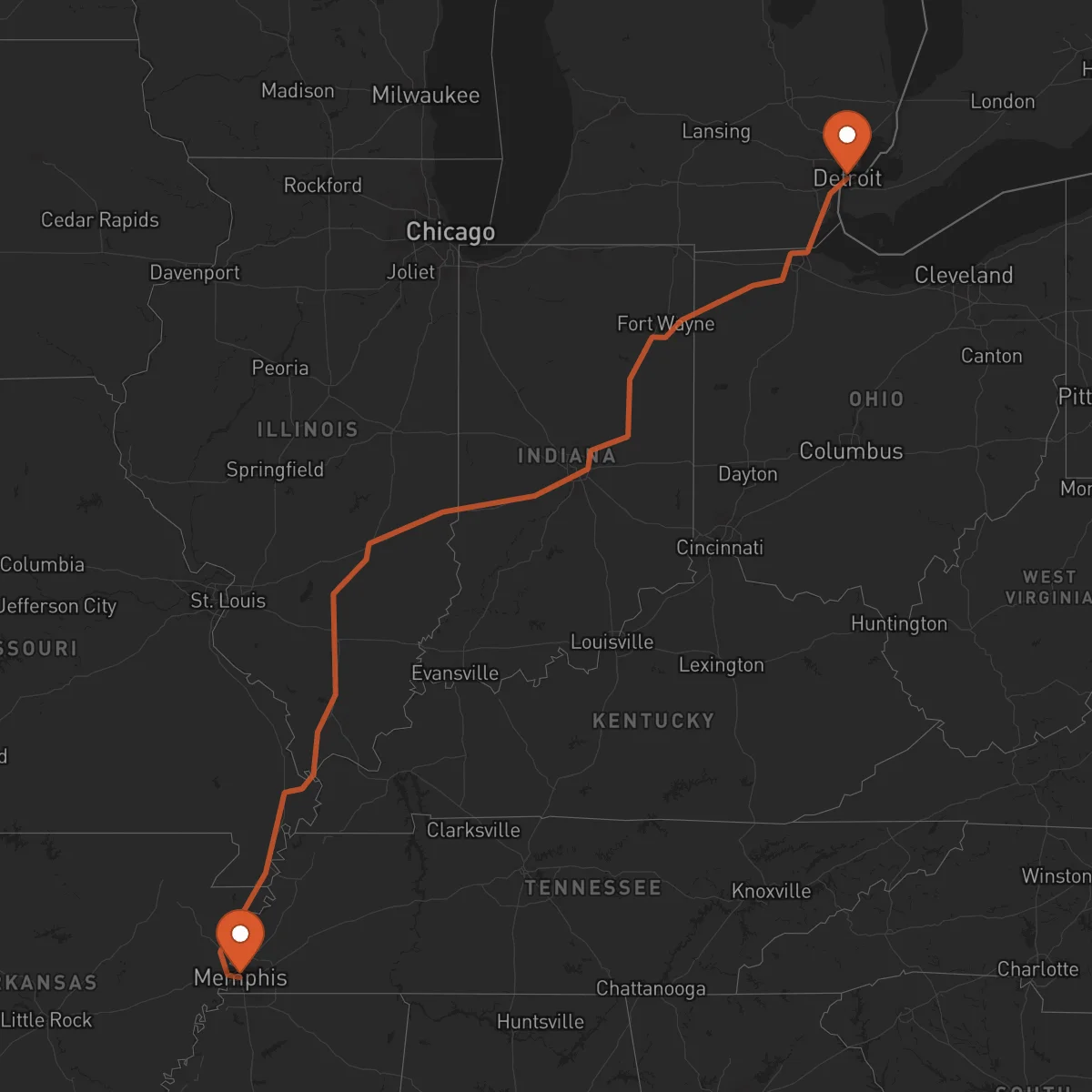
Detroit to Memphis
Memphis → DetroitFTL freight transportation service between Detroit and Memphis. Reliable logistics solutions for your business.
Route Description
Everything you need to know about the corridor Detroit - Memphis
The Detroit-Memphis corridor represents a vital logistics connection between the industrial Midwest and the southeastern United States. This 1003 km route links two major economic hubs, facilitating the flow of goods across a diverse industrial landscape. The corridor traverses key states including Michigan, Indiana, Kentucky, and Tennessee, connecting manufacturing centers with distribution networks and international trade gateways.
The route follows major interstate highways, primarily I-75 and I-40, providing efficient north-south connectivity. This strategic corridor serves as a critical link in the North American supply chain, enabling manufacturers, distributors, and retailers to move products efficiently between the Great Lakes region and the Southeast. The infrastructure supports high-volume freight movement with multiple lanes and modern transportation facilities along the entire route.
Control Terrestre specializes in optimizing freight transportation along this corridor, offering dedicated FTL services that ensure timely and secure delivery. Our extensive network of certified carriers and strategic partnerships enable us to provide reliable transportation solutions tailored to your specific cargo requirements. We understand the unique challenges of this route and leverage our expertise to maximize efficiency and minimize transit times for your shipments.
Services for this Route
Available services for the corridor Detroit - Memphis
 Origin
Detroit
Detroit stands as a major logistics hub in the Midwest, strategically positioned near the Canadian border and major manufacturing centers. The city's location provides excellent access to the Great Lakes region and serves as a gateway for international trade through the Ambassador Bridge and Detroit-Windsor Tunnel. Detroit's robust transportation infrastructure includes multiple interstate highways (I-75, I-94, I-96) and extensive rail networks, facilitating efficient cargo movement in all directions.
The region's economy is anchored by automotive manufacturing, aerospace, and advanced technology sectors. Major automotive companies and their suppliers create significant freight volumes, requiring reliable transportation solutions for both raw materials and finished products. Detroit's logistics ecosystem benefits from its proximity to major ports, international airports, and intermodal facilities, making it an ideal origin point for nationwide freight distribution.
 Destination
Memphis
Memphis serves as a crucial logistics center in the southeastern United States, strategically located at the crossroads of major freight corridors. The city's position along the Mississippi River and at the intersection of I-40 and I-55 creates a natural distribution hub. Memphis International Airport, home to the world's second-busiest cargo airport, and the city's extensive rail infrastructure provide multiple transportation options for freight movement.
The Memphis economy thrives on logistics, distribution, and manufacturing. The region hosts numerous distribution centers for major retailers and e-commerce companies, taking advantage of Memphis's central location for efficient nationwide delivery. The healthcare and biomedical industries also contribute significantly to freight volumes, requiring specialized transportation services for sensitive cargo. Memphis's affordable operating costs and business-friendly environment continue to attract companies seeking efficient logistics solutions.










