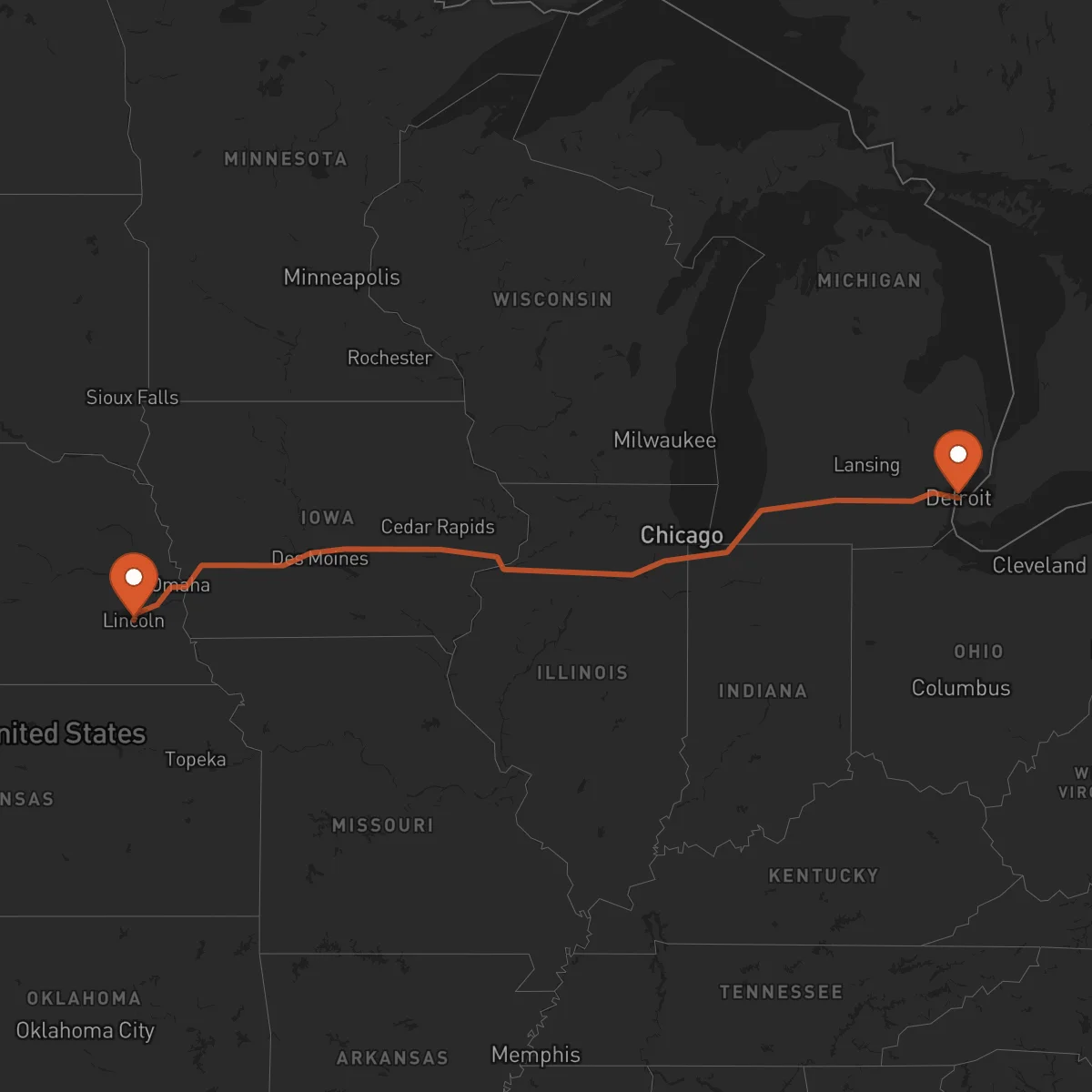
Detroit to Lincoln
Lincoln → DetroitFTL freight transportation service between Detroit and Lincoln. Reliable logistics solutions for your business.
Route Description
Everything you need to know about the corridor Detroit - Lincoln
The Detroit to Lincoln corridor represents a vital freight transportation link connecting the industrial powerhouse of Michigan with the agricultural and manufacturing heartland of Nebraska. This 1,148-kilometer route traverses the American Midwest, facilitating the movement of goods between two economically significant regions. The corridor serves as a crucial artery for businesses requiring reliable full truckload (FTL) transportation services across the central United States.
The route passes through key states including Michigan, Indiana, Illinois, and Iowa before reaching Nebraska, crossing diverse economic zones from the automotive manufacturing belt to the agricultural plains. This strategic pathway enables companies to optimize their supply chain operations by connecting the industrial Northeast with the central agricultural and manufacturing regions. The corridor benefits from well-established transportation infrastructure and a network of major highways that ensure efficient cargo movement.
Control Terrestre specializes in providing comprehensive FTL transportation solutions along this corridor, offering dedicated services tailored to the specific needs of businesses operating between Detroit and Lincoln. Our experienced transportation partners ensure that your freight moves securely and efficiently, whether you're shipping automotive parts, agricultural equipment, or manufactured goods. We understand the unique requirements of full truckload shipments and provide the reliability and expertise needed to keep your supply chain running smoothly.
Services for this Route
Available services for the corridor Detroit - Lincoln
 Origin
Detroit
Detroit, Michigan stands as a strategic logistics hub in the Great Lakes region, with its proximity to major manufacturing centers and international borders. The city's location on the Detroit River provides access to both road and water transportation networks, making it an ideal origin point for freight shipments. Detroit's extensive infrastructure includes multiple interstate highways, rail connections, and the Ambassador Bridge linking to Canada, facilitating seamless cross-border operations when needed.
The Detroit metropolitan area is renowned for its automotive manufacturing industry, hosting headquarters and production facilities for major car manufacturers. Beyond automotive, the region has diversified into aerospace, defense, healthcare, and technology sectors. This industrial diversity creates consistent demand for reliable freight transportation services, particularly for full truckload shipments of heavy machinery, components, and finished products. The city's logistics infrastructure includes numerous warehousing facilities, distribution centers, and a skilled transportation workforce.
 Destination
Lincoln
Lincoln, Nebraska serves as a strategic logistics center in the Midwest, positioned advantageously for distribution throughout the central United States. The city's location provides excellent access to major transportation routes, including Interstate 80, which runs coast-to-coast and connects Lincoln to both coastal markets and inland destinations. Lincoln's transportation infrastructure includes a regional airport, rail connections, and proximity to major trucking corridors, making it an ideal destination for freight operations.
The Lincoln economy is anchored by government services, education, healthcare, and manufacturing sectors. The city benefits from Nebraska's strong agricultural base while also hosting growing technology and insurance industries. This economic diversity creates steady demand for freight transportation services, particularly for shipments of agricultural equipment, manufactured goods, and industrial supplies. Lincoln's central location makes it an effective distribution point for companies serving the Midwest region, with its infrastructure supporting efficient last-mile delivery and regional distribution operations.










