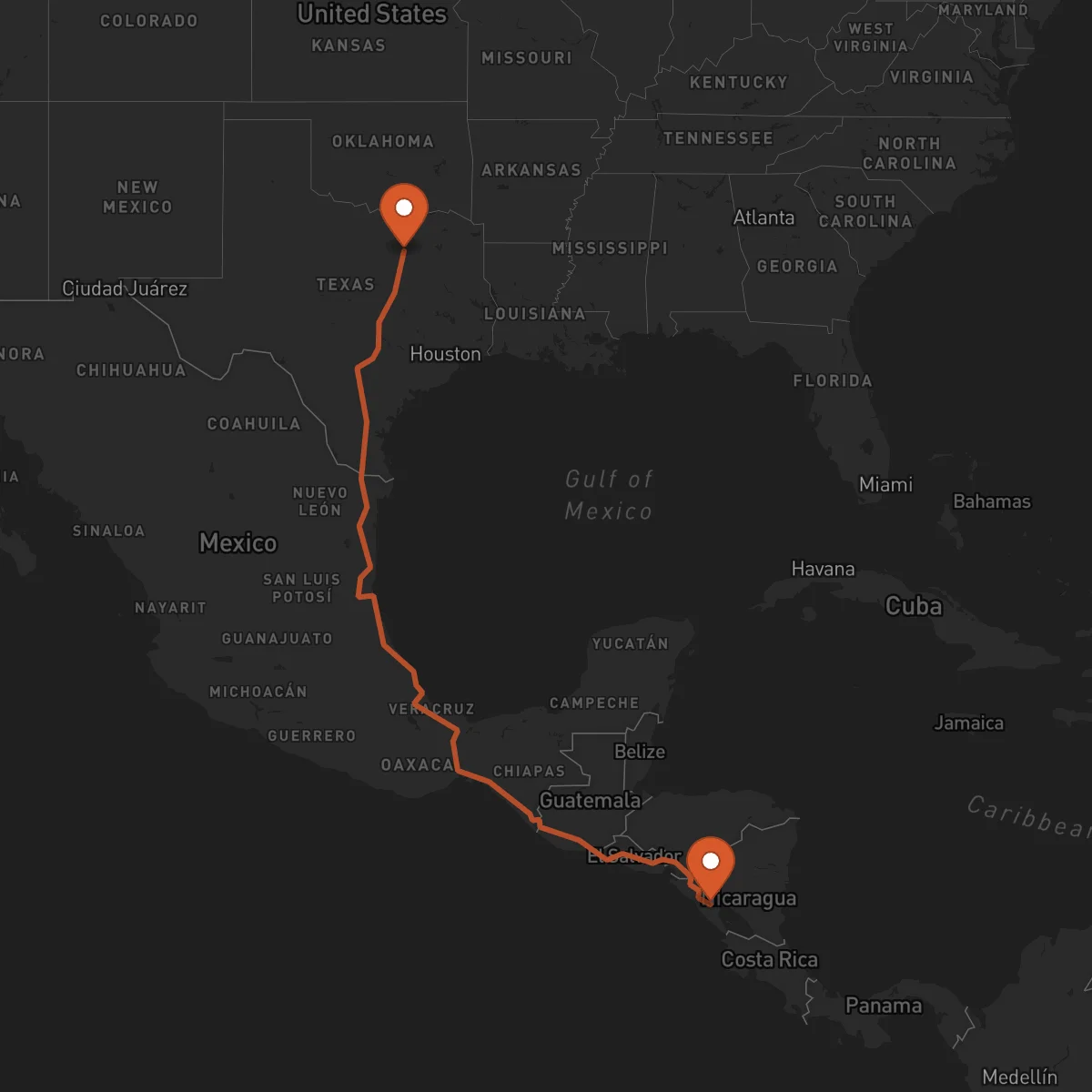
Dallas to Managua
Managua → DallasFTL freight transportation service between Dallas and Managua. Reliable logistics solutions for your business.
Route Description
Everything you need to know about the corridor Dallas - Managua
The Dallas-Managua corridor represents a vital logistics connection between the United States and Nicaragua, spanning approximately 2,537 kilometers through diverse terrain and crossing multiple international borders. This route serves as a critical artery for North-South trade, facilitating the movement of goods between two dynamic economic regions. The corridor traverses key commercial hubs and industrial zones, connecting the manufacturing powerhouse of Texas with Central America's growing markets.
The economic significance of this corridor is underscored by the complementary industrial strengths of both regions. Dallas serves as a major distribution center for technology, automotive, and consumer goods, while Managua functions as a strategic gateway for Central American distribution networks. Key industries utilizing this route include electronics manufacturing, agricultural products, automotive parts, and consumer packaged goods. The corridor also supports the growing e-commerce sector, enabling efficient cross-border fulfillment.
Transportation infrastructure along this route includes major highways such as I-35, which provides direct connectivity from Dallas through key border crossings. The corridor benefits from established customs facilities and efficient processing systems at both US and Nicaraguan borders. Control Terrestre's expertise in cross-border operations ensures seamless movement through these checkpoints, with our C-TPAT-certified carriers providing expedited processing and reduced inspection times. Our comprehensive door-to-door FTL services optimize transit times and provide real-time visibility throughout the journey.
Services for this Route
Available services for the corridor Dallas - Managua
 Origin
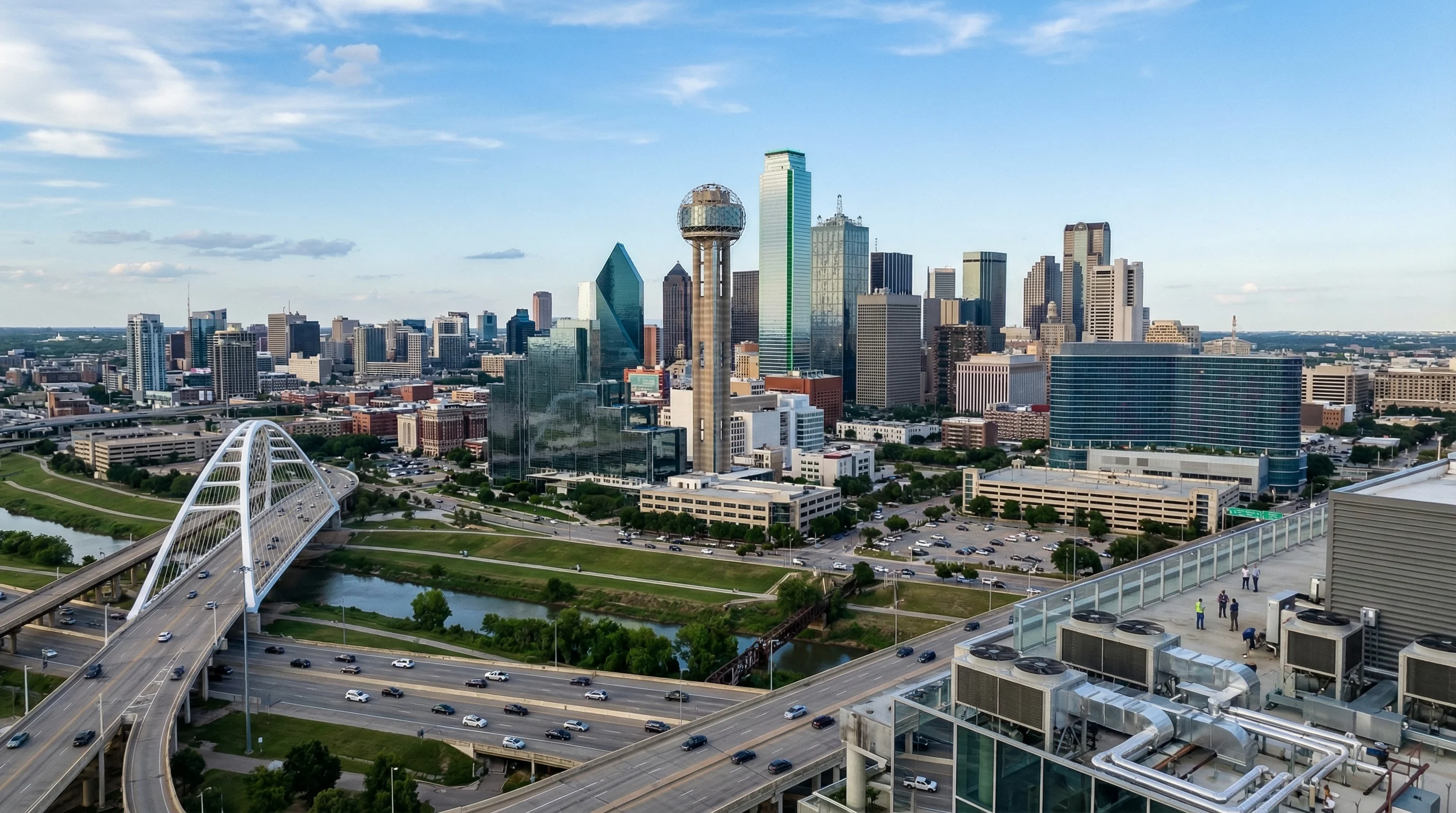
Dallas
Dallas stands as a premier logistics hub in the southern United States, strategically positioned at the intersection of major interstate highways and within proximity to key ports. The Dallas-Fort Worth metroplex hosts numerous distribution centers, warehouses, and manufacturing facilities, making it an ideal origin point for freight movements. The region's robust infrastructure includes multiple airports, rail terminals, and highway connections that facilitate efficient cargo consolidation and distribution. Dallas's economic strength in technology, telecommunications, and advanced manufacturing creates consistent freight volumes, while its central location provides optimal access to both domestic and international markets.
 Destination
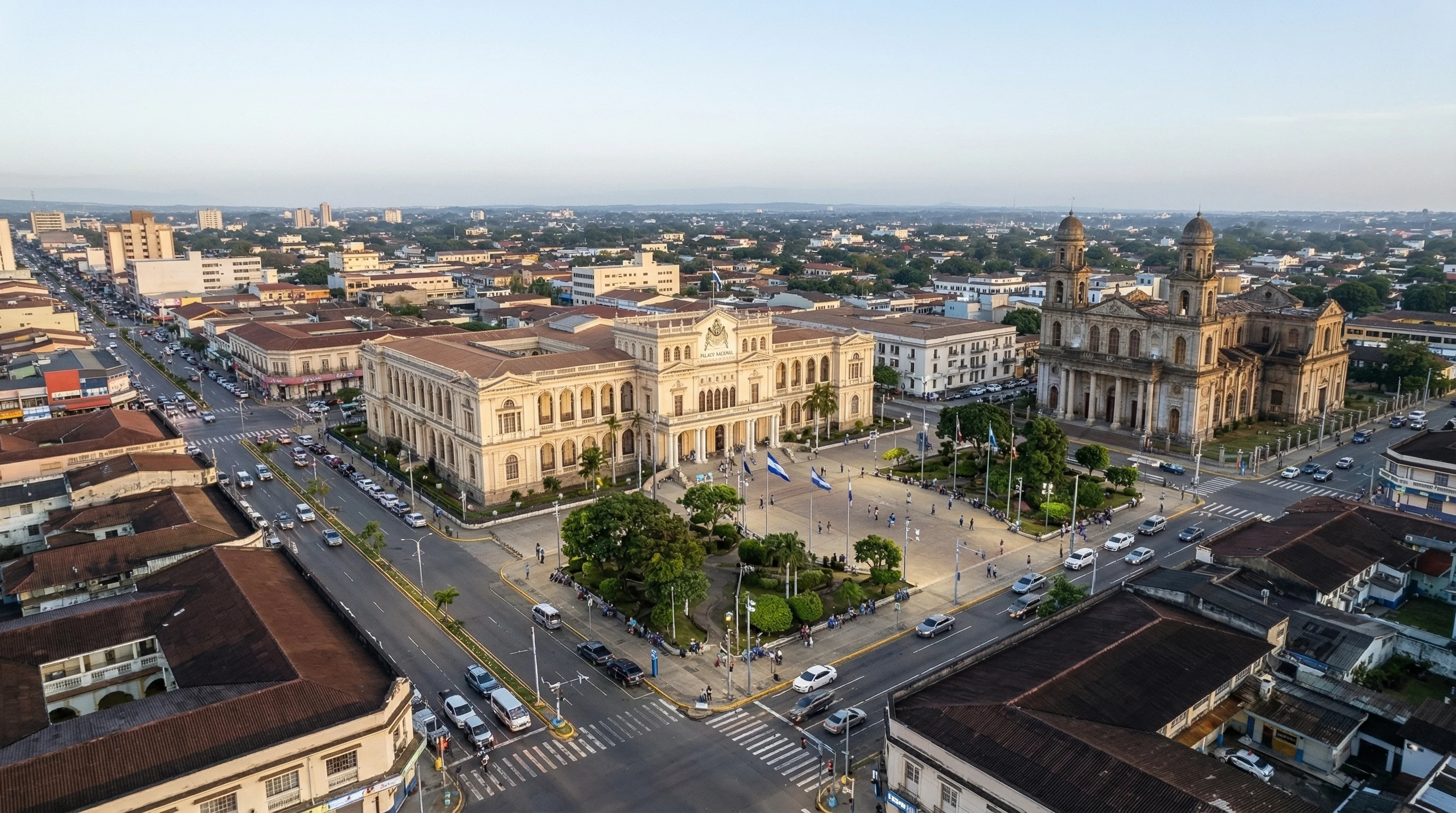
Managua serves as Nicaragua's primary commercial center and logistics gateway, offering strategic access to Central American markets. The city's infrastructure includes the Augusto C. Sandino International Airport and the Puerto Salvador Allende on Lake Managua, complementing its road network. Managua's economic landscape encompasses manufacturing, agriculture, and services, with growing sectors in textiles, food processing, and light industry. The city's location provides connectivity to neighboring countries through the Pan-American Highway, making it an ideal consolidation point for regional distribution. Managua's developing industrial parks and free trade zones continue to attract international investment, driving consistent freight demand.










