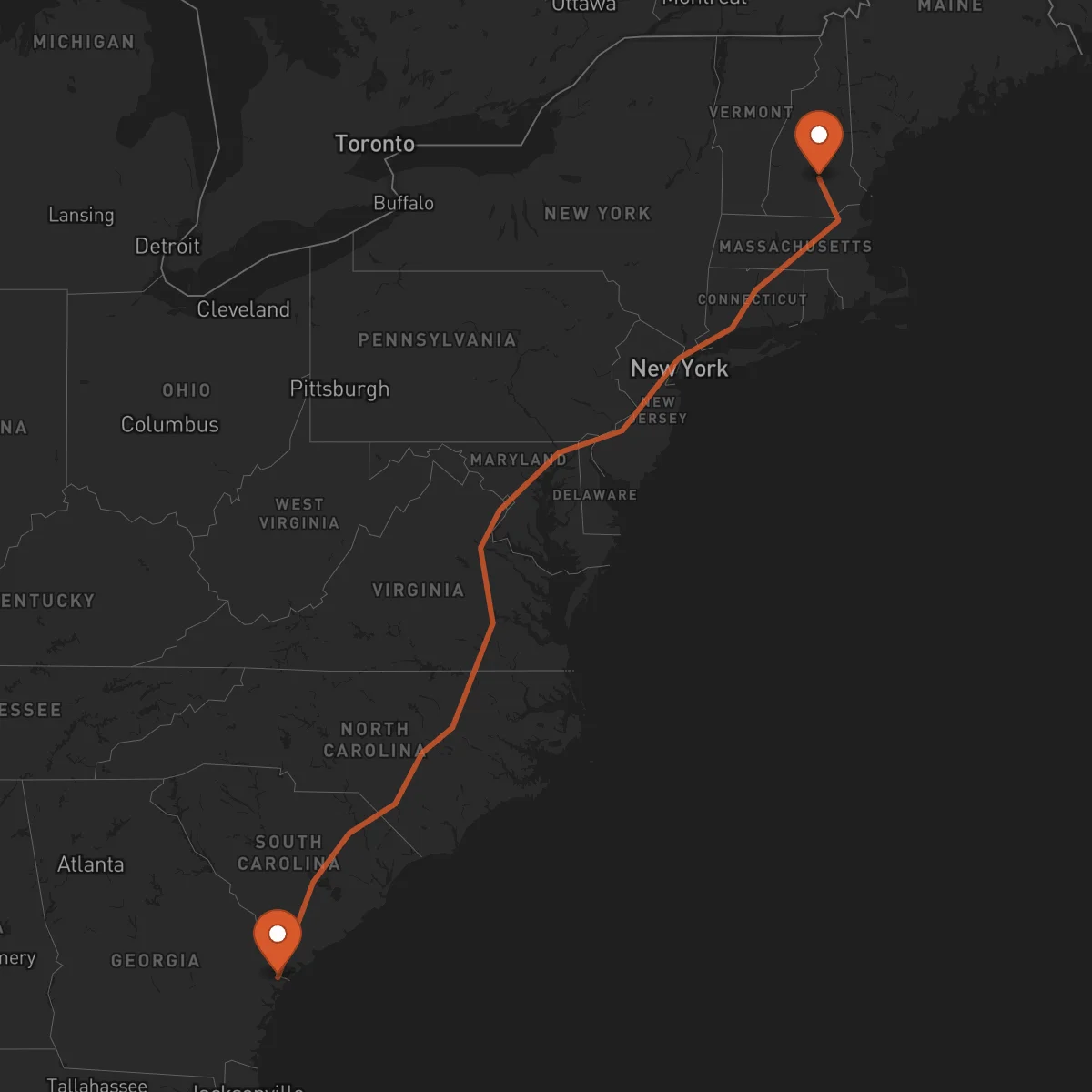
Concord to Savannah
Savannah → ConcordFTL freight transportation service between Concord and Savannah. Reliable logistics solutions for your business.
Route Description
Everything you need to know about the corridor Concord - Savannah
The logistics corridor between Concord, New Hampshire and Savannah, Georgia represents a vital freight transportation route connecting the Northeast to the Southeast United States. This 1,494-kilometer corridor traverses diverse terrain and crosses multiple states, serving as a crucial link for businesses moving goods between these economically significant regions. The route facilitates the movement of industrial products, consumer goods, and raw materials, supporting both regional and national supply chains.
The corridor passes through key economic hubs including Boston, New York, Philadelphia, and Charlotte, connecting major industrial centers with Savannah's strategic port facilities. Concord's proximity to Boston's logistics network and Savannah's status as a major Atlantic port create complementary strengths that enhance the corridor's importance. The region's manufacturing, technology, and agricultural sectors rely heavily on efficient freight movement along this route to maintain their competitive advantage in national and international markets.
Control Terrestre provides comprehensive full truckload (FTL) services along this corridor, leveraging our network of certified transportation providers. Our specialized equipment options, including dry vans, refrigerated units, and flatbeds, ensure we can handle diverse cargo types from electronics to perishable goods. We coordinate with our partners to optimize routes, manage capacity, and provide real-time tracking throughout the journey. Our expertise in cross-country transportation and commitment to reliability makes us the ideal partner for businesses requiring consistent, high-quality freight services between Concord and Savannah.
Services for this Route
Available services for the corridor Concord - Savannah
 Origin
Concord
Concord, New Hampshire serves as a strategic logistics hub in the Northeast, benefiting from its location within the Boston metropolitan area's extensive transportation network. The city's economy is anchored by healthcare, government services, and manufacturing, with a growing presence in technology and renewable energy sectors. Concord's industrial base includes advanced manufacturing facilities, research institutions, and distribution centers that require reliable freight transportation to serve both regional and national markets.
The city boasts excellent transportation infrastructure, including direct access to Interstate 93, which connects to the broader New England highway system. Manchester-Boston Regional Airport provides air cargo options, while nearby ports in Boston offer maritime shipping capabilities. The region's well-maintained road network and proximity to major logistics centers in Massachusetts make Concord an ideal origin point for freight moving throughout the eastern United States.
 Destination
Savannah
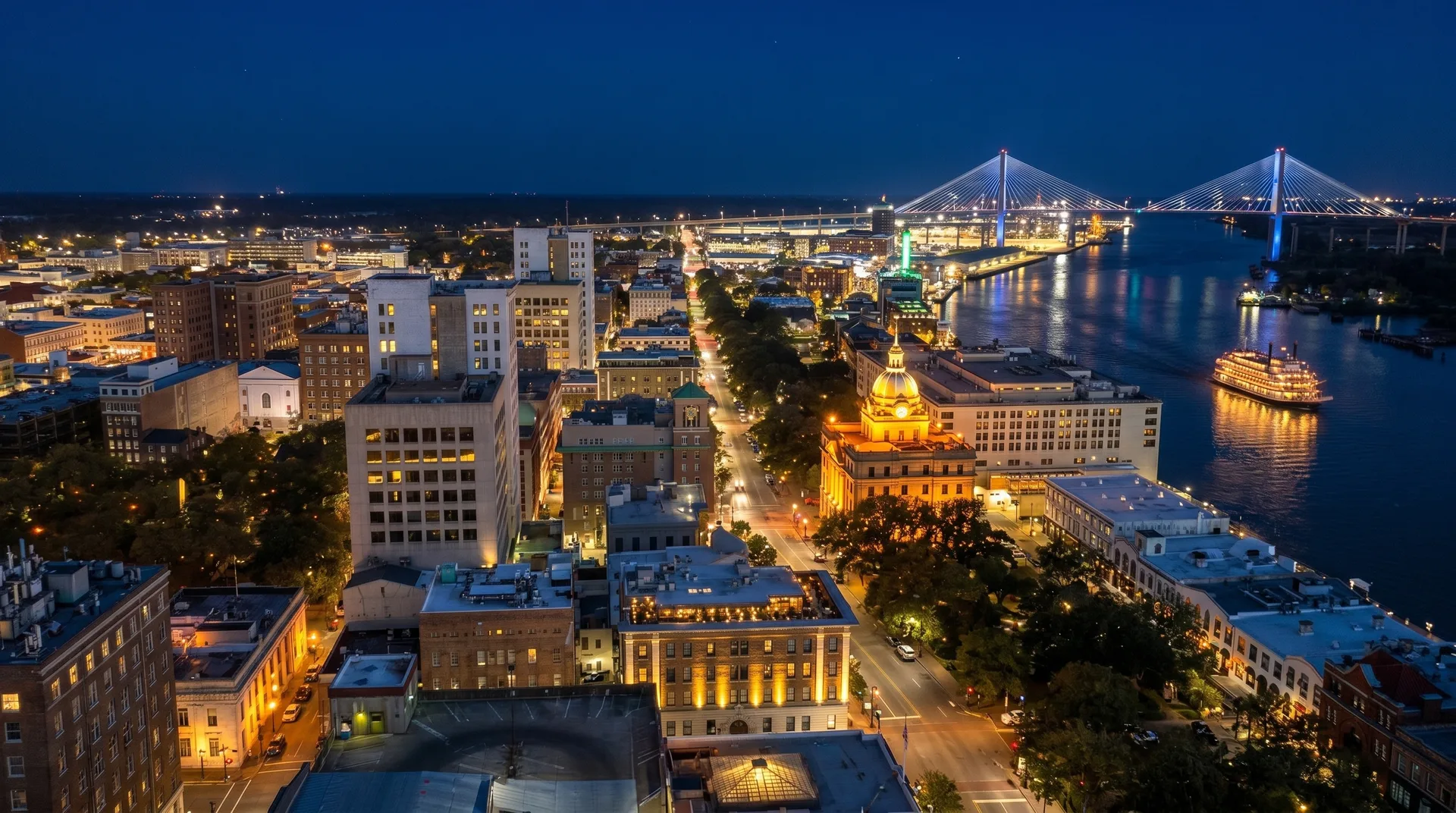
Savannah, Georgia stands as a premier logistics destination on the Atlantic coast, anchored by the Port of Savannah - the fastest-growing and second busiest container port in the United States. The city's strategic location provides direct access to major interstate highways including I-16, I-95, and I-75, creating seamless connections to markets throughout the Southeast and beyond. Savannah's logistics infrastructure includes the largest single-terminal container facility in the Western Hemisphere and extensive intermodal capabilities.
The local economy thrives on manufacturing, tourism, and logistics, with major industries including aerospace, automotive, and food processing. Savannah's Foreign Trade Zone and proximity to major consumer markets in the Southeast make it an ideal destination for distribution operations. The city's comprehensive transportation network, including the Savannah/Hilton Head International Airport and Class I rail service, provides multiple options for freight movement, while the port's deep-water capabilities accommodate the largest container vessels in operation.










