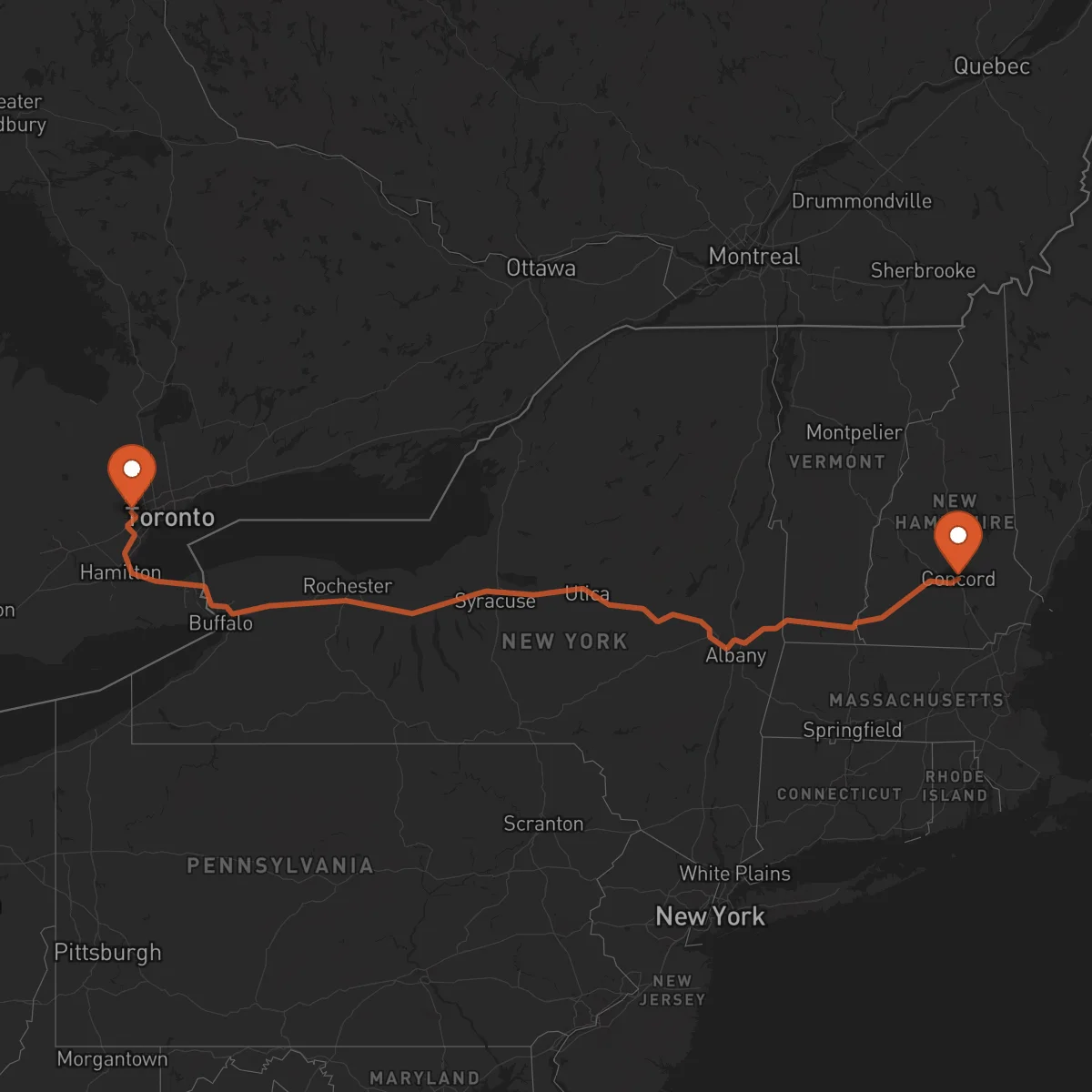
Concord to Brampton
Brampton → ConcordFTL freight transportation service between Concord and Brampton. Reliable logistics solutions for your business.
Route Description
Everything you need to know about the corridor Concord - Brampton
The Concord to Brampton corridor represents a vital cross-border freight route connecting New Hampshire with Ontario. This 666 km transportation link serves as a crucial artery for North American trade, facilitating the movement of goods between the northeastern United States and Canada's largest province. The corridor's strategic importance has grown significantly with increasing economic integration between the two countries and the implementation of trade agreements that have streamlined cross-border operations.
The economic relationship between these regions encompasses diverse industries including automotive manufacturing, advanced technology, healthcare products, and consumer goods. Concord's proximity to major New England markets combined with Brampton's position in Canada's Golden Horseshoe creates a complementary economic ecosystem. The automotive sector particularly benefits from this corridor, with supply chains requiring just-in-time delivery of components and finished vehicles between manufacturing facilities.
Transportation infrastructure along this route includes major highways such as I-93 and I-89 in the United States, transitioning to Ontario's 401 and 403 highways. The corridor primarily utilizes the Buffalo-Niagara Falls or Ogdensburg-Prescott border crossings, depending on specific routing and cargo requirements. Control Terrestre's expertise in cross-border operations ensures seamless customs clearance, compliance with both US and Canadian regulations, and efficient transit times for full truckload shipments between Concord and Brampton.
Services for this Route
Available services for the corridor Concord - Brampton
 Origin
Concord
Concord, New Hampshire serves as a strategic logistics hub in the northeastern United States, offering excellent connectivity to major markets throughout New England. The city's location provides direct access to Interstate 93, facilitating efficient transportation to Boston, Montreal, and other key destinations. Concord's logistics infrastructure includes modern warehousing facilities, distribution centers, and a supportive business environment that attracts companies requiring reliable freight transportation solutions.
The region's economy is diverse, with strong representation from healthcare, technology, advanced manufacturing, and education sectors. Several major employers in these industries create consistent freight demand, particularly for specialized equipment and time-sensitive deliveries. The city's proximity to Manchester-Boston Regional Airport and the Port of Portland enhances its multimodal transportation capabilities, though ground transportation remains the primary mode for regional distribution.
 Destination
Brampton, Ontario stands as one of Canada's fastest-growing cities and a major logistics center within the Greater Toronto Area. The city's strategic location in the heart of Canada's most populous region provides unparalleled access to over 8 million consumers within a few hours' drive. Brampton's extensive transportation infrastructure includes direct connections to Highway 401, the busiest highway in North America, and proximity to Toronto Pearson International Airport, Canada's largest air cargo facility.
The local economy is characterized by advanced manufacturing, particularly automotive and aerospace industries, along with significant presence in retail distribution, food processing, and technology sectors. Brampton hosts numerous warehousing and distribution centers that serve as key nodes in North American supply chains. The city's designation as a priority growth area has attracted substantial investment in logistics infrastructure, including modern intermodal facilities that support efficient freight movement throughout the corridor.










