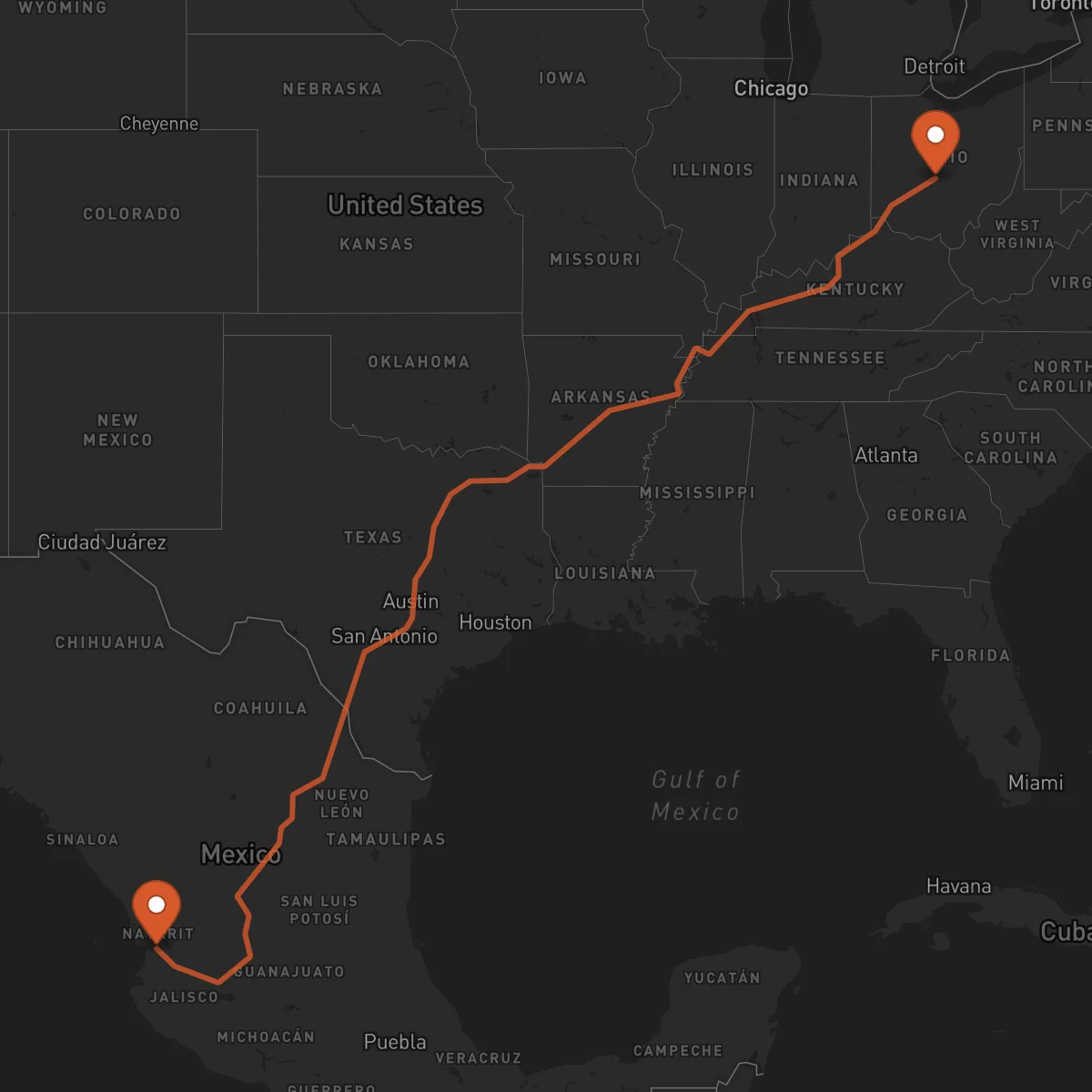
Columbus to Tepic
Tepic → ColumbusFTL freight transportation service between Columbus and Tepic. Reliable logistics solutions for your business.
Route Description
Everything you need to know about the corridor Columbus - Tepic
The Columbus to Tepic corridor represents a vital logistics link between the industrial Midwest of the United States and the emerging manufacturing hub of Western Mexico. This 2,915 km cross-border route connects Ohio's capital, a major distribution center, with Tepic, the capital of Nayarit, facilitating the movement of goods between two dynamic economic regions. The corridor traverses key industrial zones and agricultural areas, supporting trade in automotive parts, electronics, agricultural products, and consumer goods. Control Terrestre specializes in managing this complex cross-border operation, ensuring seamless freight movement through proper documentation, customs compliance, and temperature-controlled transportation when required.
Services for this Route
Available services for the corridor Columbus - Tepic
 Origin
Columbus
Columbus, Ohio serves as a strategic logistics hub in the American Midwest, featuring excellent connectivity through major highways including I-70 and I-71. The city hosts a diverse industrial base with strong presence in logistics, healthcare, education, and technology sectors. Columbus benefits from Rickenbacker International Airport and extensive rail connections, making it an ideal origin point for freight distribution. The region's manufacturing sector produces automotive components, machinery, and processed foods, while its central location provides access to major markets across the eastern United States.
 Destination
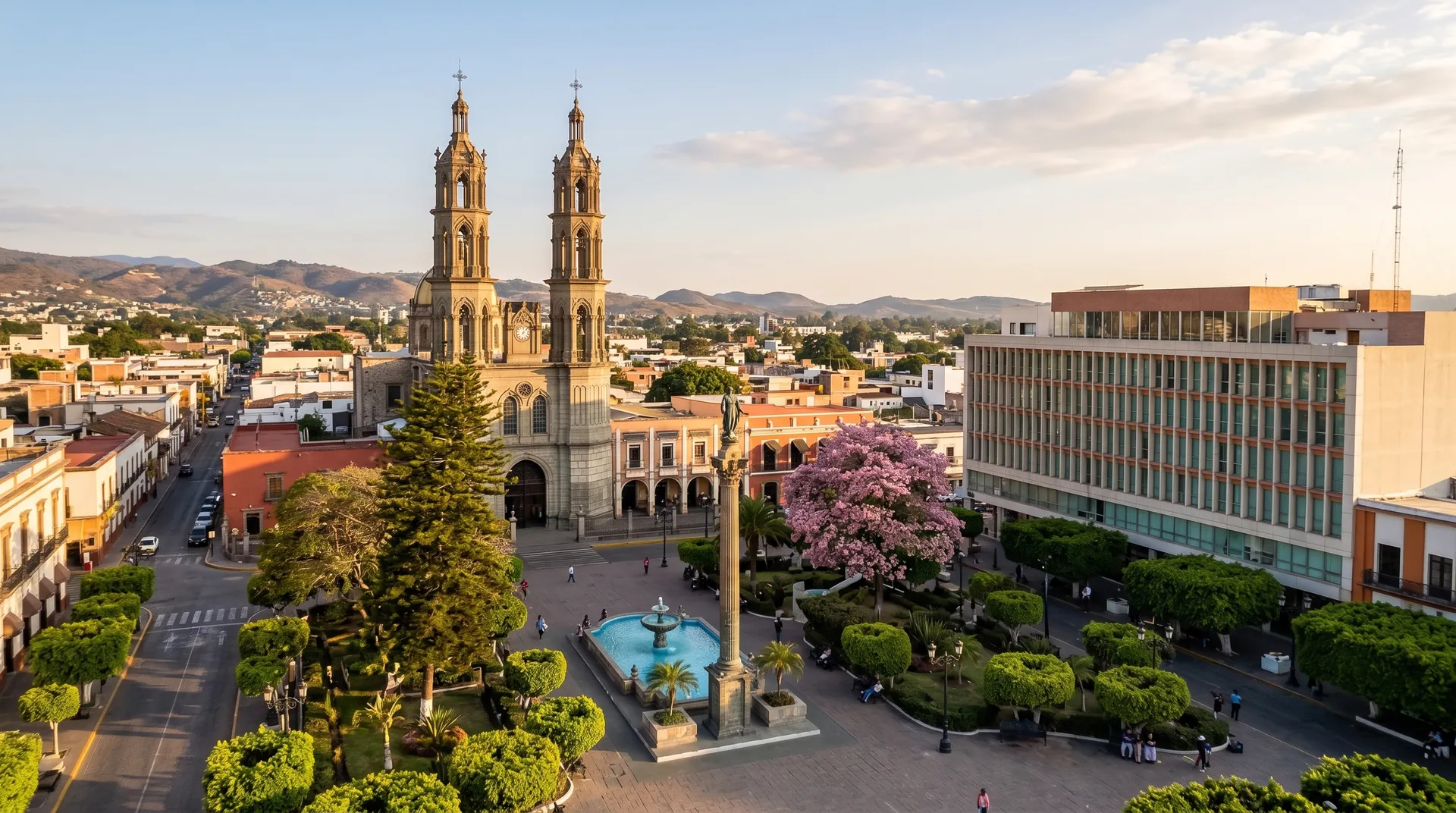
Tepic, Nayarit represents a growing logistics center in Western Mexico, strategically positioned near the Pacific coast and major industrial areas. The city serves as an important commercial hub for the state of Nayarit, with emerging manufacturing and agricultural sectors. Tepic's location provides access to key markets in Guadalajara, Sinaloa, and the Pacific coast, while its developing infrastructure includes modern highways connecting to the Mexican interior. The region specializes in agricultural products, electronics assembly, and light manufacturing, making it an increasingly important destination for cross-border freight.










