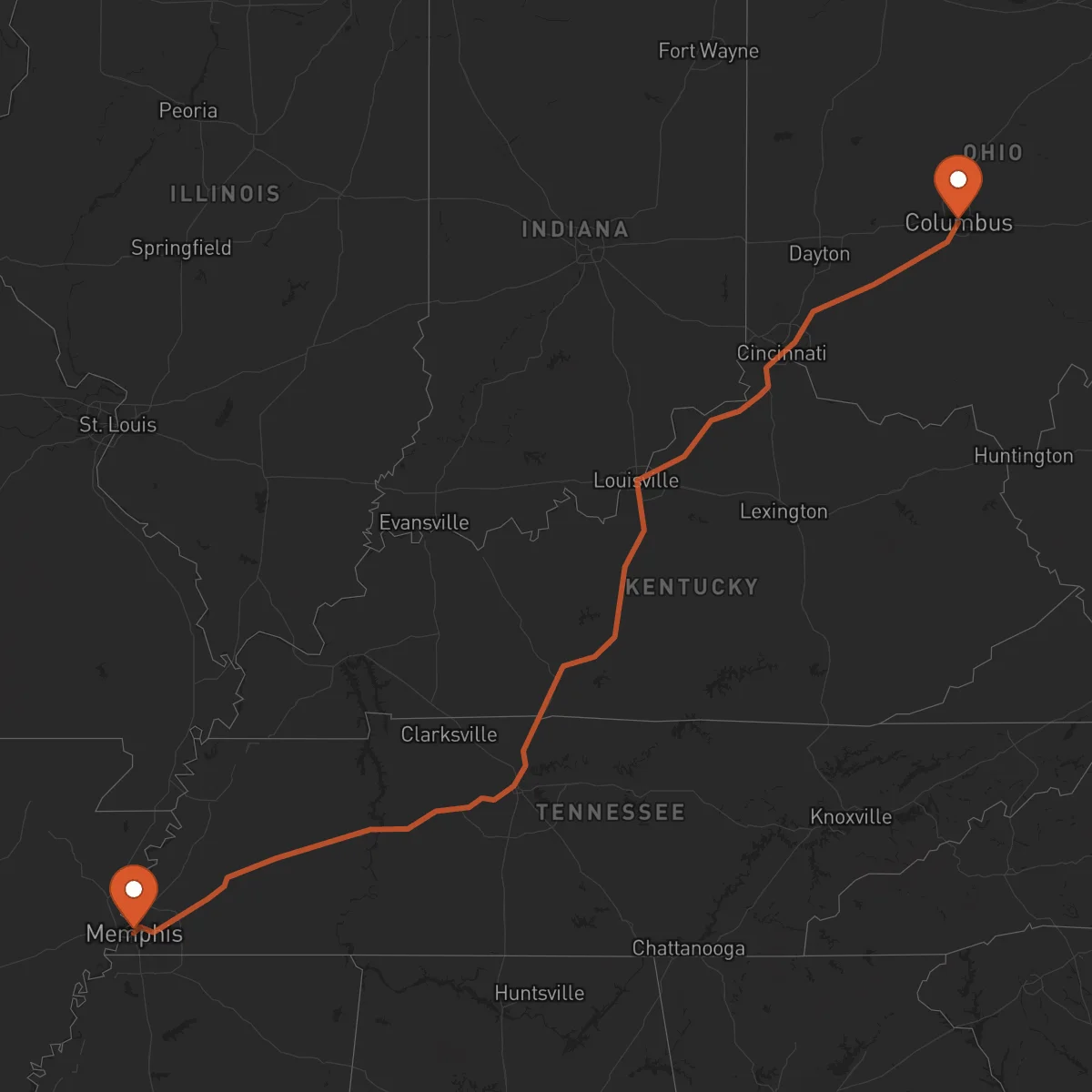
Columbus to Memphis
Memphis → ColumbusFTL freight transportation service between Columbus and Memphis. Reliable logistics solutions for your business.
Route Description
Everything you need to know about the corridor Columbus - Memphis
The Columbus to Memphis corridor represents a vital logistics connection in the central United States, spanning approximately 820 kilometers through the heart of America's transportation network. This domestic route links two strategically positioned cities that serve as crucial distribution hubs for the Midwest and Southeast regions. The corridor traverses multiple states including Ohio, Kentucky, and Tennessee, providing access to diverse industrial centers and consumer markets along the way.
The economic significance of this route is substantial, connecting Columbus's growing technology and manufacturing sectors with Memphis's established logistics and distribution infrastructure. Major industries utilizing this corridor include automotive manufacturing, healthcare products, agricultural goods, and consumer packaged goods. The route benefits from excellent highway infrastructure, primarily utilizing I-71 South to I-65 South, providing reliable and efficient transportation options for full truckload (FTL) freight movements.
Control Terrestre optimizes operations along this corridor through our network of certified transportation providers and strategic partnerships. Our dedicated FTL services ensure that your cargo moves directly from origin to destination without intermediate stops or handling. We leverage our expertise in domestic freight transportation to provide consistent, reliable service that meets the demanding schedules of modern supply chains. Our providers maintain all necessary certifications including C-TPAT and other security protocols, ensuring your freight moves smoothly across state lines while maintaining the highest standards of safety and compliance.
Services for this Route
Available services for the corridor Columbus - Memphis
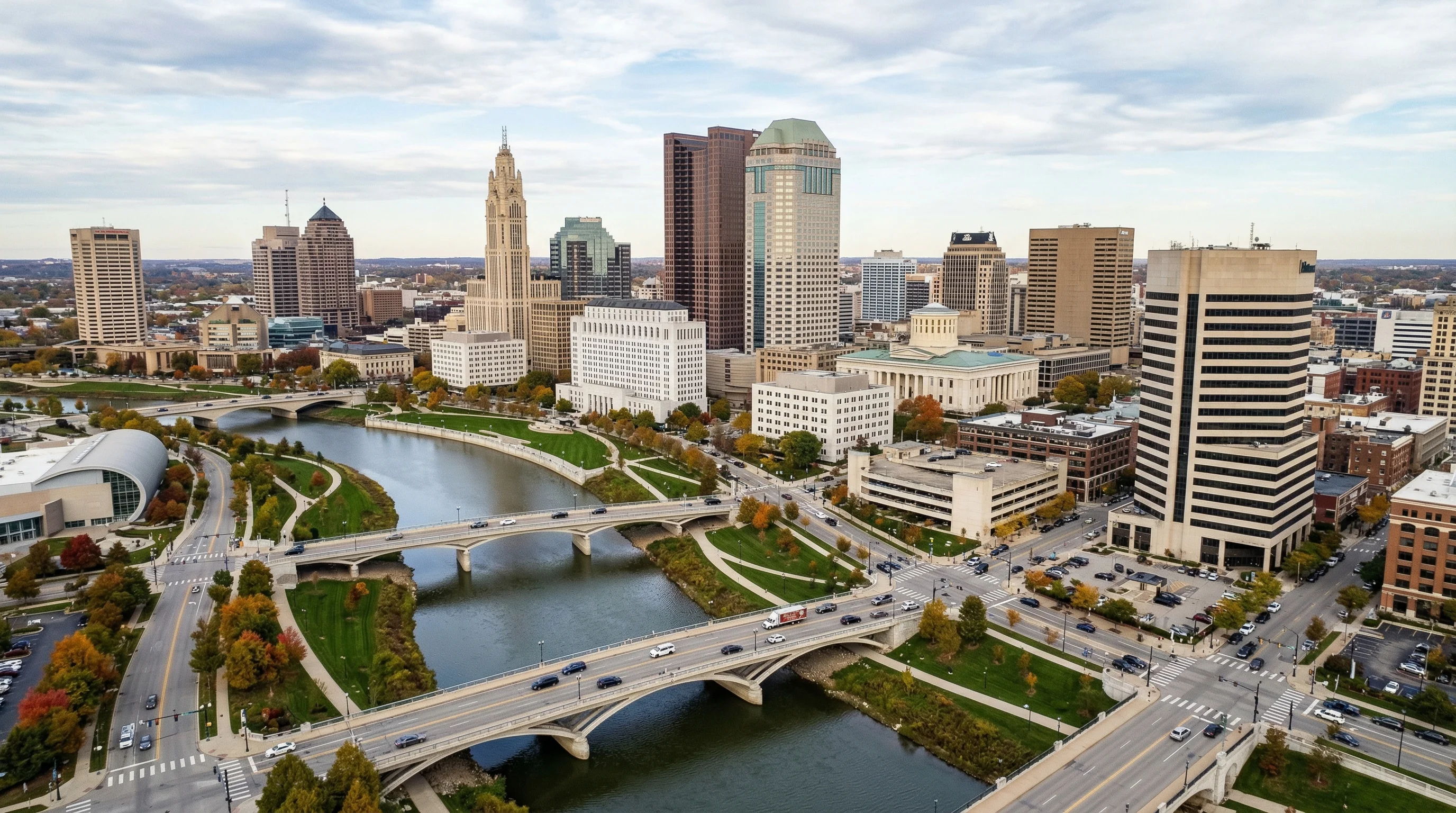 Origin
Columbus
Columbus, Ohio serves as a strategic logistics hub in the Midwest, offering excellent connectivity to major markets across the eastern United States. The city's central location provides access to over 50% of the US population within a day's drive, making it an ideal origin point for freight distribution. Columbus boasts a diverse economic base with strong presence in technology, education, healthcare, and manufacturing sectors. The city is home to The Ohio State University and numerous corporate headquarters, creating consistent demand for freight transportation services.
The transportation infrastructure in Columbus is exceptionally well-developed, featuring multiple interstate highways including I-70, I-71, and I-270 that provide direct connections to major markets. The city also offers rail service through CSX and Norfolk Southern, along with Port Columbus International Airport for air cargo needs. The Rickenbacker Inland Port provides additional logistics capabilities, including a Foreign Trade Zone and Foreign Trade Zone designation, enhancing the city's attractiveness for freight consolidation and distribution operations.
 Destination
Memphis
Memphis, Tennessee stands as one of America's most important logistics centers, strategically positioned at the crossroads of major transportation routes in the southeastern United States. The city's location provides access to nine major interstates and serves as a critical distribution point for freight moving throughout the region. Memphis's economy is heavily influenced by logistics and transportation, with FedEx's global hub located at Memphis International Airport, making it the busiest cargo airport in the world.
The city offers comprehensive transportation infrastructure including extensive highway networks, rail connections through major Class I railroads, and river access via the Mississippi River. Memphis is home to numerous distribution centers and warehouses, serving industries such as healthcare, automotive, food and beverage, and retail. The presence of major corporations and logistics providers creates a robust freight ecosystem that benefits from the city's central location and excellent connectivity to both northern and southern markets.










