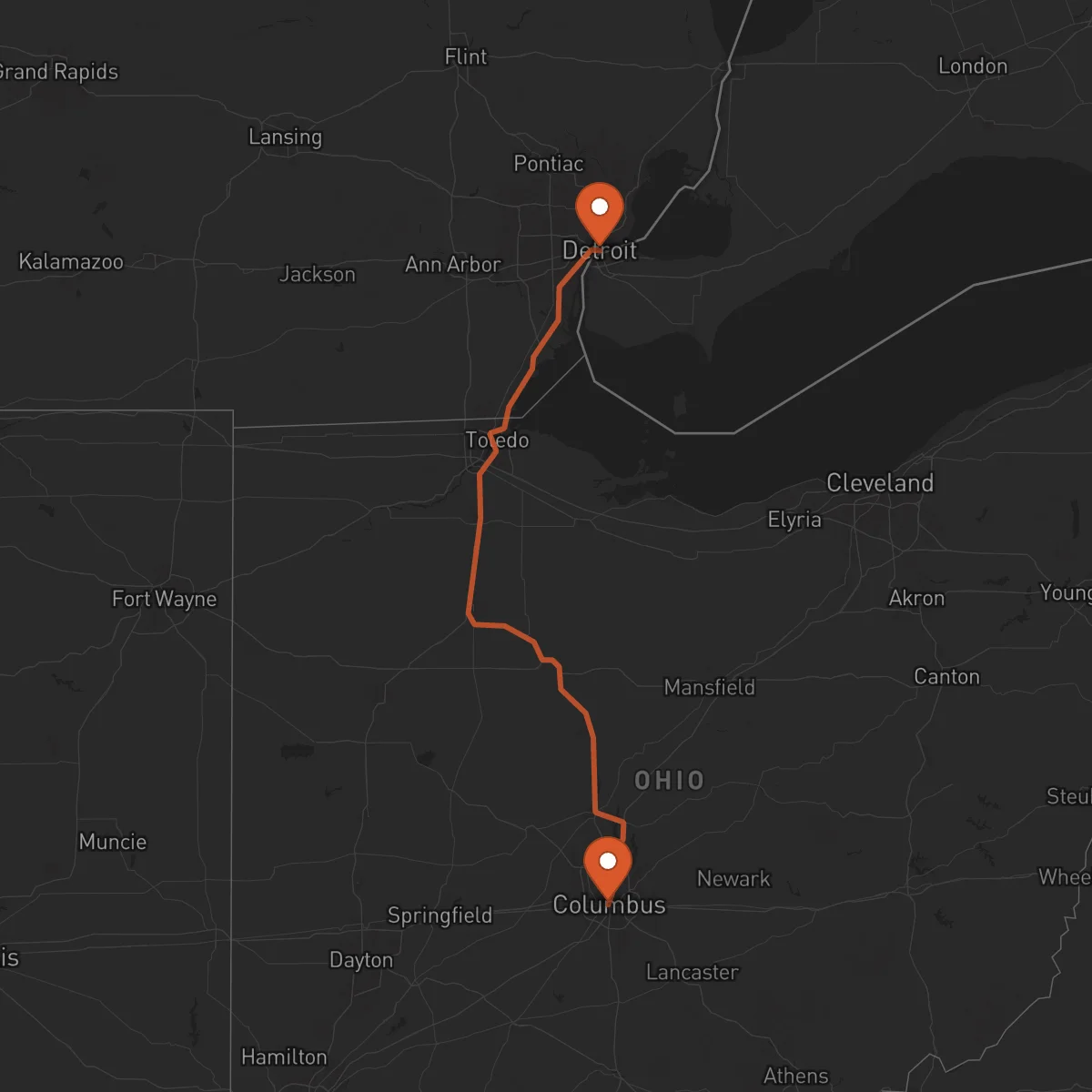
Columbus to Detroit
Detroit → ColumbusFTL freight transportation service between Columbus and Detroit. Reliable logistics solutions for your business.
Route Description
Everything you need to know about the corridor Columbus - Detroit
The logistics corridor between Columbus, Ohio and Detroit, Michigan represents a vital transportation link in the Midwest region of the United States. This 263-kilometer route connects two major industrial and economic centers, facilitating the movement of goods between Ohio and Michigan. The corridor traverses through diverse terrain and connects multiple states, making it a strategic pathway for freight transportation across the Great Lakes region.
The region along this corridor is characterized by a strong industrial presence, with manufacturing, automotive, and logistics sectors playing crucial roles in the local economies. Both Columbus and Detroit serve as major distribution hubs, with numerous warehouses, distribution centers, and manufacturing facilities located along or near the route. The automotive industry, in particular, drives significant freight movement between these cities, given Detroit's status as the historic center of American automobile manufacturing.
Control Terrestre enhances logistics operations along this corridor by providing reliable full truckload (FTL) transportation services. Our extensive network of certified carriers ensures consistent capacity and service quality throughout the route. We leverage our strategic partnerships and industry expertise to optimize freight movement, offering solutions that meet the specific needs of businesses operating between Columbus and Detroit. Our commitment to safety, efficiency, and customer service makes us the preferred transportation partner for companies requiring dependable freight services on this important Midwest corridor.
Services for this Route
Available services for the corridor Columbus - Detroit
 Origin
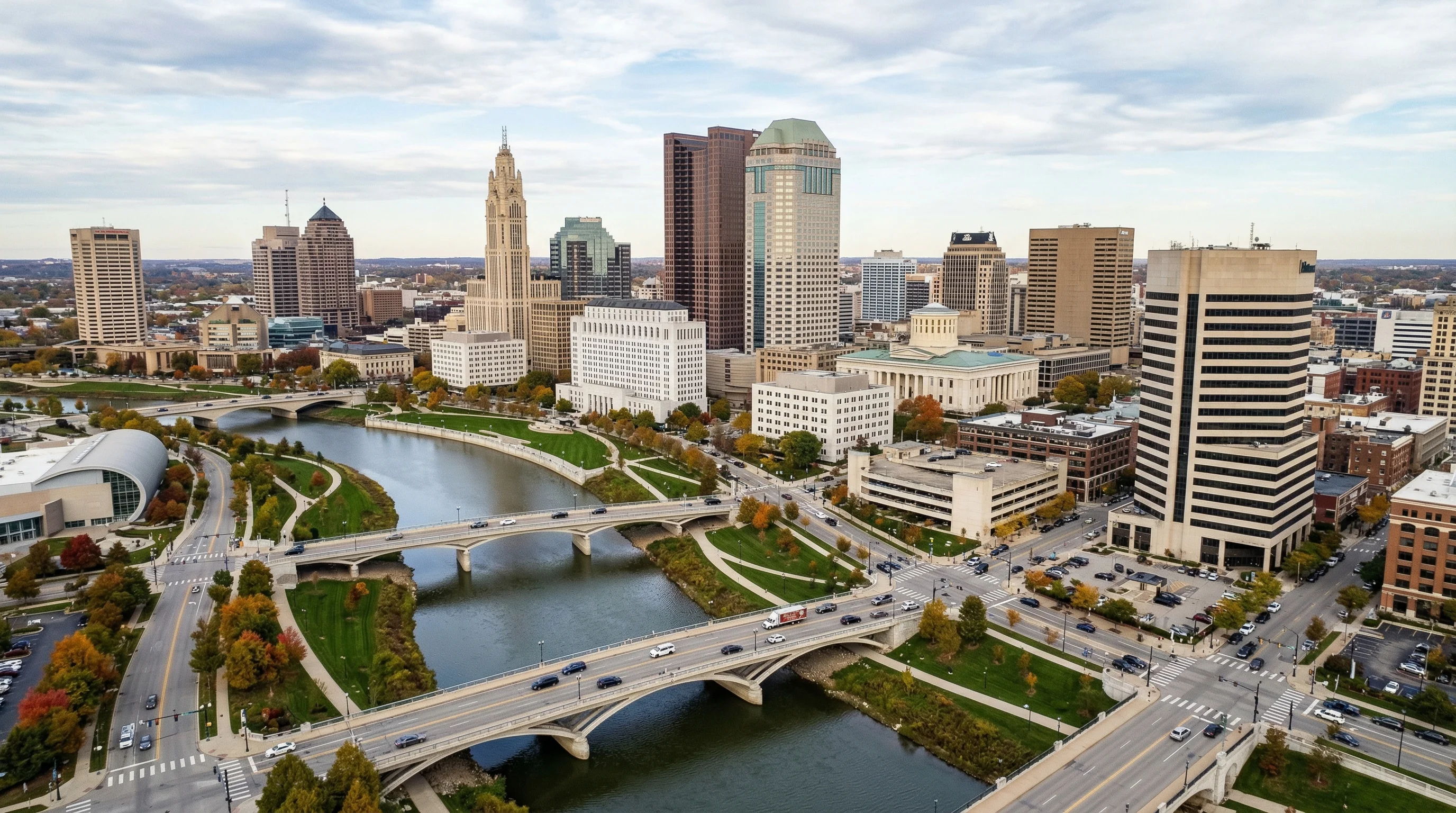
Columbus
Columbus, Ohio serves as a strategic logistics hub in the Midwest, offering excellent connectivity through multiple transportation modes. The city's central location within Ohio provides easy access to major markets across the Midwest and East Coast. Columbus boasts a robust infrastructure including Port Columbus International Airport, extensive highway networks (I-70, I-71, I-270), and rail connections through CSX and Norfolk Southern. The city's economy is diverse, with strong sectors in healthcare, education, technology, and retail distribution. Major corporations have established significant operations in Columbus, attracted by its business-friendly environment and skilled workforce. The city's logistics infrastructure includes numerous warehousing and distribution facilities, making it an ideal origin point for freight movements throughout the region.
 Destination
Detroit
Detroit, Michigan stands as a critical logistics and industrial center in the Great Lakes region, with a rich history in manufacturing and transportation. The city's strategic location on the Detroit River provides access to international shipping routes via the Great Lakes and the St. Lawrence Seaway. Detroit's extensive transportation infrastructure includes the Detroit Metropolitan Airport, major highway systems (I-75, I-94, I-96), and significant rail freight operations through Canadian National and CSX. The city remains a powerhouse in automotive manufacturing, with numerous assembly plants and supplier facilities in the surrounding area. Detroit's logistics ecosystem includes major intermodal facilities, warehouses, and distribution centers that support both domestic and international trade. The city's ongoing economic revitalization has strengthened its position as a key destination for freight movements in the Midwest.










