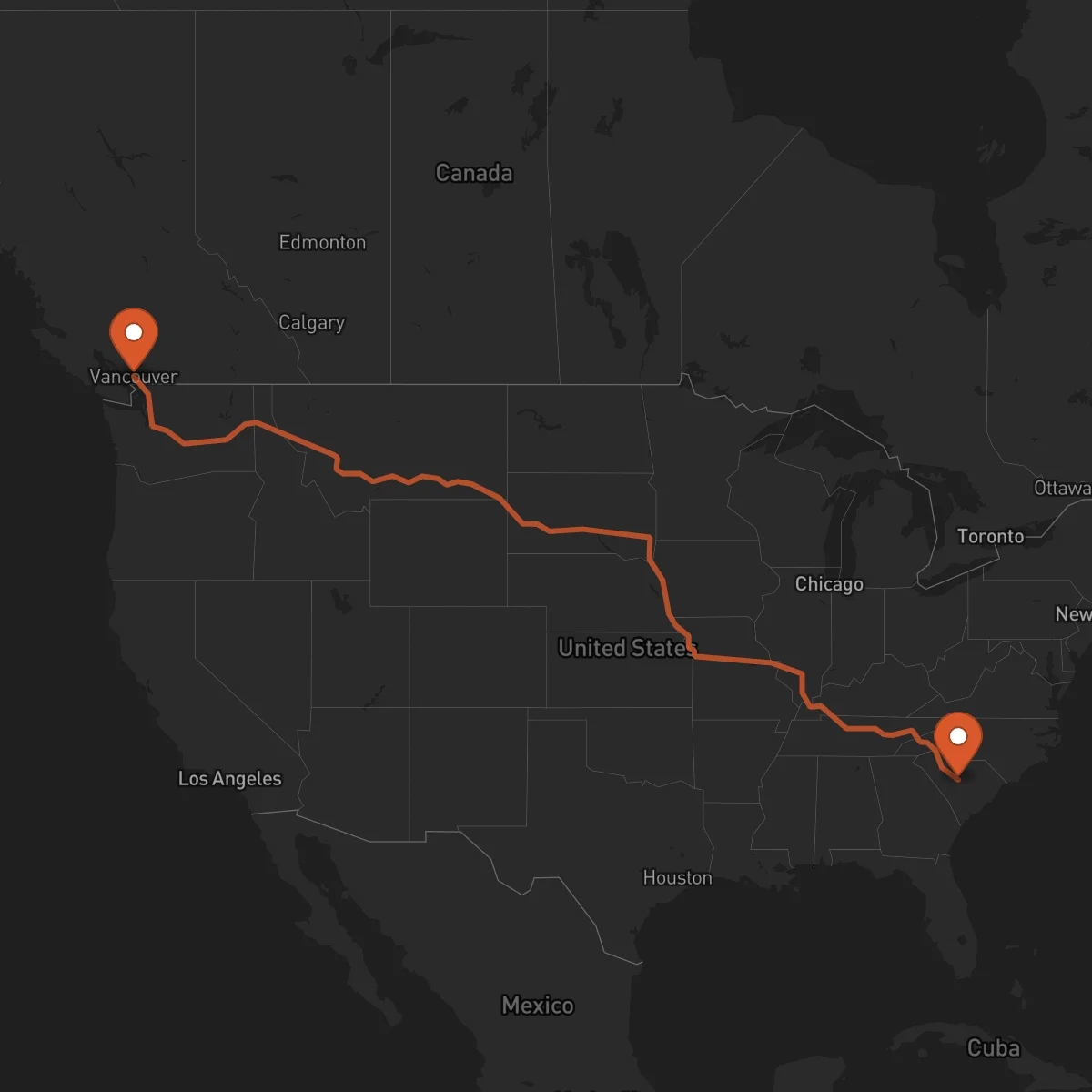
Columbia to Vancouver
Vancouver → ColumbiaFTL freight transportation service between Columbia and Vancouver. Reliable logistics solutions for your business.
Route Description
Everything you need to know about the corridor Columbia - Vancouver
The logistics corridor connecting Columbia, South Carolina to Vancouver, British Columbia represents a vital cross-border freight transportation route spanning approximately 3,824 kilometers. This corridor serves as a critical link between the southeastern United States and the Pacific Northwest, facilitating the movement of goods through major industrial and commercial centers. The route traverses diverse geographical and economic regions, connecting the manufacturing and distribution hubs of the American South with Canada's western gateway.
This corridor is particularly significant for industries such as automotive manufacturing, aerospace components, agricultural products, and technology equipment. Columbia's strategic location in South Carolina's industrial corridor provides access to major automotive assembly plants and distribution centers, while Vancouver serves as Canada's primary port city on the Pacific coast, handling significant volumes of international trade. The route primarily utilizes Interstate 77 and Interstate 5, connecting through major transportation hubs and crossing at key border points.
Control Terrestre facilitates seamless operations along this corridor by leveraging our extensive network of certified transportation providers. Our expertise in cross-border logistics ensures efficient customs clearance and compliance with both US and Canadian regulations. We provide dedicated full truckload (FTL) services that maintain cargo integrity throughout the journey, offering door-to-door solutions that optimize transit times and reduce handling costs for our clients.
Services for this Route
Available services for the corridor Columbia - Vancouver
 Origin
Columbia
Columbia, South Carolina serves as a strategic logistics hub in the southeastern United States, positioned at the intersection of major transportation networks. The city benefits from its location along Interstate 26 and Interstate 77, providing excellent connectivity to regional distribution centers and manufacturing facilities. Columbia's economic landscape includes significant automotive manufacturing presence, with nearby plants operated by major manufacturers, as well as a growing technology sector and healthcare industry. The region's infrastructure includes the Columbia Metropolitan Airport and access to the Port of Charleston via highway connections, making it an ideal origin point for freight distribution across North America.
 Destination
Vancouver
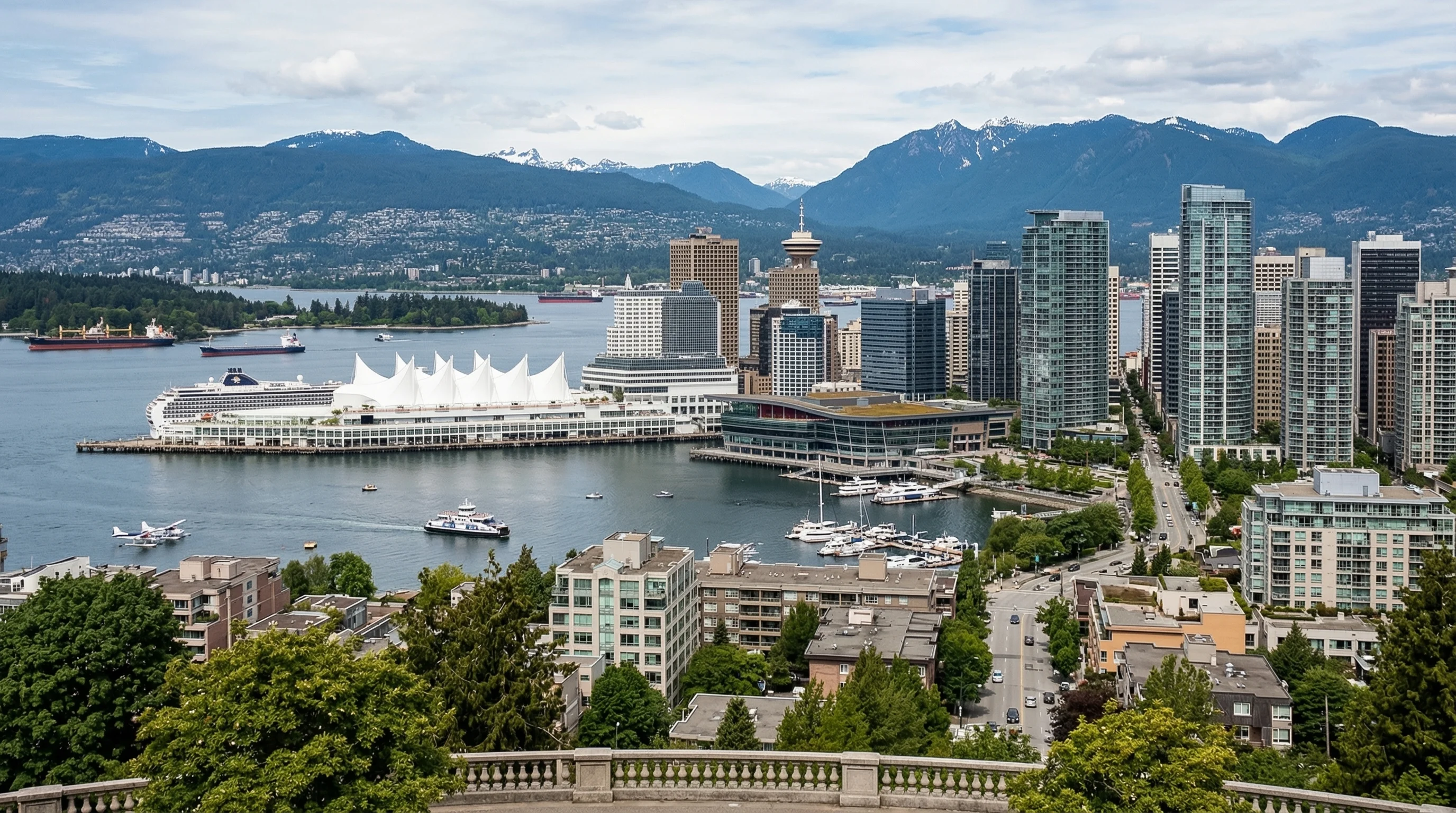
Vancouver, British Columbia stands as Canada's primary western gateway and a crucial logistics hub for international trade. Located on the Pacific coast, Vancouver provides direct access to major shipping routes and serves as the terminus for transcontinental rail lines. The city's economy is diverse, with strong representation in technology, film and television production, natural resources, and international trade. Vancouver's Port Metro Vancouver is Canada's largest port by tonnage, handling millions of containers annually. The region's transportation infrastructure includes Vancouver International Airport, extensive highway networks, and rail connections, making it an essential destination for freight moving between North America and Asia-Pacific markets.










