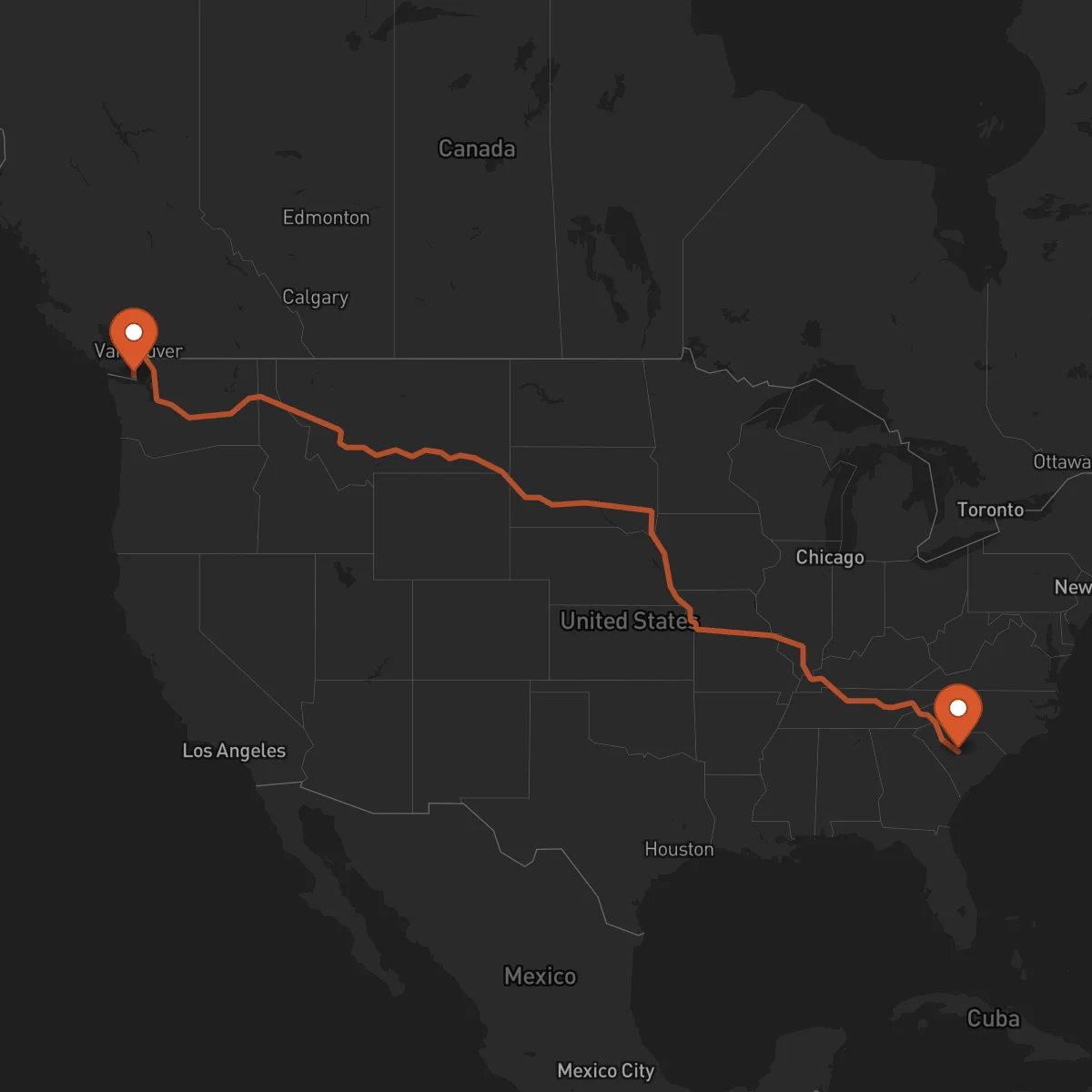
Columbia to Victoria
Victoria → ColumbiaFTL freight transportation service between Columbia and Victoria. Reliable logistics solutions for your business.
Route Description
Everything you need to know about the corridor Columbia - Victoria
The logistics corridor connecting Columbia, South Carolina, to Victoria, British Columbia, represents a vital cross-border freight route spanning approximately 3,826 kilometers across the United States and Canada. This corridor links the southeastern United States with the Pacific Northwest, traversing diverse terrain and crossing international borders. The route is strategically significant for industries requiring reliable transportation between these major economic regions, facilitating trade between American manufacturing hubs and Canadian ports and markets.
This corridor serves a diverse range of industries, including automotive parts manufacturing, aerospace components, agricultural products, and technology equipment. Columbia's proximity to major southeastern ports and manufacturing centers complements Victoria's role as a gateway to Asian markets and Canada's western provinces. The corridor primarily utilizes major interstate highways including I-26, I-40, I-84, and I-5, connecting through key border crossings such as the Peace Arch or Pacific Highway crossings between Washington State and British Columbia.
Control Terrestre specializes in managing cross-border FTL freight operations along this corridor, ensuring seamless customs clearance and compliance with both US and Canadian regulations. Our experienced team coordinates all necessary documentation, including customs bonds, commercial invoices, and certificates of origin. We maintain strategic partnerships with certified carriers who understand the complexities of cross-border transportation, providing dedicated equipment and experienced drivers to handle the full journey from origin to destination.
Services for this Route
Available services for the corridor Columbia - Victoria
 Origin
Columbia
Columbia, South Carolina serves as a strategic logistics hub in the southeastern United States, offering excellent connectivity to major transportation networks. Located near the intersection of I-20, I-26, and I-77, Columbia provides efficient access to regional distribution centers and southeastern ports including Charleston and Savannah. The city's central location within South Carolina makes it an ideal origin point for freight distribution throughout the eastern United States.
The region's economy is diverse, with strong presence in automotive manufacturing (including major facilities for BMW and Volvo), healthcare, education, and advanced manufacturing. Columbia benefits from the South Carolina Ports Authority's extensive network and proximity to major rail terminals operated by Norfolk Southern and CSX. The city's infrastructure includes multiple industrial parks, warehousing facilities, and a skilled workforce, making it an attractive origin point for companies requiring reliable freight transportation to Canadian markets.
 Destination
Victoria
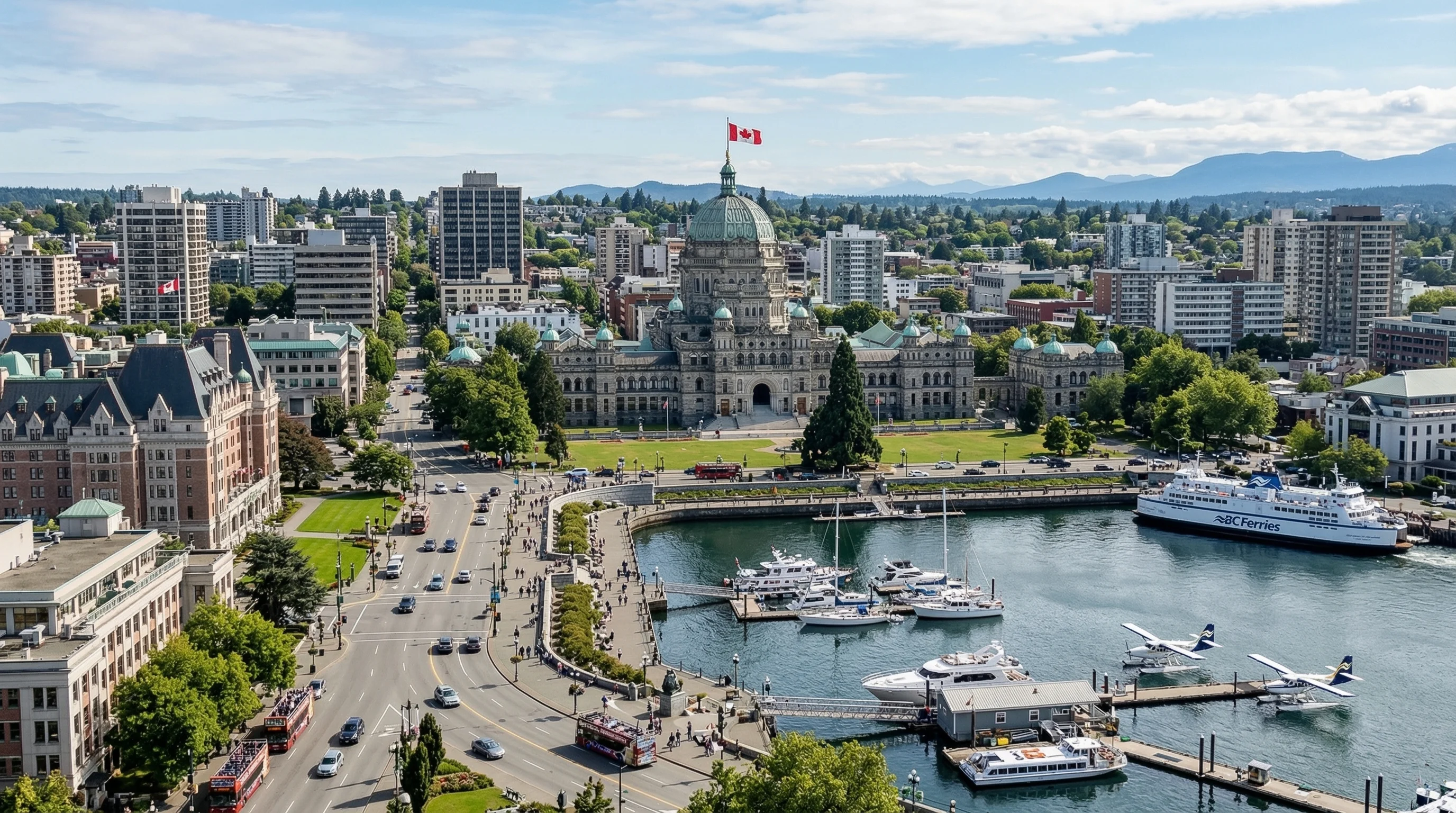
Victoria, British Columbia, located on Vancouver Island, serves as a strategic gateway to Canada's Pacific coast and Asian markets. While the city itself is primarily known for government services and tourism, its position within the greater Vancouver Island region provides access to major transportation infrastructure. Goods typically arrive in Victoria via ferry connections from mainland British Columbia, which are then distributed throughout Vancouver Island and beyond.
The broader Vancouver Island region supports diverse industries including technology, aerospace, forestry, and agriculture. Victoria's port facilities handle specialized cargo and provide connections to mainland British Columbia's extensive transportation network. The region benefits from proximity to major Canadian ports in Vancouver and the Port of Prince Rupert, which serve as crucial links for trade with Asia. Victoria's infrastructure includes modern warehousing facilities and distribution centers that support both local and international supply chains.










