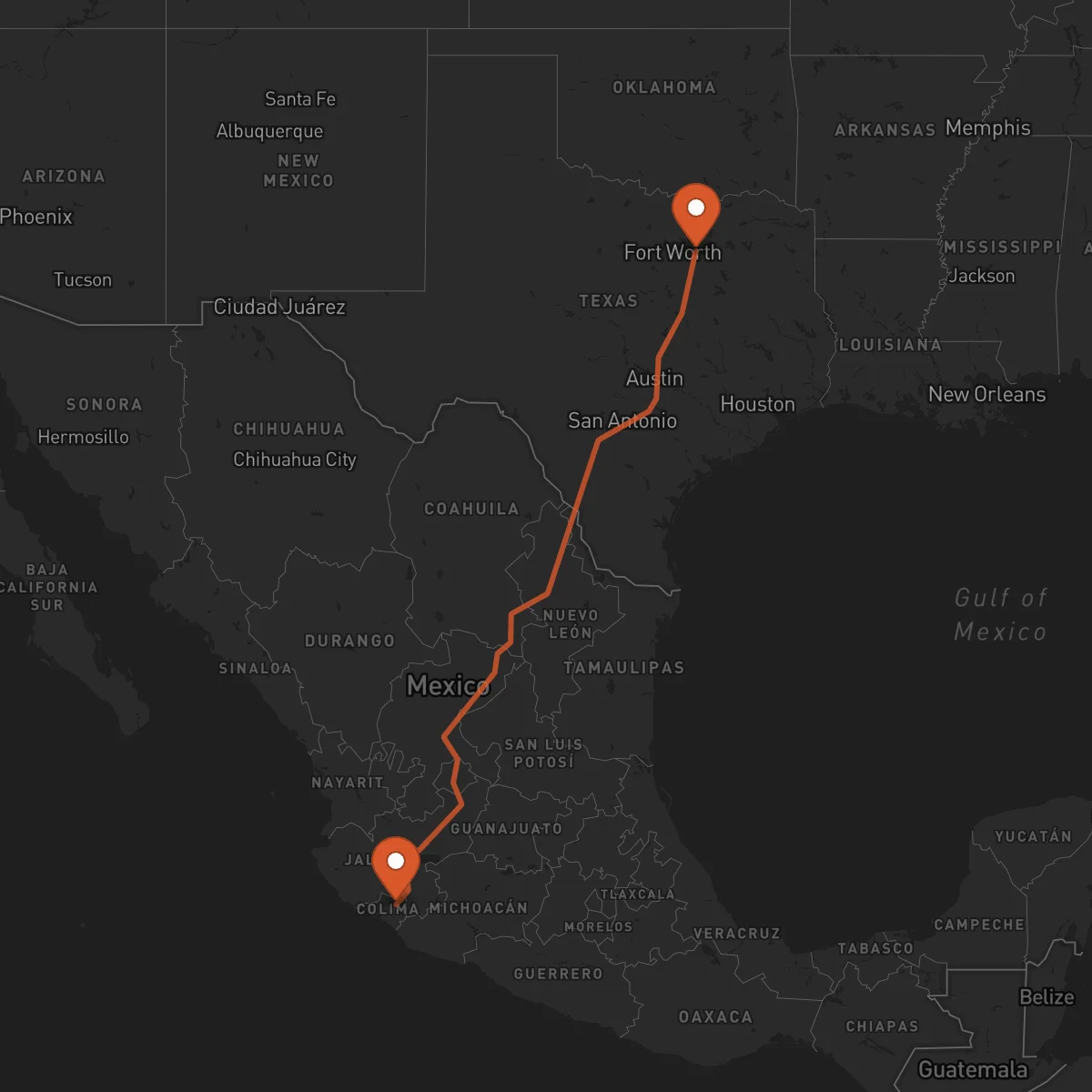
Colima to Dallas
Dallas → ColimaFTL freight transportation service between Colima and Dallas. Reliable logistics solutions for your business.
Route Description
Everything you need to know about the corridor Colima - Dallas
The logistics corridor connecting Colima, Colima, México to Dallas, Texas, Estados Unidos represents a vital trade route spanning approximately 1,655 kilometers across the heart of North America. This cross-border corridor serves as a crucial link between Mexico's Pacific coast and one of the United States' most important commercial hubs, facilitating the movement of goods between two dynamic economic regions. The route traverses diverse terrain and crosses multiple state and federal jurisdictions, requiring expert knowledge of cross-border regulations and efficient coordination to ensure seamless freight movement.
This corridor connects Colima's growing industrial base with Dallas's extensive distribution network and manufacturing sector. Colima has developed as a key industrial center in western Mexico, with strengths in food processing, agriculture, and emerging manufacturing sectors. Dallas, meanwhile, stands as a major logistics hub in the southern United States, home to numerous Fortune 500 companies, advanced manufacturing facilities, and one of the busiest inland ports in the nation. The economic complementarity between these regions drives substantial freight traffic along this route.
Key transportation infrastructure includes Mexico's Federal Highway 80 and Federal Highway 45, which connect to major U.S. interstate systems including I-35, a critical north-south freight corridor. The primary border crossing utilized for this route is typically Laredo/Nuevo Laredo, one of North America's busiest commercial ports of entry. Control Terrestre's expertise in navigating this corridor includes comprehensive knowledge of customs procedures, efficient border crossing strategies, and reliable transportation solutions that minimize delays and ensure cargo security throughout the journey.
Services for this Route
Available services for the corridor Colima - Dallas
 Origin
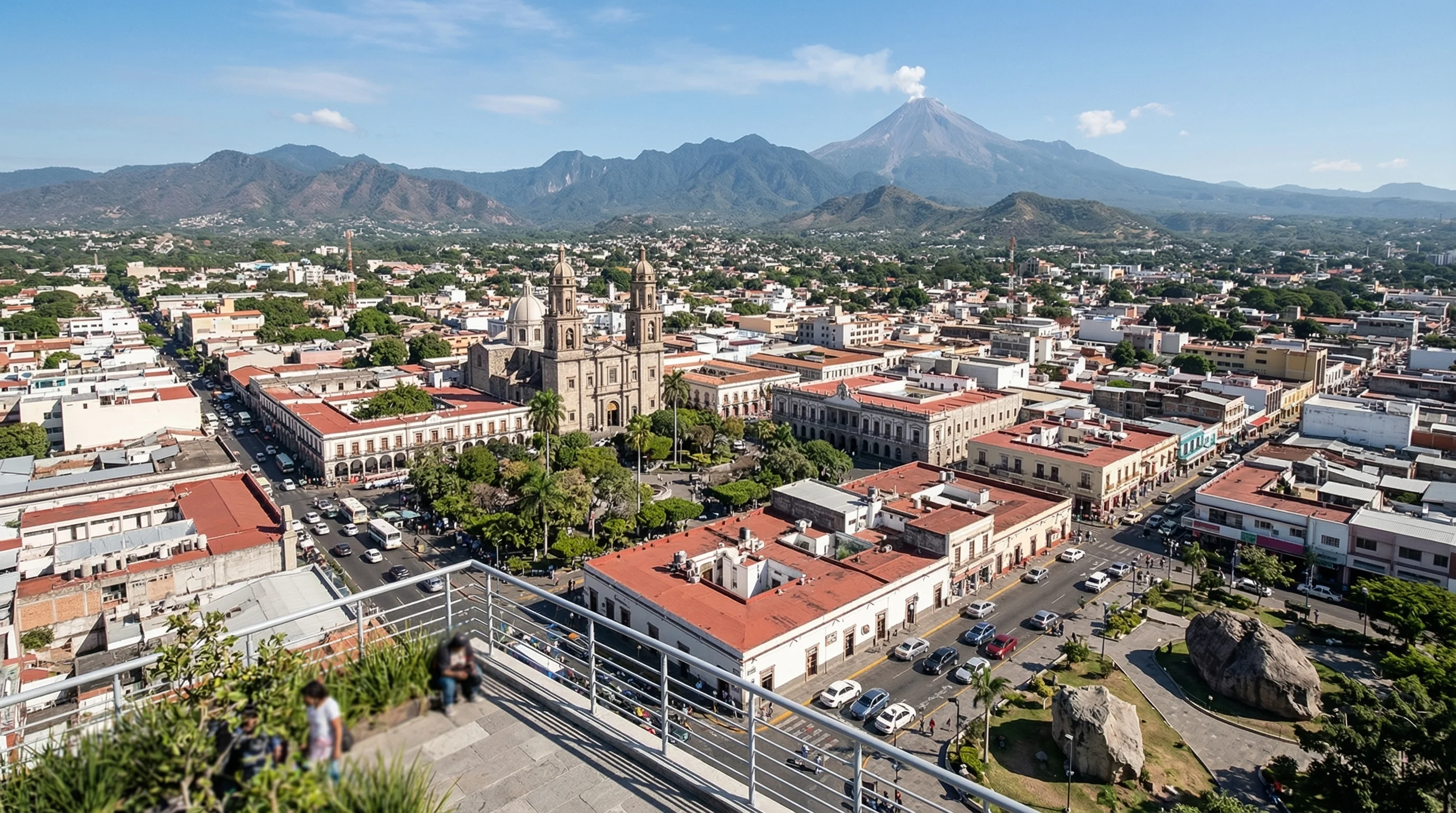
Colima, located on Mexico's Pacific coast, offers strategic advantages for logistics operations due to its proximity to major ports and its position within Mexico's western industrial corridor. The state features well-developed transportation infrastructure including access to the Port of Manzanillo, Mexico's busiest container port, which provides excellent maritime connections for international trade. Colima's road network connects efficiently to major highways leading north toward the U.S. border and east toward Mexico's central industrial zones.
The region's economy is anchored by diverse industries including food processing, particularly fruits and vegetables, as well as agricultural products, cement production, and emerging manufacturing sectors. Colima has also developed capabilities in the energy sector, with significant electrical infrastructure and renewable energy projects. These industries generate consistent freight demand for both raw materials inbound and finished products outbound, creating a robust logistics ecosystem that benefits from the state's strategic location and infrastructure investments.
 Destination
Dallas
Dallas, Texas, stands as one of the United States' most strategically positioned logistics hubs, offering exceptional connectivity and infrastructure for freight transportation. Located in the heart of the Dallas-Fort Worth metroplex, the city provides immediate access to a vast network of interstate highways, including I-35, I-30, and I-45, facilitating efficient distribution throughout the central United States. Dallas/Fort Worth International Airport ranks among the world's busiest cargo airports, while the nearby Port of Houston provides additional maritime access approximately 250 miles to the southeast.
The Dallas economy is characterized by its remarkable diversity and strength, encompassing advanced manufacturing, technology, telecommunications, financial services, and healthcare sectors. The region hosts numerous corporate headquarters and distribution centers, making it a critical node in North American supply chains. Dallas's central location within the U.S. provides logistical advantages for companies serving markets across the southern, central, and western regions of the country, with excellent rail connections complementing its extensive highway infrastructure.










