
Cojutepeque to Boise
Boise → CojutepequeFTL freight transportation service between Cojutepeque and Boise. Reliable logistics solutions for your business.
Route Description
Everything you need to know about the corridor Cojutepeque - Boise
The logistics corridor connecting Cojutepeque, El Salvador to Boise, Idaho represents a vital cross-border transportation route spanning approximately 4,217 kilometers. This corridor serves as a crucial link between Central America and the northwestern United States, facilitating the movement of goods between two distinct economic regions. The route traverses diverse terrains and crosses multiple international borders, making it a complex but essential pathway for freight transportation.
The economic significance of this corridor lies in its ability to connect El Salvador's growing manufacturing and agricultural sectors with Idaho's robust technology, agriculture, and food processing industries. Companies along this route benefit from the complementary nature of these markets, with electronics, agricultural products, and manufactured goods flowing in both directions. The corridor supports various industries including technology, agriculture, food processing, and automotive parts, creating a dynamic trade environment.
Transportation infrastructure along this route includes major highways such as CA-1 in Central America, connecting roads through Mexico, and the interstate highway system in the United States, including I-84 and I-90 leading into Boise. Key border crossings include those between Guatemala and Mexico, and between Mexico and the United States, where customs procedures require careful coordination. Control Terrestre facilitates seamless operations on this corridor by providing expert knowledge of cross-border regulations, customs documentation, and efficient routing strategies, ensuring reliable full truckload (FTL) service throughout the entire journey.
Services for this Route
Available services for the corridor Cojutepeque - Boise
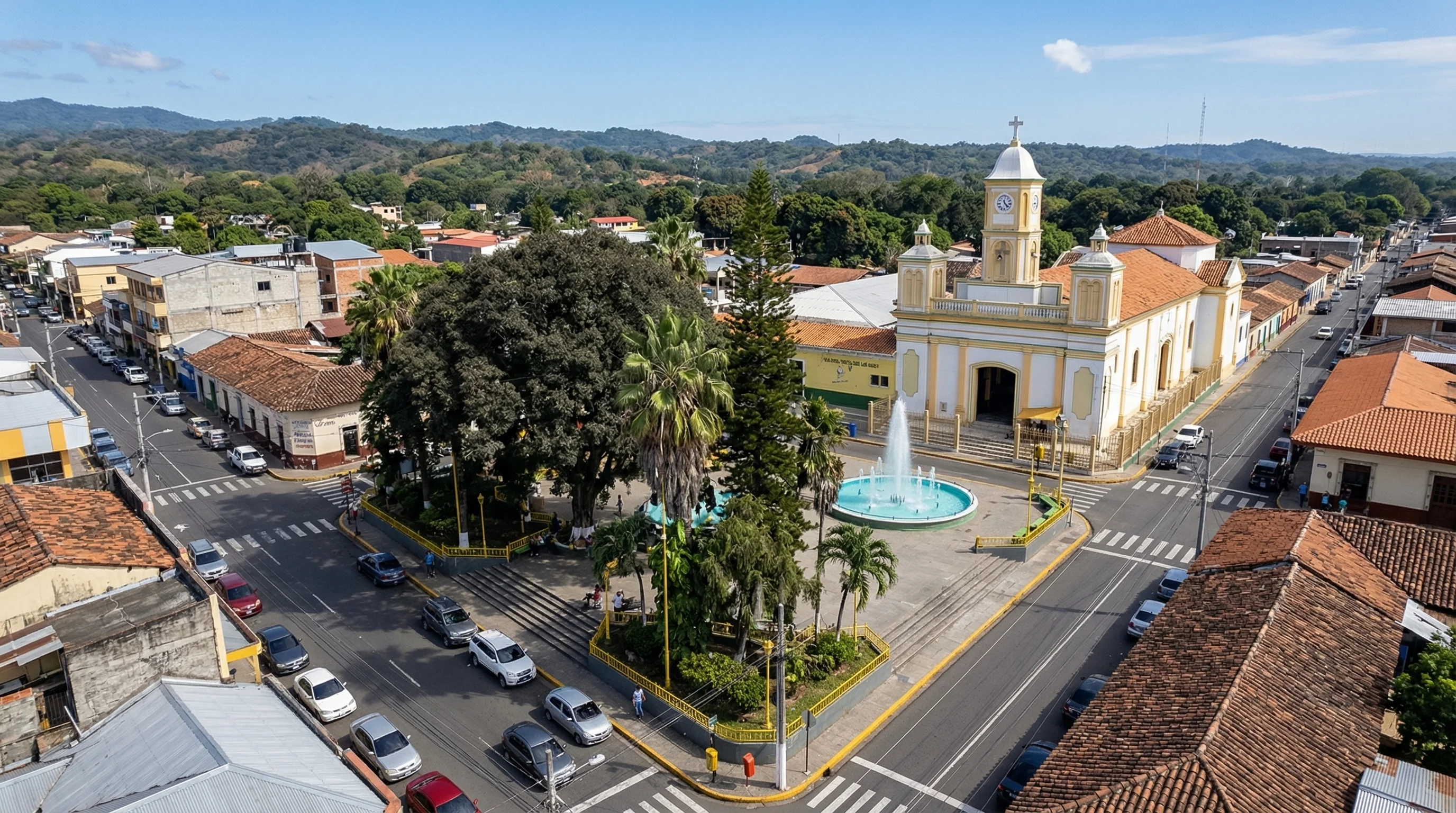 Origin
Cojutepeque
Cojutepeque, located in the department of Cuscatlán, El Salvador, serves as a strategic logistics hub in Central America. Its central location within El Salvador provides excellent connectivity to major ports, including Acajutla on the Pacific coast, facilitating efficient international trade. The city's proximity to the Pan-American Highway (CA-1) enhances its role as a distribution center, allowing for smooth transportation of goods to and from neighboring countries.
The region's economy is characterized by a mix of agricultural activities, including coffee and sugar production, as well as growing manufacturing sectors, particularly in textiles and electronics. These industries create a steady demand for freight transportation services. Cojutepeque benefits from a developing transportation infrastructure, including well-maintained roads and access to rail connections for bulk cargo, making it an ideal origin point for cross-border shipments to the United States.
 Destination
Boise
Boise, Idaho, strategically located in the northwestern United States, serves as a key logistics center for the region. Its position along major interstate highways, including I-84 and I-90, provides excellent connectivity to other major cities and ports on the West Coast. Boise's location makes it an ideal distribution hub for companies serving the Pacific Northwest and beyond, with easy access to rail networks and the Boise Airport for air cargo.
The city's economy is diverse, with strong sectors in technology, agriculture, food processing, and manufacturing. Major employers include technology companies, agricultural cooperatives, and food processing plants, all of which require reliable freight transportation services. Boise's infrastructure includes modern warehousing facilities, intermodal yards, and a growing logistics sector, supporting efficient distribution and supply chain operations for businesses throughout the region.










