Mexico City to Zacapa
Zacapa → Mexico CityFTL freight transportation service between Mexico City and Zacapa. Reliable logistics solutions for your business.
Route Description
Everything you need to know about the corridor Mexico City - Zacapa
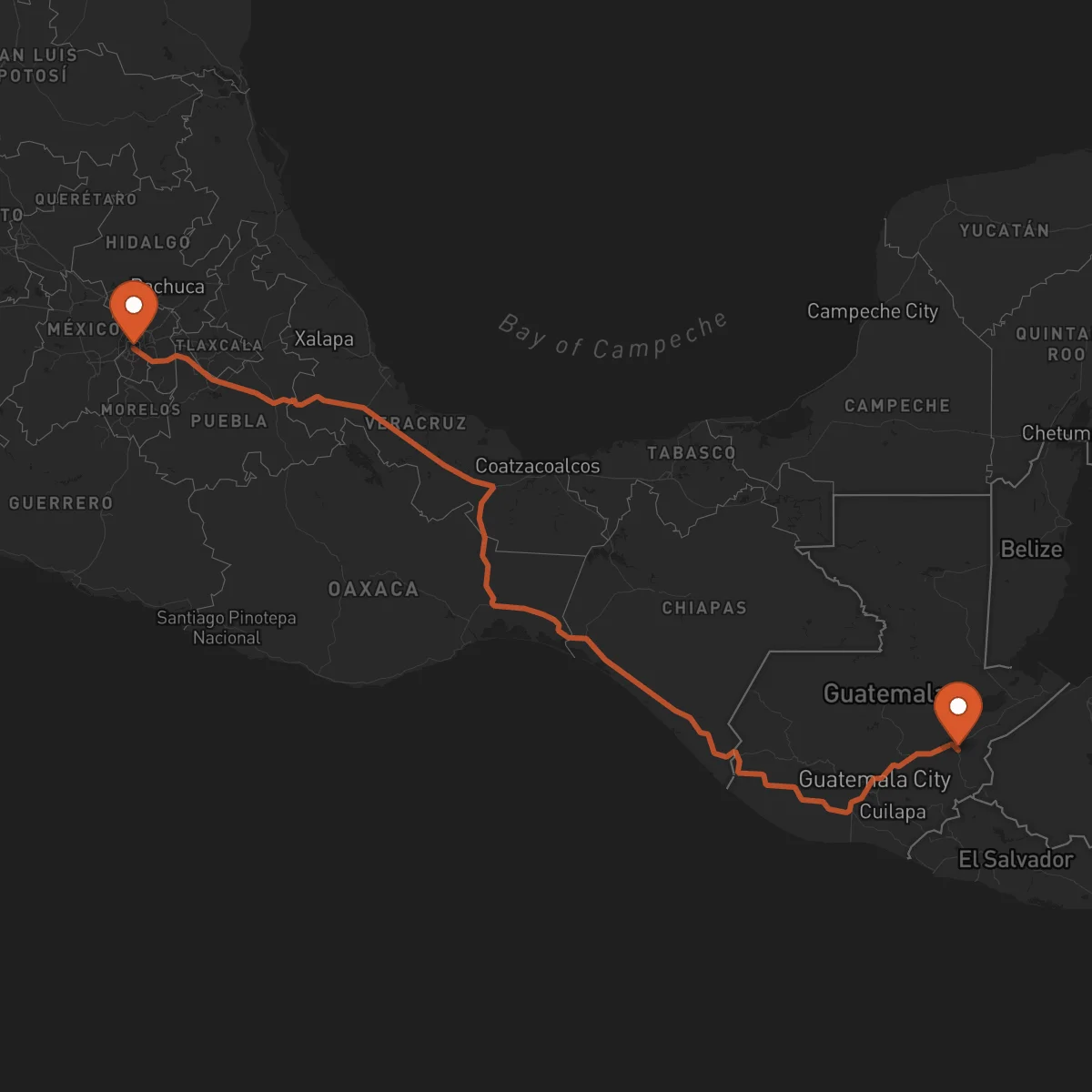
The logistics corridor connecting Ciudad de México, Mexico, to Zacapa, Guatemala, represents a critical north-south artery for trade between Central America and one of Mexico's most significant industrial and consumer hubs. Spanning approximately 1,134 kilometers, this cross-border route facilitates the efficient movement of goods across international frontiers, supporting the integrated supply chains of the region. Its strategic importance lies in linking the massive production and consumption center of the Mexican capital with the agricultural and emerging industrial heartland of eastern Guatemala, providing a direct gateway to Central American markets. This corridor is essential for businesses looking to optimize their distribution networks, reduce transit times compared to alternative maritime routes, and maintain tighter control over their full truckload (FTL) shipments.
Economically, the region served by this corridor is dynamic and diverse. The origin in Ciudad de México drives demand from a vast array of industries, including automotive, aerospace, electronics, pharmaceuticals, and consumer goods manufacturing. The destination area around Zacapa is pivotal for Guatemala's agricultural exports—such as sugar, coffee, bananas, and tropical fruits—as well as for its growing textile, food processing, and light manufacturing sectors. This creates a robust, two-way flow of cargo: finished goods and inputs moving south, and raw materials and agricultural products moving north. The corridor's efficiency directly impacts the competitiveness and profitability of companies operating in these sectors.
Key transportation infrastructure underpins this route. The primary highway network begins with Mexico's Federal Highway 150D (México-Puebla-Veracruz), a major toll road that provides a high-capacity, well-maintained exit from the capital. After traversing the Puebla and Veracruz regions, the route converges on the Ciudad Hidalgo/El Carmen border crossing between Chiapas, Mexico, and Guatemala. This is the principal land bridge for commercial traffic. Upon entering Guatemala, the route continues on the CA-1 highway (Carretera al Atlántico), a crucial national roadway that runs directly to Zacapa. This highway is undergoing continuous improvements to handle increased freight volumes.
Navigating the border crossing at Ciudad Hidalgo/El Carmen is a complex process involving Mexican and Guatemalan customs and immigration authorities. Compliance with regulations such as Mexico's C-TPAT (Customs-Trade Partnership Against Terrorism) and Guatemala's equivalent programs is vital for expedited clearance. Control Terrestre facilitates seamless operations on this corridor through our robust alliance of certified transportation providers. Our partners hold key certifications including C-TPAT, FAST (Free and Secure Trade), and BASC (Business Alliance for Secure Commerce), which streamline customs procedures. We manage all cross-border documentation, customs brokerage coordination, and ensure compliance with both nations' regulations. By leveraging our dedicated network, we offer our clients a single, reliable point of contact for their FTL shipments, providing visibility and handling the intricacies of international ground transportation from door to door.
Services for this Route
Available services for the corridor Mexico City - Zacapa
 Origin
Mexico City
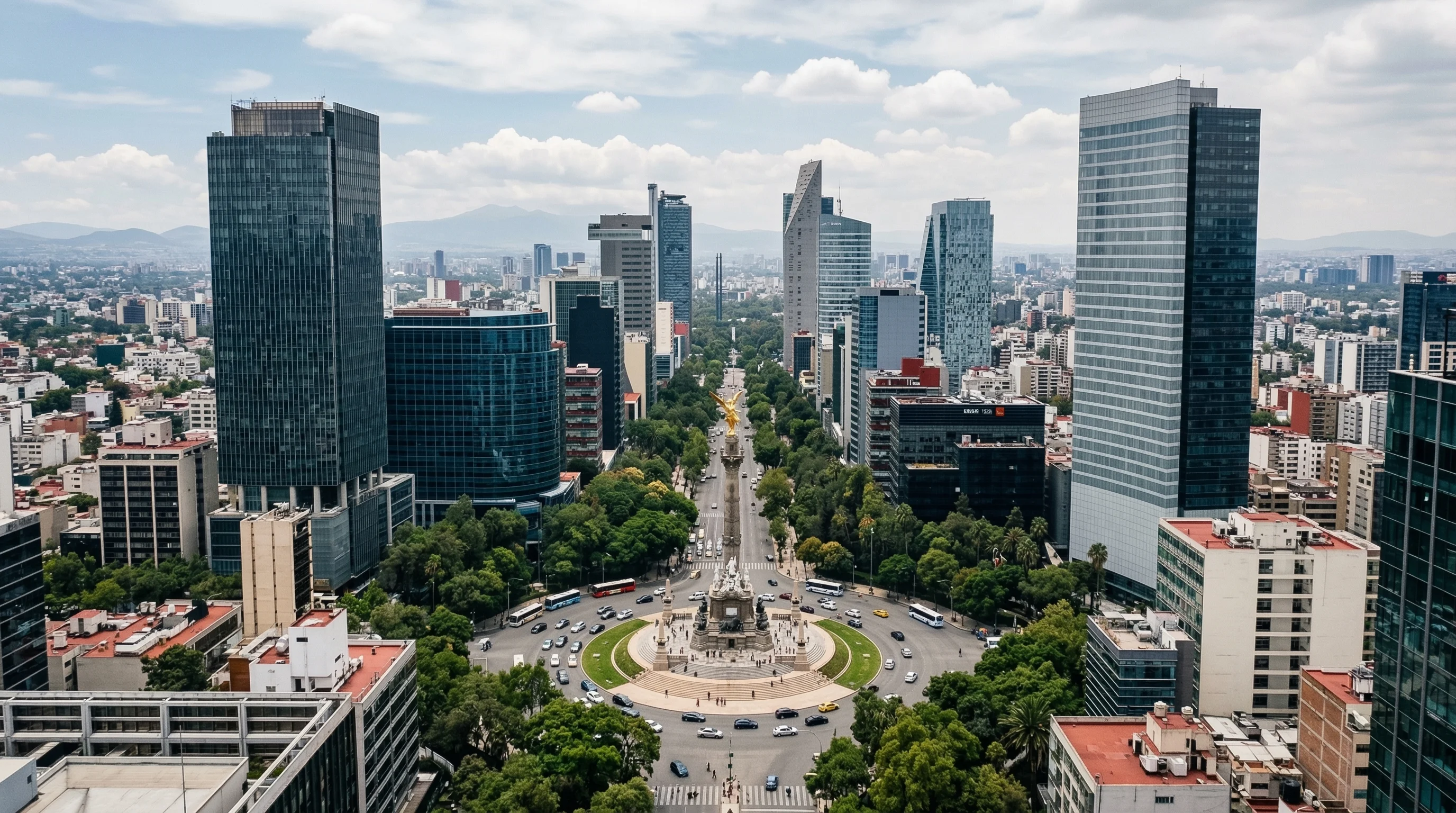
Ciudad de México, the capital of Mexico, is an unparalleled strategic logistics hub for North American supply chains. As one of the largest metropolitan areas in the world, it is a colossal center for manufacturing, finance, technology, and consumer markets. The city's economic output generates immense demand for inbound raw materials and outbound finished goods across countless industries. Its location in the heart of Mexico provides excellent connectivity to the country's major industrial corridors, ports on both the Gulf of Mexico and the Pacific, and the northern border with the United States. This makes it an ideal origin point for distribution throughout Mexico and for cross-border exports.
The city's transportation infrastructure is vast and multi-modal, though our focus is on its ground network. It is the nexus for Mexico's federal highway system, with major toll roads (autopistas) like the Mexico-Querétaro, México-Puebla-Veracruz (150D), and México-Toluca providing high-speed, direct links to key economic zones and border crossings. While it has major international airports (AICM, AIFA) and rail terminals, its road infrastructure is the dominant force for freight. For FTL services, this means access to a dense network of carriers and immediate departure points onto primary corridors heading south, such as the vital route to the Guatemalan border. The sheer volume of commercial activity ensures constant availability of equipment and capacity for dedicated and spot shipments.
 Destination
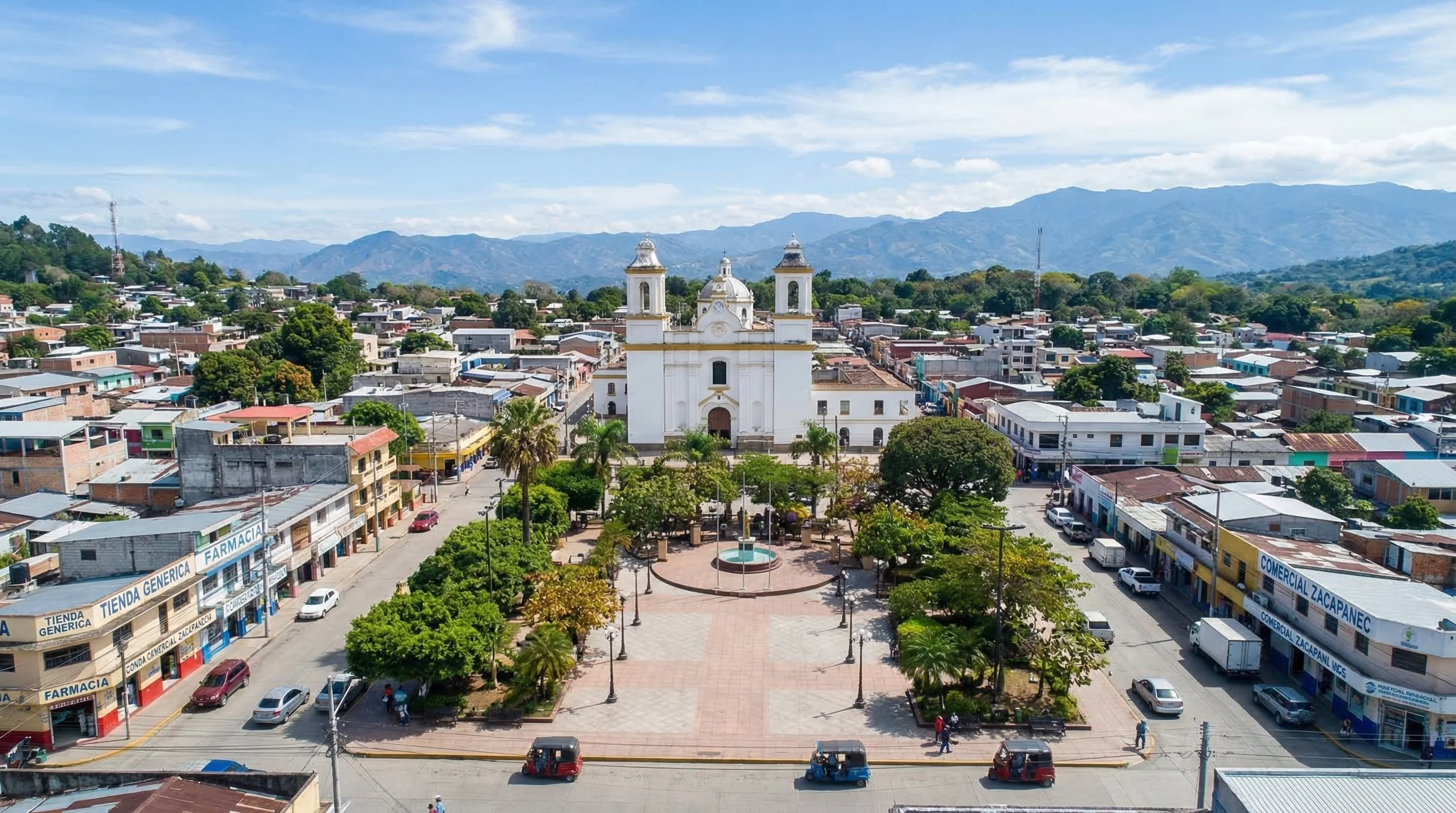
Zacapa, the capital of the department of Zacapa in eastern Guatemala, is a strategically vital logistics destination due to its geographic position and economic role. It sits at the crossroads of Guatemala, providing direct access to the fertile Motagua River valley and serving as the primary commercial and transportation hub for the entire eastern region of the country. Its location near the border with Honduras and its position on the CA-1 highway (Carretera al Atlántico) makes it a natural distribution center for cargo moving to and from Central America's Atlantic coast and northern Central American nations. For importers, it offers a strategic inland point closer to final consumption or production sites than Pacific ports, reducing inland haulage costs.
Economically, Zacapa is the heart of Guatemala's agricultural export powerhouse. The surrounding region is famous for producing sugar cane, coffee, cardamom, bananas, and a variety of tropical fruits and vegetables. Furthermore, the area supports significant livestock, textile, and food processing industries. This creates consistent demand for inbound transportation of fertilizers, machinery, packaging, and consumer goods, as well as outbound movement of agricultural and manufactured products. The key transportation infrastructure is the CA-1 highway, the main paved artery running from the Mexican border through Guatemala City to the Caribbean coast. While rail infrastructure is limited, the robust road network, supported by ongoing government and private investment, is the backbone of freight movement to and from Zacapa, making reliable FTL service critical for the region's supply chains.










