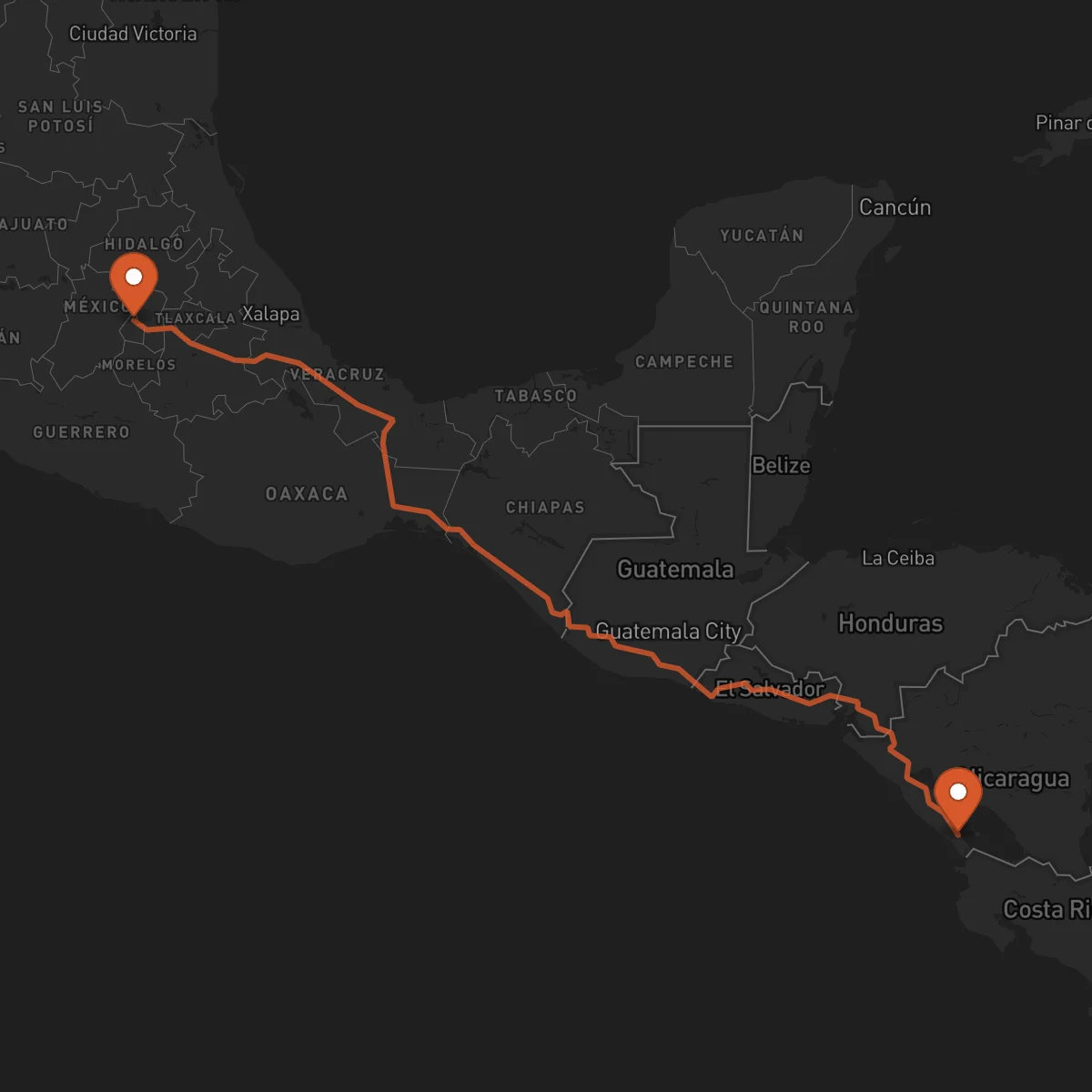
Mexico City to Rivas
Rivas → Mexico CityFTL freight transportation service between Mexico City and Rivas. Reliable logistics solutions for your business.
Route Description
Everything you need to know about the corridor Mexico City - Rivas
The freight corridor connecting Ciudad de México and Rivas, Nicaragua, represents a vital north-south artery for commerce across Mesoamerica. Spanning approximately 1,680 kilometers, this cross-border route is a strategic conduit linking Mexico's industrial heartland with Central America's Pacific coast, facilitating the flow of goods essential for regional economic integration. The corridor traverses diverse landscapes and multiple national jurisdictions, making it a complex but high-value logistics channel for businesses operating across these markets.
Economically, this route serves a region characterized by robust manufacturing in Mexico and significant agricultural and textile production in Central America. Key industries leveraging this corridor include automotive and electronics manufacturers shipping components southward, and agribusinesses moving perishable goods like fruits, vegetables, and coffee northward. The movement of construction materials, consumer goods, and industrial equipment is also constant, driven by development projects and retail demand throughout the region.
Infrastructure along the route primarily relies on Mexico's Federal Highway 150D south from Mexico City to the Guatemalan border at Ciudad Hidalgo/Tecún Umán. After crossing into Guatemala, the network continues through Central America via major highways like the CA-1, connecting through Honduras, El Salvador, and into Nicaragua at the border crossing of Guasaule/El Espino. The final leg utilizes Nicaragua's Pan-American Highway segment to reach Rivas. Each border crossing presents unique customs procedures; efficiency depends on proper documentation, compliance with regulations like C-TPAT and FAST for expedited processing, and understanding the specific requirements of each country's customs authority.
At Control Terrestre, we facilitate seamless operations on this corridor through our robust alliance of experienced transportation providers. Our expertise in cross-border logistics ensures compliance with all international regulations and documentation. We coordinate the entire journey, managing transfers at border points to minimize delays. Our fleet, including dry vans, reefers, and specialized equipment, is matched to the cargo's needs, while our providers' certifications (C-TPAT, FAST, BASC) streamline customs clearance. We handle the complexity so you can benefit from a direct, reliable FTL connection between these key economic zones.
Services for this Route
Available services for the corridor Mexico City - Rivas
 Origin
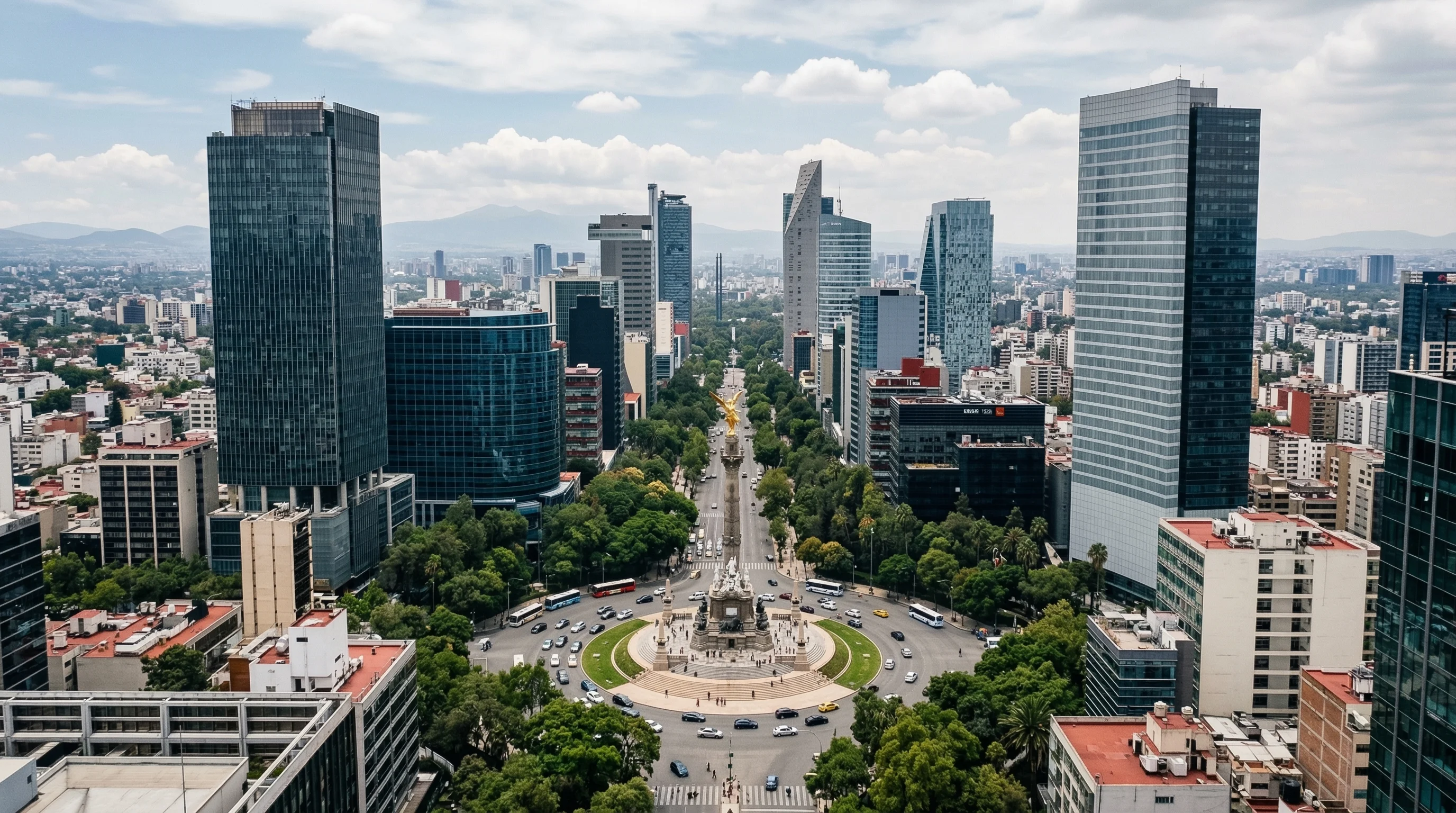
Mexico City
Ciudad de México stands as a monumental logistics and economic hub for North America. Its strategic location in the heart of Mexico provides unparalleled access to the country's primary industrial corridors and consumer markets. The city and its surrounding metropolitan area are engines of manufacturing, particularly in automotive, aerospace, electronics, and pharmaceuticals, generating massive outbound freight volumes. Major infrastructure supports this activity, including the Mexico City International Airport (AICM), extensive rail networks, and critical highway junctions like the Mexico-Puebla-Veracruz corridor (Fed. 150D). This dense concentration of production and world-class connectivity makes it an indispensable origin point for national and international supply chains, demanding expert freight coordination for efficient distribution south.
 Destination
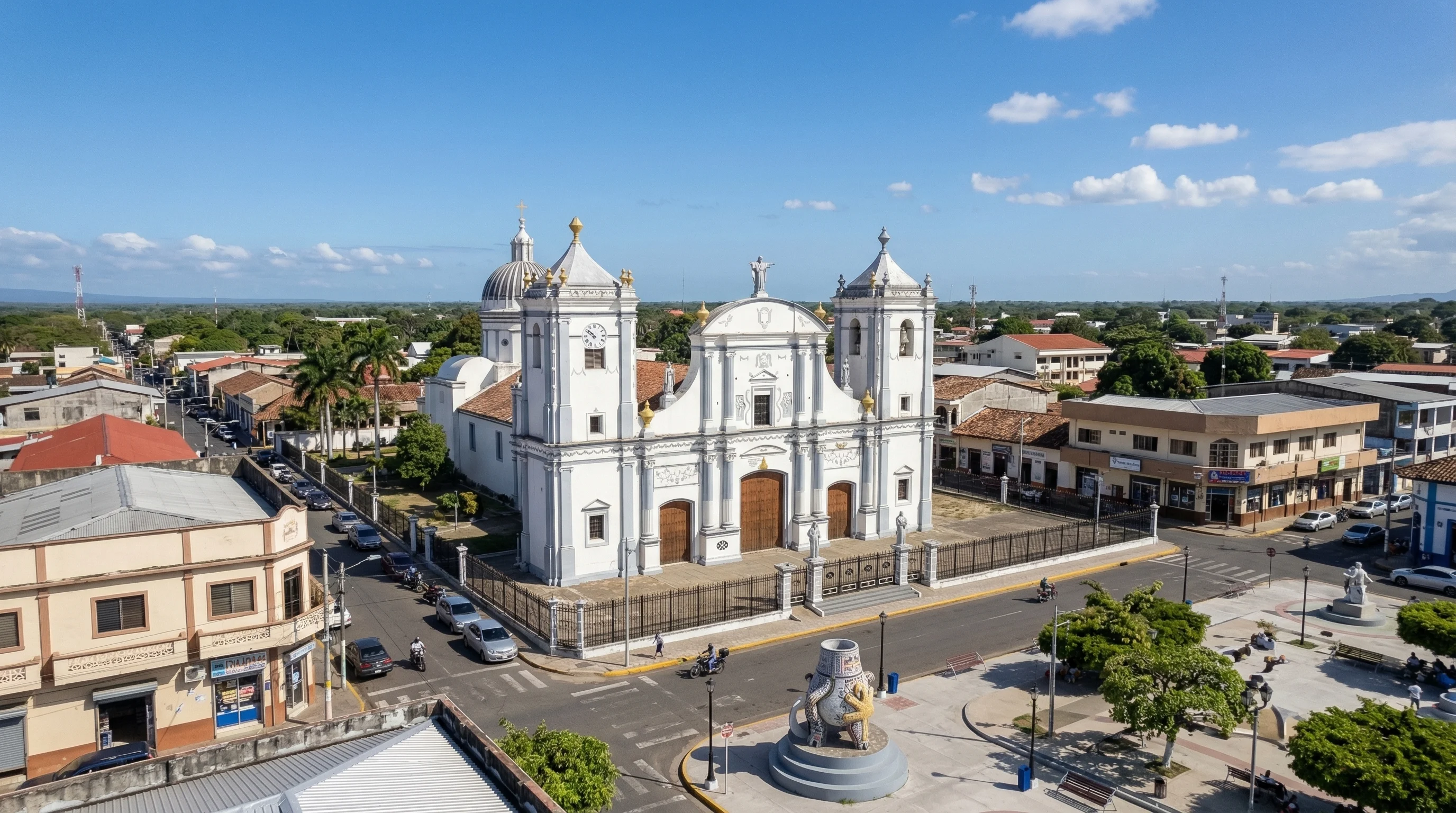
Rivas, Nicaragua, is a strategically located Pacific gateway in Central America, serving as a crucial logistics node for the region. Its position near the Costa Rican border makes it a natural transshipment and distribution center for goods moving throughout Nicaragua and into southern Central America. The local economy is heavily influenced by agriculture, with surrounding regions producing coffee, sugar cane, and tropical fruits, alongside growing textile and light manufacturing sectors. Infrastructure is anchored by the Pan-American Highway ( Nicaragua's RN-1), which provides the primary road link to Managua and the border with Costa Rica. This connectivity, combined with its proximity to Pacific port options, establishes Rivas as a vital destination for receiving and distributing goods across Nicaragua and the wider isthmus.










