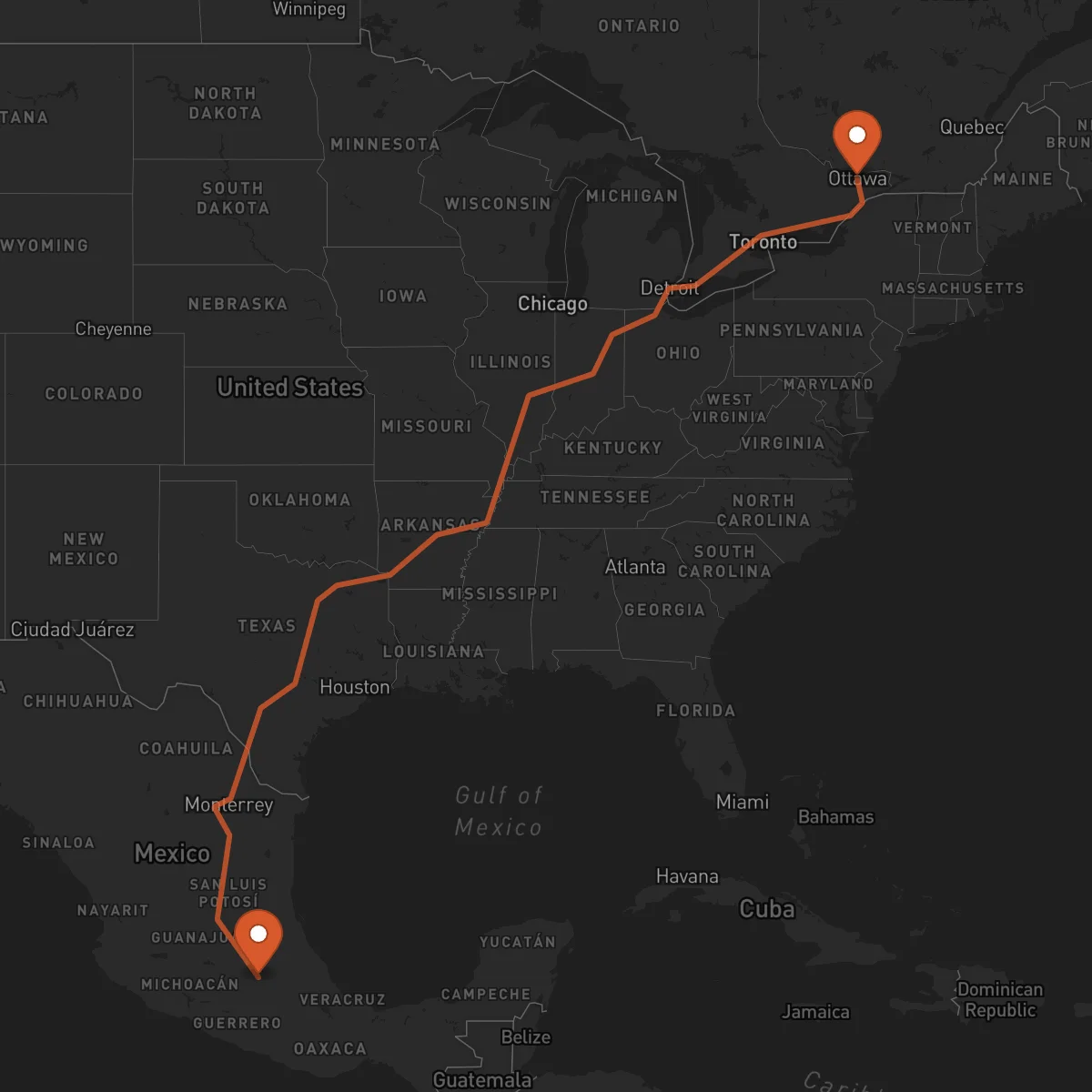
Mexico City to Ottawa
Ottawa → Mexico CityFTL freight transportation service between Mexico City and Ottawa. Reliable logistics solutions for your business.
Route Description
Everything you need to know about the corridor Mexico City - Ottawa
The logistics corridor between Mexico City and Ottawa represents a vital trade connection between North America's two largest economies. This cross-border route spans approximately 3,603 kilometers, connecting the economic heart of Mexico with Canada's capital and technology hub. The corridor facilitates the movement of goods between the NAFTA/USMCA region, supporting integrated supply chains that have developed over decades of trade partnership.
The route traverses diverse industrial regions, from Mexico City's manufacturing and service economy through the industrial centers of central Mexico, across the U.S. Midwest manufacturing belt, and into Ontario's technology and automotive corridors. Major industries utilizing this corridor include automotive parts, electronics, aerospace components, agricultural products, and manufactured goods. The corridor benefits from Mexico's position as a manufacturing powerhouse and Canada's advanced technology and natural resource sectors.
Key transportation infrastructure includes Mexico's Federal Highway 85D and 40D connecting to U.S. Interstate 35 and I-80, providing efficient north-south movement. The corridor typically crosses at Laredo/Nuevo Laredo or El Paso/Juárez, utilizing the FAST and C-TPAT certified lanes for expedited processing. Control Terrestre's expertise in cross-border operations ensures seamless customs clearance, temperature-controlled transport when needed, and real-time tracking throughout the journey. Our dedicated FTL services maintain cargo integrity while our strategic partnerships with certified carriers guarantee compliance with all cross-border regulations.
Services for this Route
Available services for the corridor Mexico City - Ottawa
 Origin
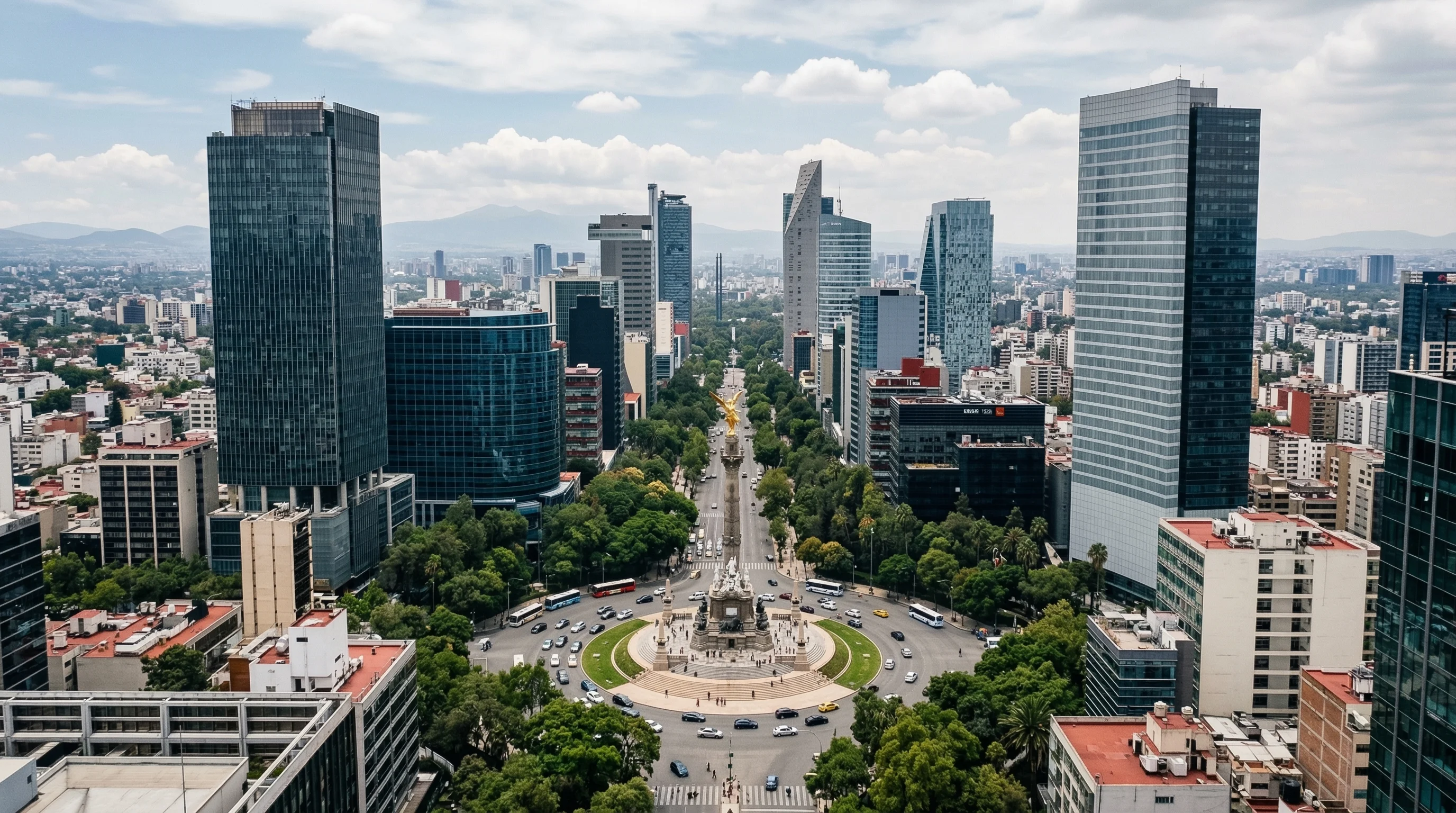
Mexico City
Mexico City serves as a strategic logistics hub for both national and international freight movement. As one of the world's largest metropolitan areas, it hosts a diverse industrial base including automotive manufacturing, aerospace, electronics, pharmaceuticals, and food processing. The city's central location in Mexico provides excellent connectivity to both Atlantic and Pacific ports through an extensive network of federal highways and railroads. Benito Juárez International Airport and the newer Felipe Ángeles International Airport facilitate air cargo operations, while the surrounding industrial parks and free trade zones create a robust environment for freight consolidation and distribution.
 Destination
Ottawa functions as a strategic logistics center in eastern Canada, leveraging its location in Ontario's technology corridor. The city hosts significant government operations, research institutions, and a growing technology sector, particularly in telecommunications, software development, and clean technology. Ottawa's proximity to major manufacturing centers in southern Ontario, including the automotive industry in Windsor and the aerospace sector in Montreal, creates strong intermodal connections. The city benefits from access to major highways including the 416 and 417, connections to the Port of Montreal via rail, and Ottawa International Airport for air cargo, facilitating efficient distribution throughout eastern Canada and the northeastern United States.










