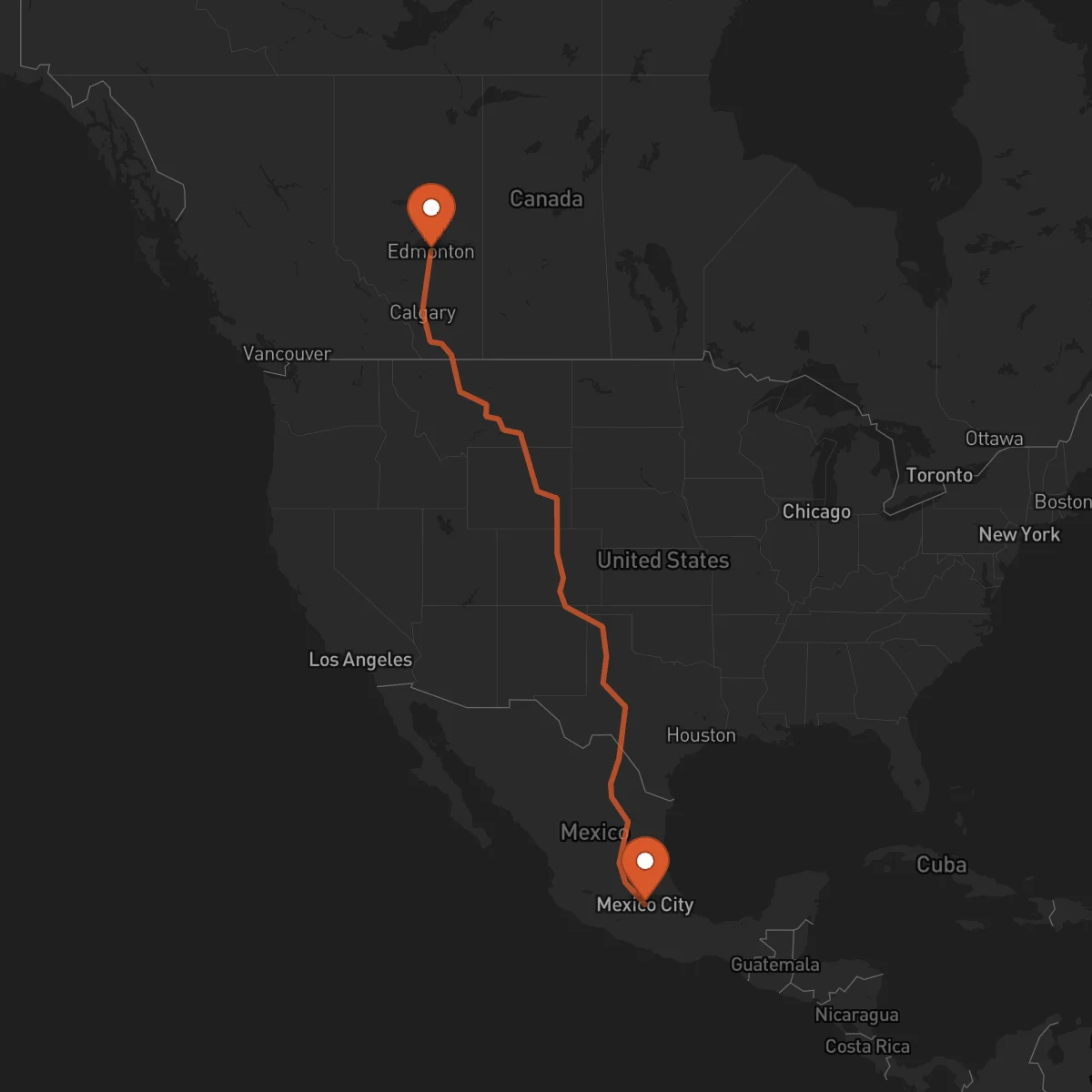
Mexico City to Edmonton
Edmonton → Mexico CityFTL freight transportation service between Mexico City and Edmonton. Reliable logistics solutions for your business.
Route Description
Everything you need to know about the corridor Mexico City - Edmonton
The logistics corridor connecting Mexico City to Edmonton represents a vital trade link between two of North America's most important economic centers. This 3,988 km cross-border route traverses the heart of Mexico and the United States before reaching Canada's Alberta province, facilitating the movement of goods across three nations. The corridor serves as a crucial artery for North American supply chains, connecting Mexico's manufacturing powerhouse with Canada's energy and industrial sectors.
The economic significance of this route is underscored by the complementary industrial strengths of both regions. Mexico City serves as a major hub for automotive manufacturing, electronics, aerospace components, and medical devices, while Edmonton is a key center for oil and gas operations, petrochemicals, forestry products, and agricultural machinery. This complementarity creates substantial freight demand, particularly for specialized equipment and temperature-controlled shipments.
Transportation infrastructure along this corridor includes Mexico's Federal Highway 85D and Federal Highway 45D connecting Mexico City to the U.S. border, major interstate highways through the United States, and Canada's Yellowhead Highway and Queen Elizabeth II Highway leading to Edmonton. Key border crossings include Laredo/Nuevo Laredo and Detroit/Windsor, depending on the specific route chosen. Control Terrestre's expertise in cross-border operations ensures seamless customs clearance and compliance with regulations across all three countries, providing dedicated FTL services that maintain cargo integrity throughout the journey.
Services for this Route
Available services for the corridor Mexico City - Edmonton
 Origin
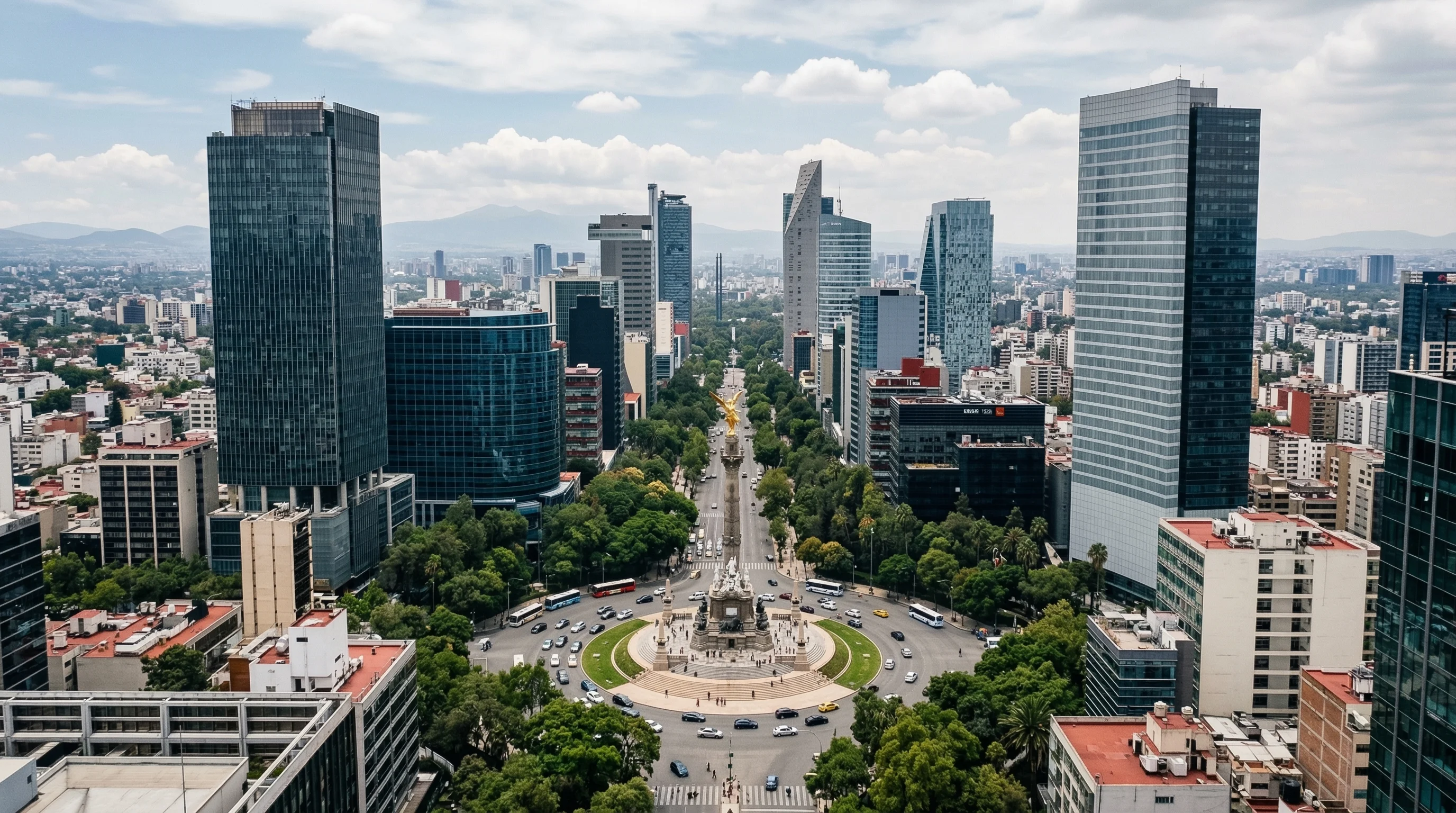
Mexico City
Mexico City stands as one of North America's most strategic logistics hubs, combining a massive consumer market with sophisticated manufacturing capabilities. The metropolitan area's elevation of 2,240 meters above sea level and central location within Mexico provide unique advantages for distribution networks. The city's extensive transportation infrastructure includes the Felipe Ángeles International Airport, four major ground freight terminals, and direct connections to Mexico's highway network. Mexico City's industrial base encompasses automotive assembly plants, aerospace manufacturing facilities, pharmaceutical production centers, and a growing technology sector, all requiring reliable freight transportation solutions. The region's economic diversity creates consistent demand for full truckload services, particularly for time-sensitive and high-value cargo moving to international markets.
 Destination
Edmonton serves as Alberta's capital and a critical logistics gateway to Canada's western provinces and northern territories. Located on the North Saskatchewan River, the city benefits from its position at the northern end of the CANAMEX Corridor, providing access to both Pacific trade routes and Arctic shipping lanes. Edmonton's industrial landscape is dominated by the energy sector, with numerous oil and gas operations requiring specialized transportation for equipment and materials. The city also hosts significant manufacturing facilities for agricultural equipment, forestry products, and industrial machinery. Edmonton International Airport and the city's extensive rail connections complement the road network, creating multimodal transportation options. The region's cold climate necessitates specialized equipment for winter operations, making experienced logistics providers essential for successful freight movements.


Ready to ship your cargo?
Get a personalized quote for your freight.
Quote Now Mexico City - Edmonton








