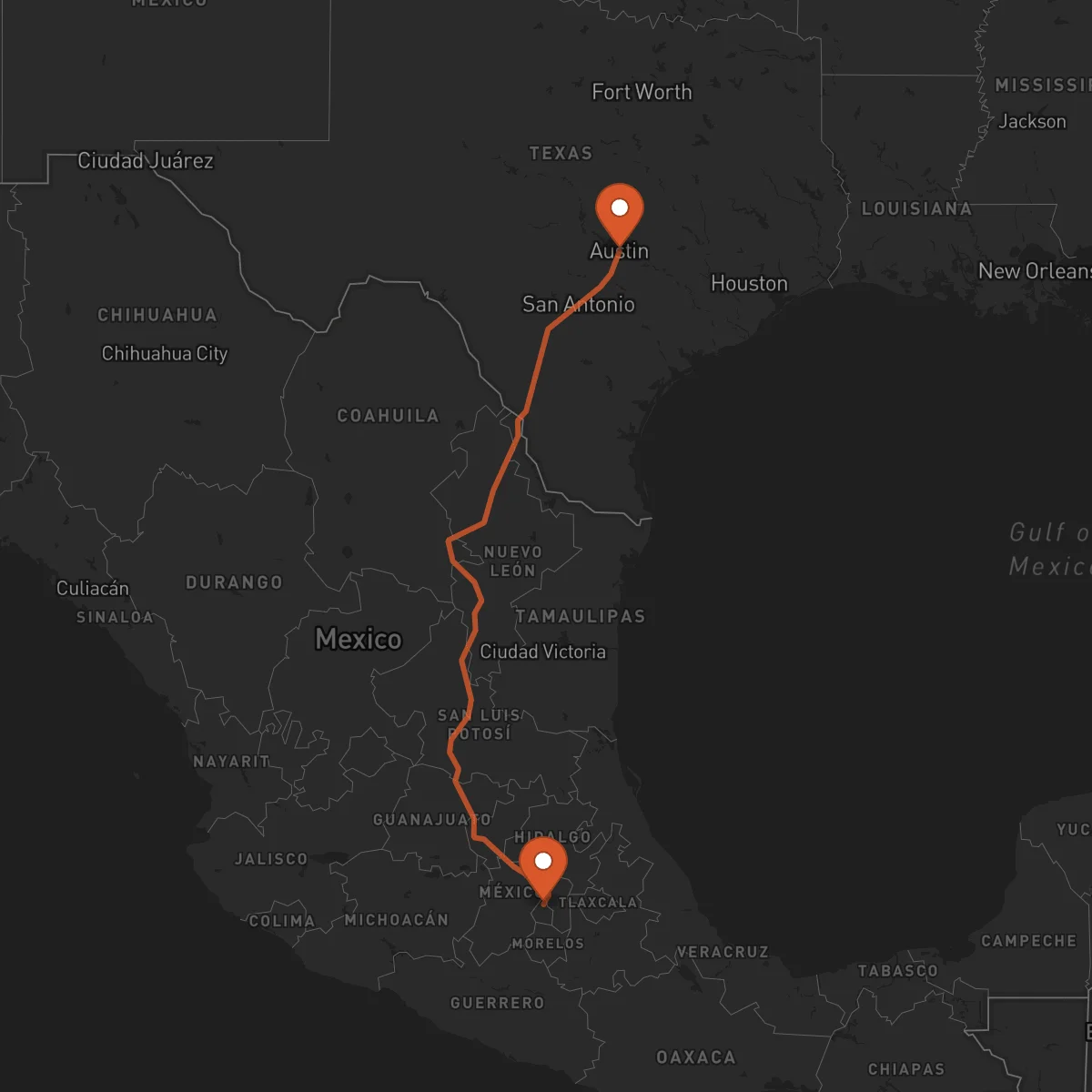
Mexico City to Austin
Austin → Mexico CityFTL freight transportation service between Mexico City and Austin. Reliable logistics solutions for your business.
Route Description
Everything you need to know about the corridor Mexico City - Austin
The logistics corridor between Mexico City and Austin represents a vital commercial link connecting the economic heart of Mexico with one of the most dynamic technology and business hubs in the United States. This cross-border route spans approximately 1,213 kilometers, traversing diverse landscapes and connecting major industrial centers across North America. The corridor facilitates the movement of goods between Mexico's capital, a city of over 21 million people, and Austin, Texas, a rapidly growing metropolis known for its technology sector and business-friendly environment.
The economic significance of this route is substantial, supporting trade between two major economies. Mexico City serves as a central distribution point for goods throughout central and southern Mexico, while Austin has become a key destination for technology products, manufacturing components, and various industrial supplies. The corridor particularly benefits from the strong commercial relationship between Mexico and Texas, with numerous companies operating on both sides of the border.
Key transportation infrastructure along this corridor includes Mexico's Federal Highway 85D and Federal Highway 40D, connecting to major U.S. interstate highways including I-35, which directly links to Austin. The primary border crossing utilized is typically Laredo/Nuevo Laredo, one of the busiest commercial ports of entry between the two countries. Control Terrestre facilitates seamless operations on this corridor through our expertise in cross-border logistics, customs clearance procedures, and our network of certified carriers who understand the specific requirements for transporting goods between Mexico and the United States.
Services for this Route
Available services for the corridor Mexico City - Austin
 Origin
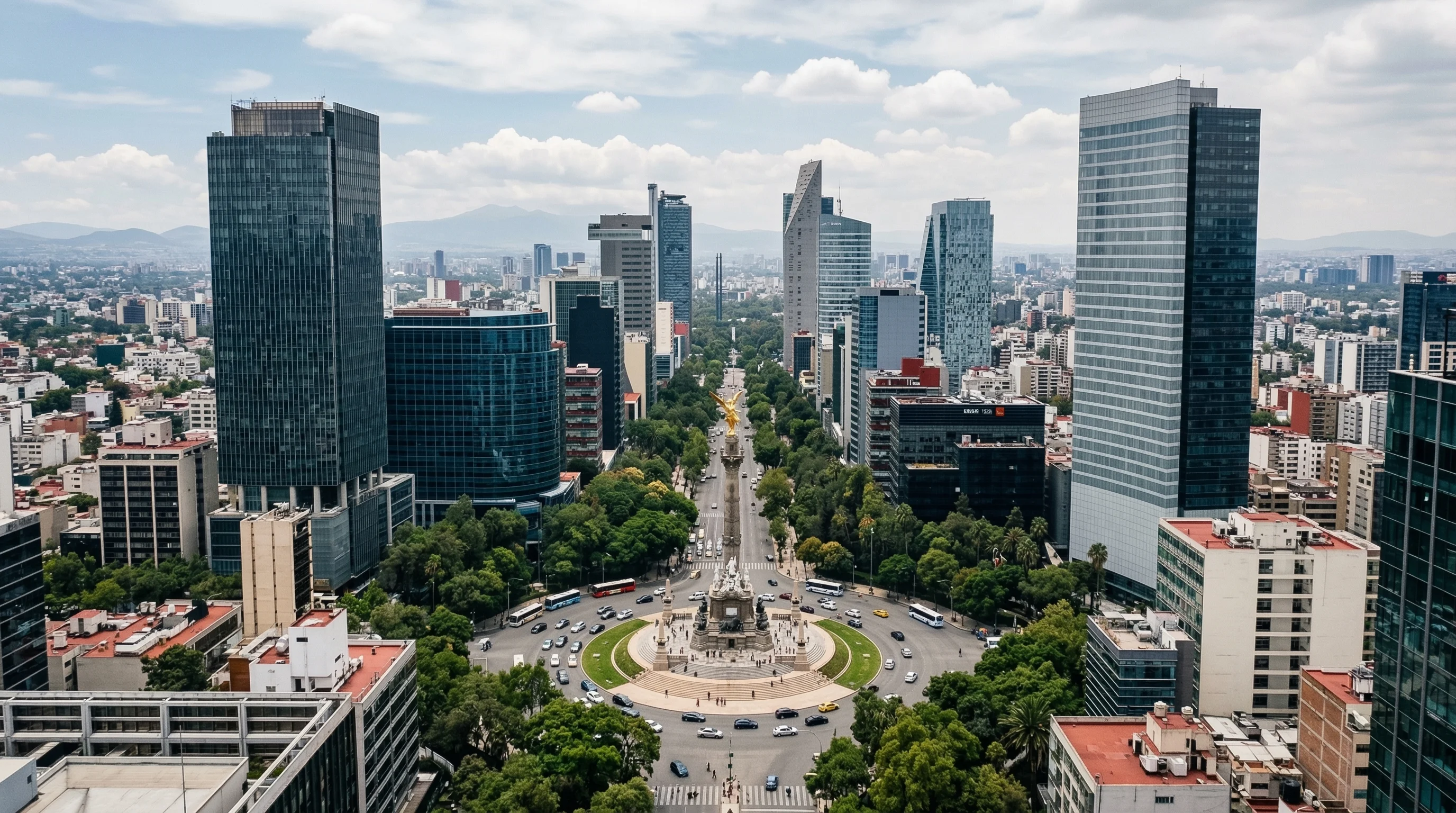
Mexico City
Mexico City stands as the primary economic and logistical hub of Mexico, offering unparalleled connectivity and infrastructure for freight transportation. The city's strategic location in the center of the country makes it an ideal distribution point for goods moving to both northern and southern regions. As the capital and largest metropolitan area in Mexico, it hosts a diverse industrial base including automotive manufacturing, electronics, pharmaceuticals, food processing, and consumer goods production. The city's extensive transportation network includes multiple freight terminals, a major international airport (AICM), and connections to Mexico's extensive highway system, facilitating efficient cargo movement throughout the country.
 Destination
Austin
Austin, Texas has emerged as a major economic powerhouse in the southern United States, particularly known for its thriving technology sector, often referred to as 'Silicon Hills.' The city's strategic location in central Texas provides excellent connectivity to major markets across the southern and southwestern United States. Austin's economy is driven by technology companies, semiconductor manufacturing, healthcare, and education, with the University of Texas contributing to a skilled workforce and research capabilities. The city benefits from proximity to major transportation infrastructure including Austin-Bergstrom International Airport, extensive highway networks (I-35, SH-130 toll road), and rail connections, making it an attractive destination for logistics operations and distribution centers.










