Chinandega to Laredo
Laredo → ChinandegaFTL freight transportation service between Chinandega and Laredo. Reliable logistics solutions for your business.
Route Description
Everything you need to know about the corridor Chinandega - Laredo
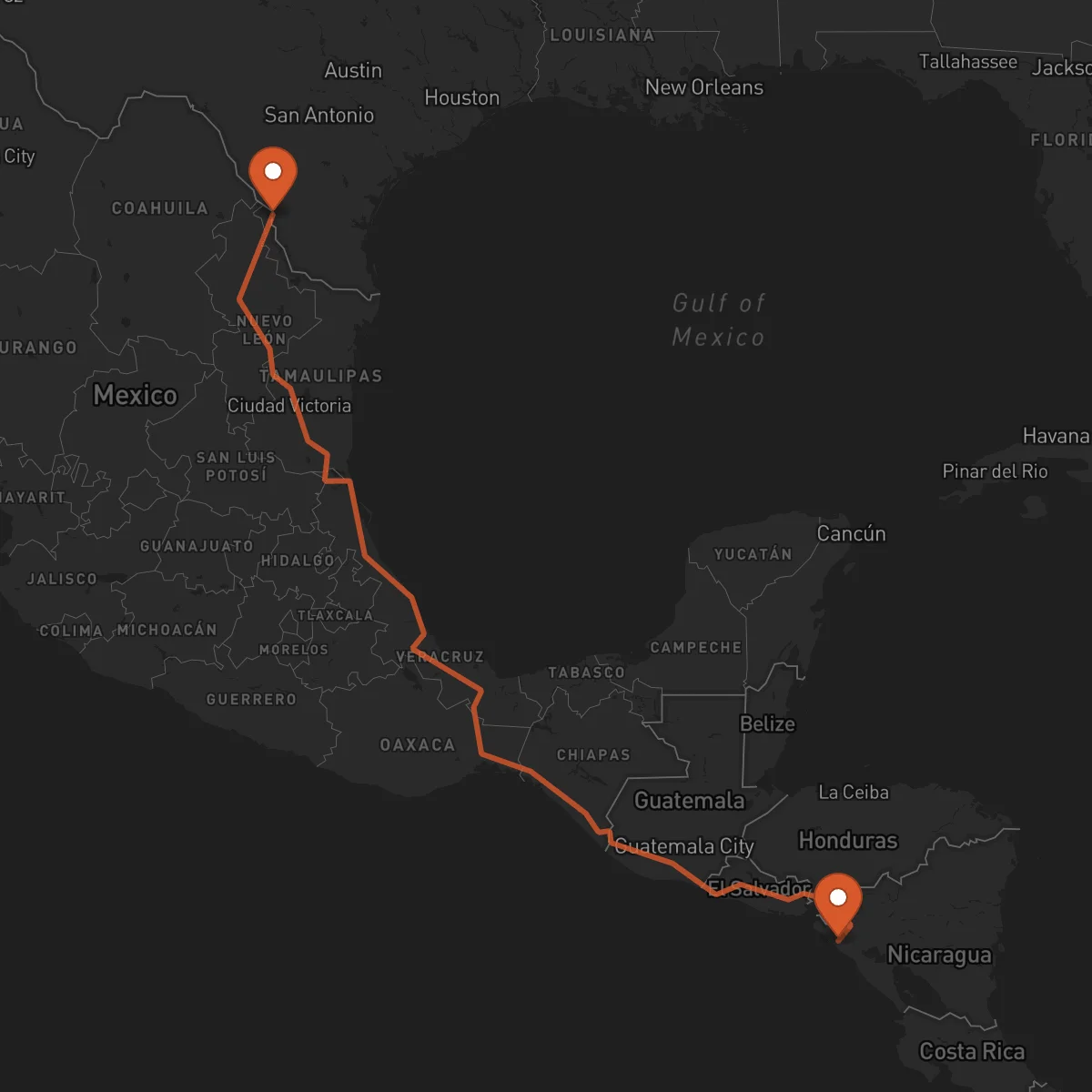
The logistics corridor connecting Chinandega, Nicaragua to Laredo, Texas represents a vital trade link between Central America and North America. This 2,097 km cross-border route facilitates the movement of goods from Nicaragua's Pacific coast through Mexico to the United States, serving as a crucial artery for international commerce. The corridor leverages both maritime and overland transportation, with Chinandega's port facilities providing ocean freight connections that complement the extensive ground transportation network.
The economic significance of this corridor is substantial, supporting trade in agricultural products, manufactured goods, and industrial materials. Key industries utilizing this route include agriculture (sugar, coffee, and other crops from Nicaragua), automotive parts manufacturing, electronics, and consumer goods. The corridor particularly benefits from the maquiladora industry in northern Mexico and the robust manufacturing sector in Texas, creating a seamless supply chain from Central American production to North American markets.
Transportation infrastructure along this route includes Mexico's Federal Highway 85 and Highway 40, providing reliable connections through Monterrey and Nuevo Laredo before reaching Laredo, Texas. The corridor features multiple border crossing options, with the Colombia Solidarity Bridge and Juarez-Lincoln Bridge serving as primary entry points into the United States. Control Terrestre facilitates seamless operations across this corridor through our C-TPAT-certified carriers, ensuring compliance with customs regulations, providing real-time tracking, and managing all documentation requirements for efficient cross-border freight movement.
Services for this Route
Available services for the corridor Chinandega - Laredo
 Origin
Chinandega
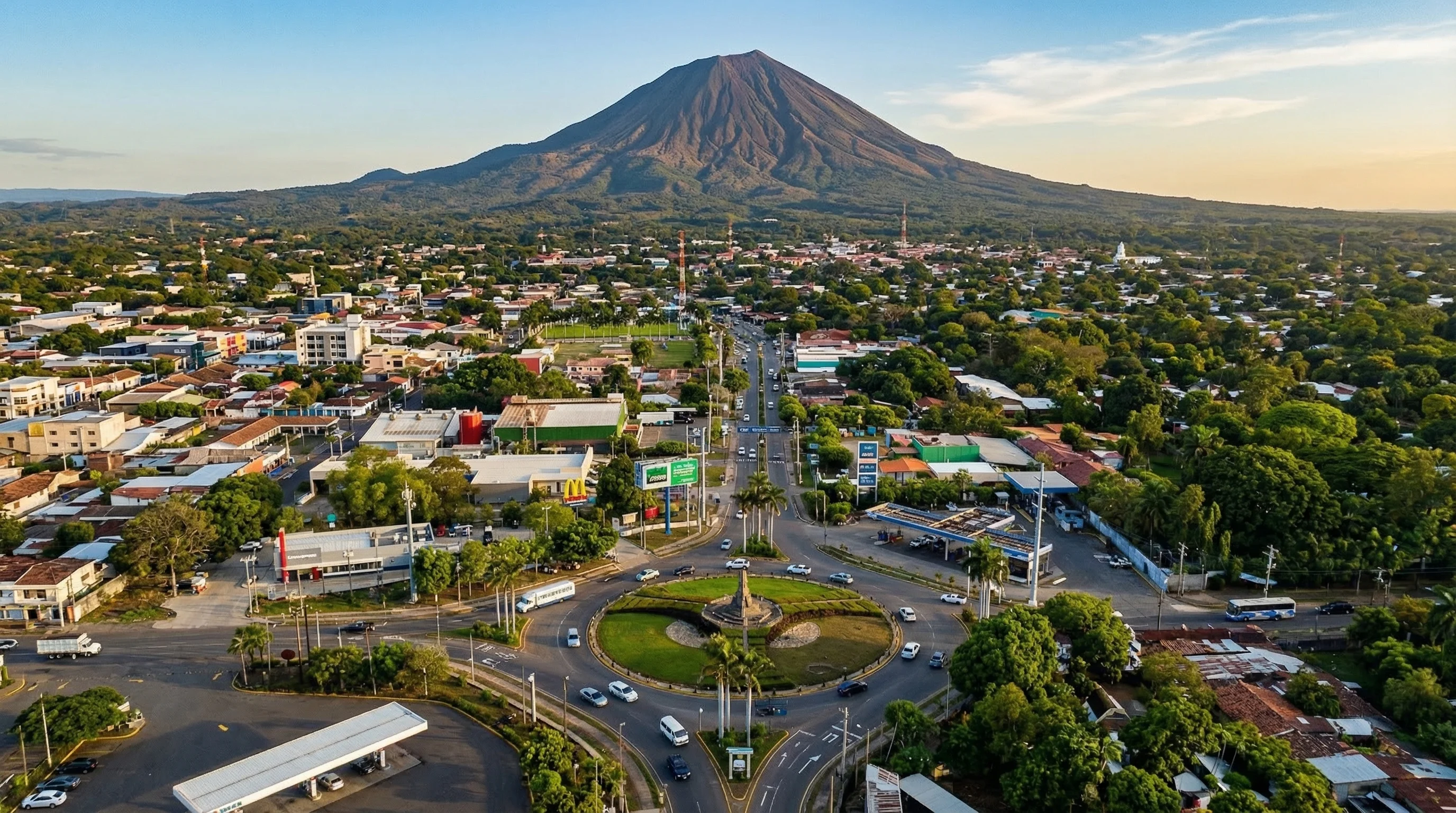
Chinandega serves as a strategic logistics hub in western Nicaragua, located near the Pacific coast with excellent access to both maritime and overland transportation networks. The city's proximity to Puerto Corinto, Nicaragua's principal Pacific port, provides seamless integration between sea and land freight operations. This positioning makes Chinandega an ideal origin point for goods destined for North American markets, offering companies efficient export capabilities through multiple transportation modes.
The region's economy is anchored by diverse industries including agriculture (sugar cane, peanuts, and tropical fruits), food processing, and growing manufacturing sectors. Chinandega benefits from Nicaragua's free trade agreements and its strategic location within the CA-4 agreement (allowing free movement with neighboring Central American countries). The city's transportation infrastructure includes well-maintained highways connecting to Managua and the Costa Rican border, as well as rail connections that historically supported the region's agricultural exports.
 Destination
Laredo
Laredo, Texas stands as one of North America's most critical inland ports and logistics hubs, strategically positioned on the U.S.-Mexico border. The city processes more truck traffic than any other land port in the Western Hemisphere, making it an essential gateway for cross-border trade. Laredo's location at the convergence of Interstate 35 and major Mexican highways creates unparalleled connectivity between the United States, Mexico, and beyond, serving as a natural distribution point for goods entering the North American market.
The region's economy thrives on international trade, logistics services, and manufacturing, with major industries including automotive, electronics, medical devices, and consumer goods. Laredo benefits from sophisticated customs facilities, warehousing infrastructure, and a business-friendly environment that attracts multinational companies. The city's transportation infrastructure includes multiple international bridges, extensive rail yards operated by major Class I railroads, and proximity to major air cargo facilities in San Antonio, creating a comprehensive logistics ecosystem that efficiently processes freight from Central and South America.










