Chicago to Vancouver
Vancouver → ChicagoFTL freight transportation service between Chicago and Vancouver. Reliable logistics solutions for your business.
Route Description
Everything you need to know about the corridor Chicago - Vancouver
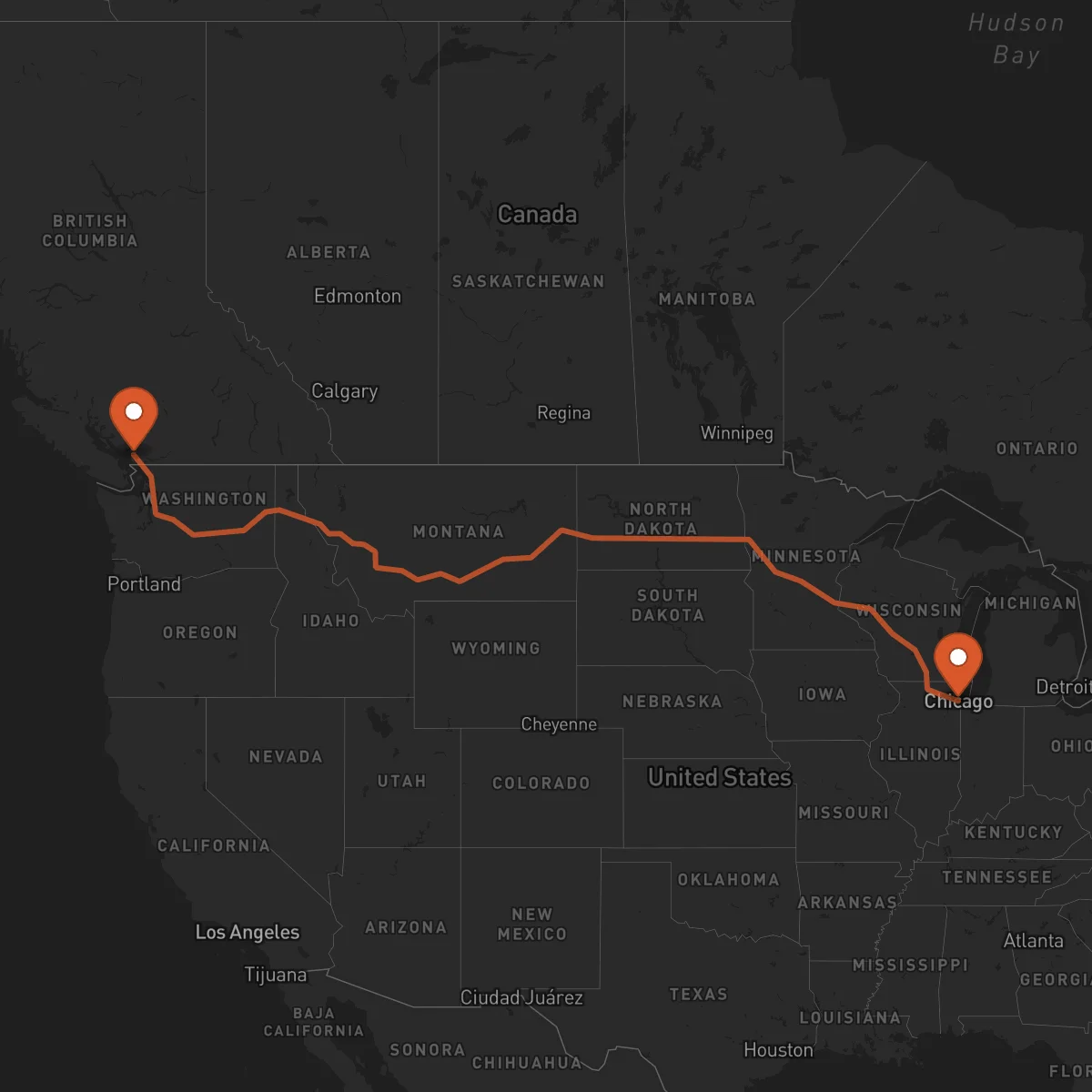
The Chicago to Vancouver corridor represents one of the most critical freight transportation routes in North America, connecting the economic powerhouse of the Midwest with the Pacific gateway of Canada. This 2,852 km cross-border route traverses diverse terrain and multiple jurisdictions, making it a vital artery for international trade between the United States and Canada. The corridor's strategic importance stems from its ability to link major industrial centers with West Coast ports, facilitating the seamless movement of goods across the continent.
The economic significance of this route cannot be overstated. Chicago serves as a major logistics hub with its extensive rail networks, O'Hare International Airport, and proximity to the Great Lakes, while Vancouver functions as Canada's largest port city and a key gateway for Asian trade. The corridor supports a wide range of industries including automotive, technology, agriculture, and manufacturing, with companies relying on timely and reliable freight transportation to maintain their supply chains. The route passes through major metropolitan areas and industrial zones, ensuring consistent demand for freight services.
Key transportation infrastructure along this corridor includes major interstate highways such as I-90 and I-94, which provide direct connections between the two cities. The route also intersects with other important transportation networks, allowing for multimodal shipping options. Border crossings at locations like Sweetgrass, MT/Blaine, WA are crucial for cross-border operations, requiring specialized knowledge of customs procedures and documentation. Control Terrestre's expertise in navigating these complexities ensures that shipments move efficiently through each jurisdiction, minimizing delays and maintaining the integrity of the supply chain.
Services for this Route
Available services for the corridor Chicago - Vancouver
 Origin
Chicago
Chicago stands as a premier logistics hub in North America, strategically positioned in the heart of the Midwest. The city's location provides unparalleled access to major markets across the United States, with its central position reducing transit times to both coasts. Chicago's transportation infrastructure is among the most comprehensive in the world, featuring O'Hare International Airport (one of the busiest in the world), extensive rail networks operated by major carriers, and a complex system of interstate highways. The city serves as a critical node in the North American freight network, with its intermodal facilities enabling seamless transfers between different transportation modes.
The economic landscape of Chicago is diverse and robust, with key industries including manufacturing, technology, finance, and agriculture. The city is home to numerous Fortune 500 companies and serves as a distribution center for goods throughout the Midwest. Chicago's industrial base includes food processing, machinery manufacturing, and printing, while its proximity to agricultural regions makes it a vital point for food and commodity distribution. The Port of Chicago, though not a coastal port, provides crucial inland waterway connections via the Great Lakes and the Mississippi River system, further enhancing the city's logistics capabilities.
 Destination
Vancouver
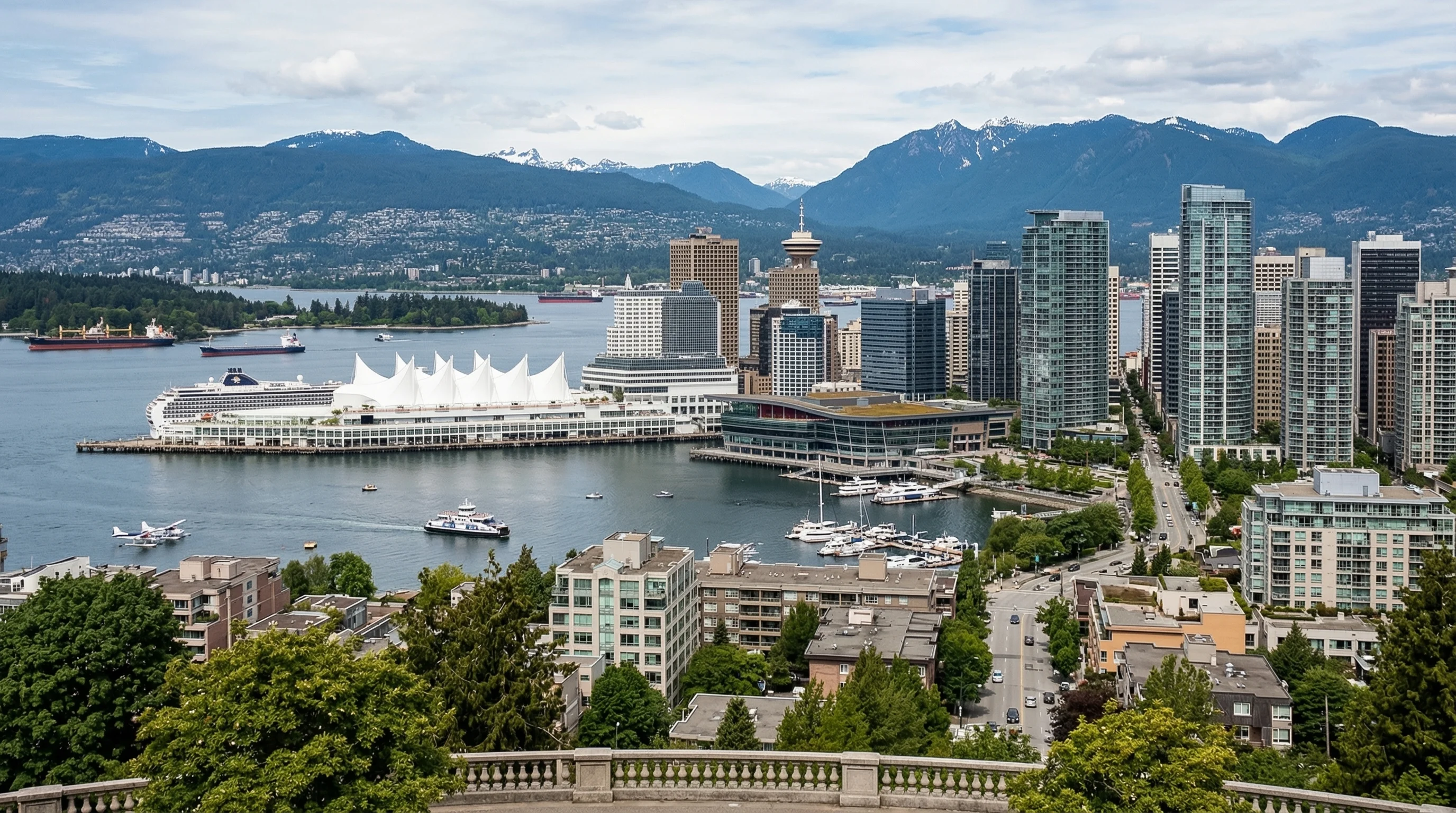
Vancouver represents Canada's primary Pacific gateway and a critical logistics hub for international trade, particularly with Asia. Located on the west coast of British Columbia, the city provides direct access to the Pacific Ocean and serves as the terminus for major transcontinental rail lines. Vancouver's Port Metro Vancouver is the largest port in Canada by tonnage and the third-largest in North America, handling millions of containers annually. The city's transportation infrastructure includes the Vancouver International Airport, extensive highway networks, and comprehensive rail connections that link to the rest of Canada and the United States.
The economic profile of Vancouver is characterized by international trade, technology, film production, and natural resources. The city's port facilities support a wide range of industries, from forestry and mining products to consumer goods and agricultural products. Vancouver's strategic location makes it an ideal distribution point for goods destined for Western Canada and the Pacific Northwest of the United States. The region's growing technology sector and strong international business connections further enhance its importance as a logistics center. The city's commitment to sustainable development and green initiatives also influences its approach to freight transportation and logistics operations.










