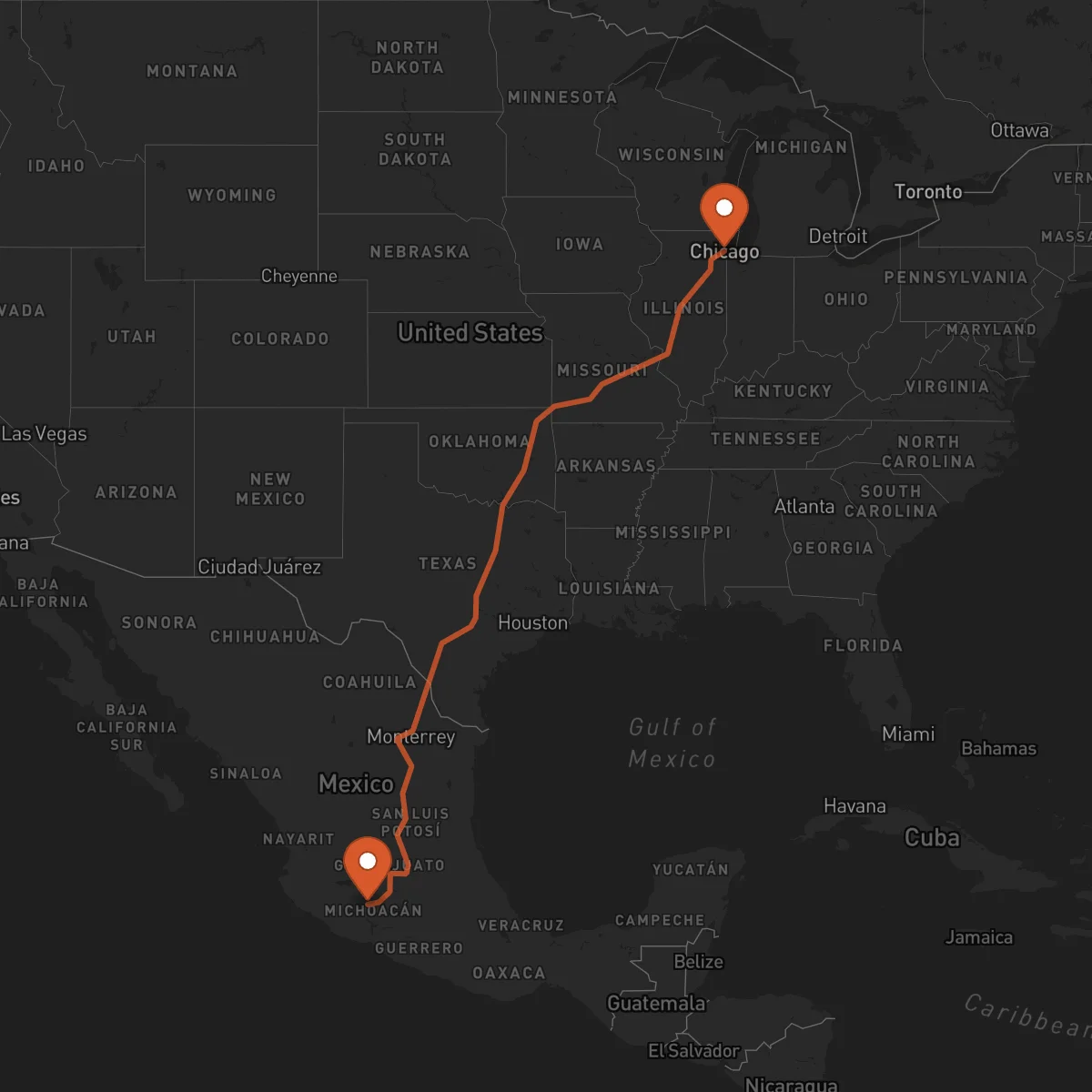
Chicago to Uruapan
Uruapan → ChicagoFTL freight transportation service between Chicago and Uruapan. Reliable logistics solutions for your business.
Route Description
Everything you need to know about the corridor Chicago - Uruapan
The Chicago to Uruapan corridor represents a vital cross-border logistics connection between the United States and Mexico, spanning approximately 2,845 kilometers. This strategic route links the industrial heartland of the Midwest with the growing manufacturing hub of Michoacán, facilitating the movement of goods between two major economic regions. The corridor serves as a crucial link in the North American supply chain, connecting the automotive, electronics, and agricultural sectors that dominate both regions. Control Terrestre specializes in optimizing this cross-border journey, ensuring seamless freight transportation from origin to destination.
Services for this Route
Available services for the corridor Chicago - Uruapan
 Origin
Chicago
Chicago, Illinois stands as a major logistics hub in the United States, strategically positioned in the Midwest with access to extensive transportation networks. The city serves as a critical distribution center for the automotive, manufacturing, and agricultural industries, with major corporations like Caterpillar, Boeing, and numerous food processing companies operating in the region. Chicago's transportation infrastructure includes O'Hare International Airport, one of the busiest in the world, and extensive rail networks operated by major carriers. The city's location at the crossroads of major interstate highways (I-90, I-94, I-55, and I-80) provides excellent ground transportation connectivity to all parts of the country.
 Destination
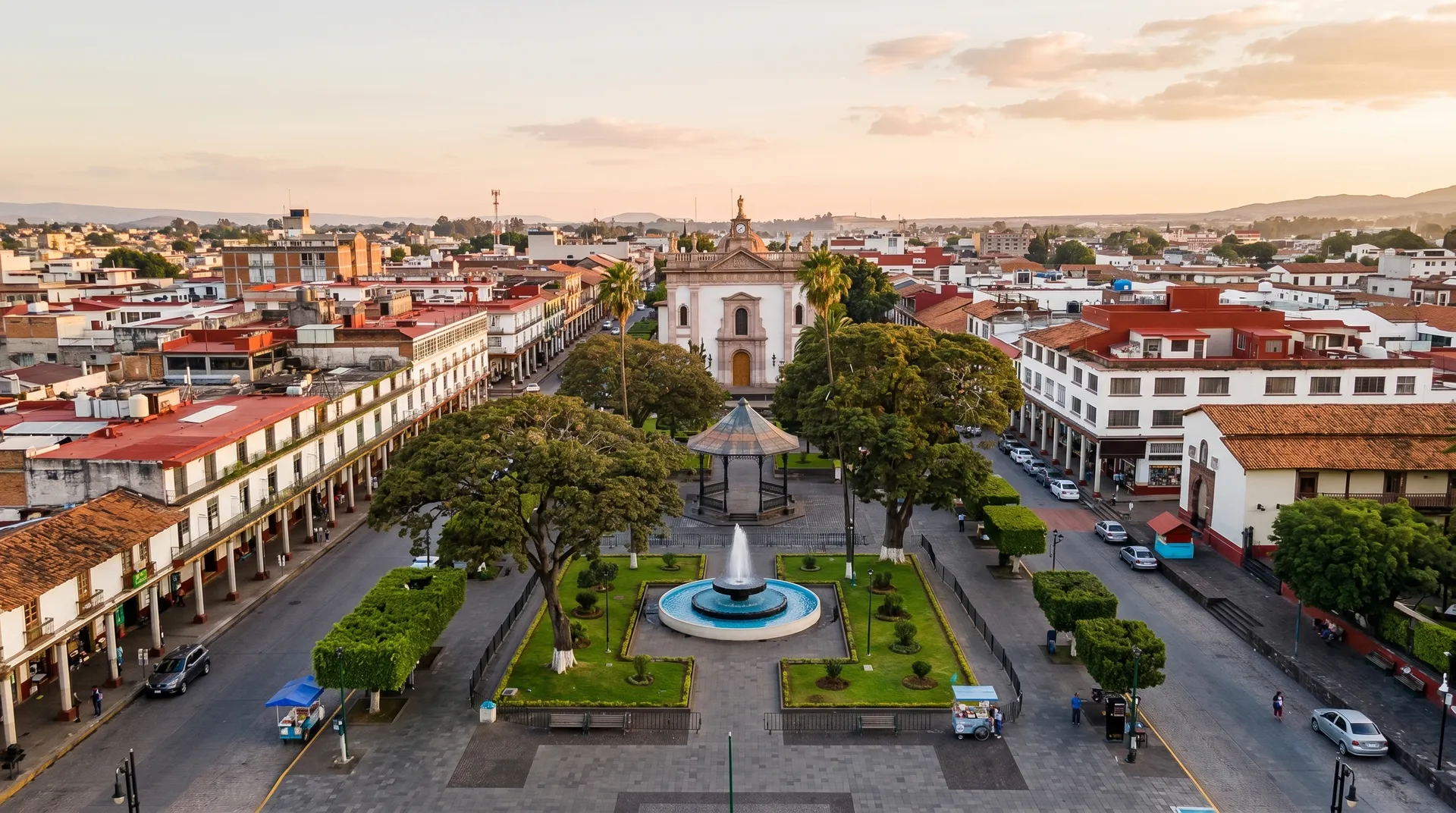
Uruapan, located in the state of Michoacán, Mexico, serves as an important industrial and commercial center in western Mexico. The city benefits from its strategic location near major manufacturing zones and its proximity to the Pacific port of Lázaro Cárdenas. Uruapan's economy is driven by the automotive parts manufacturing, agricultural products (particularly avocados and berries), and food processing industries. The region has seen significant foreign investment, particularly from Japanese and American companies, establishing it as a key player in Mexico's industrial landscape. The city's transportation infrastructure includes access to federal highways connecting to major cities and ports, facilitating efficient distribution throughout Mexico.










