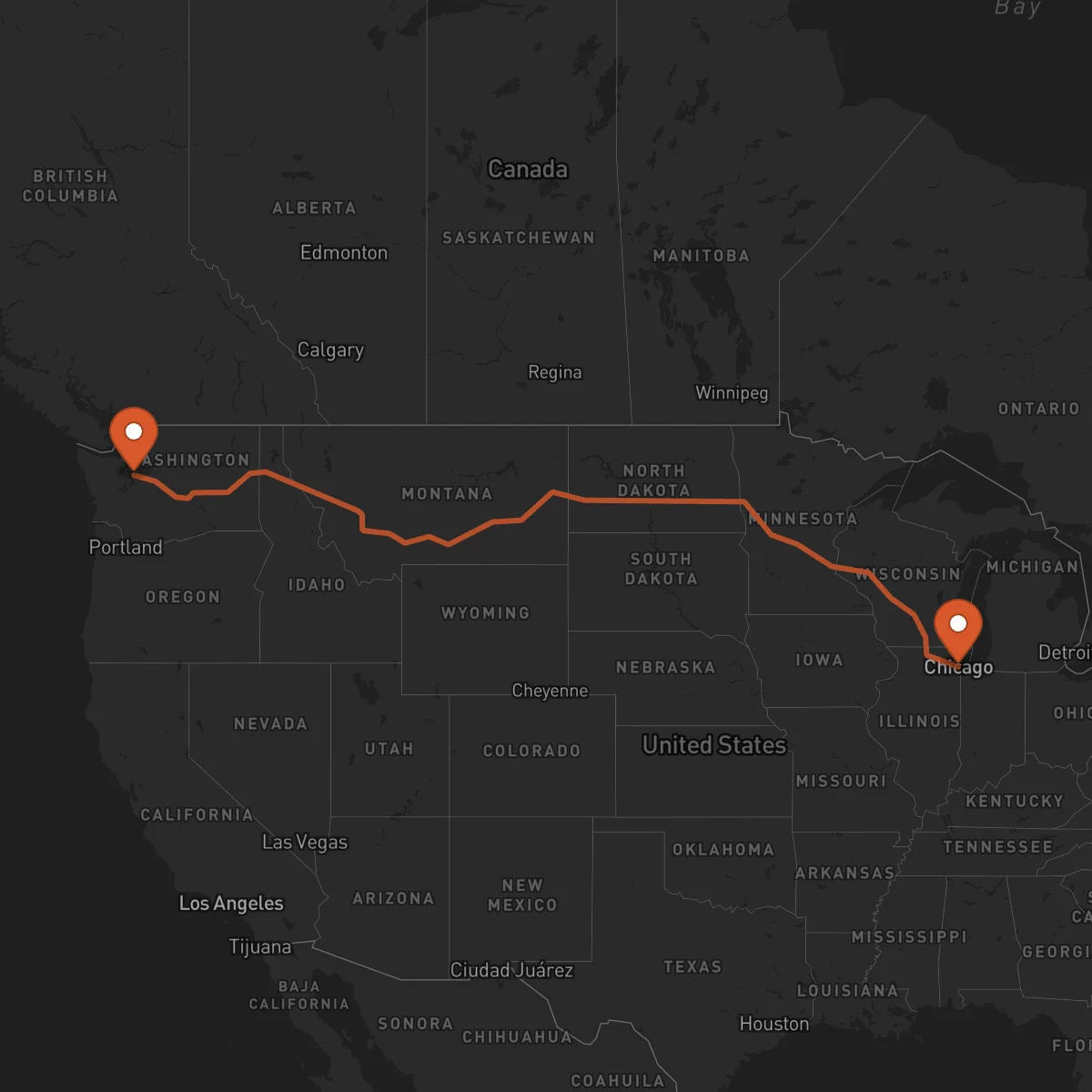
Chicago to Seattle
Seattle → ChicagoFTL freight transportation service between Chicago and Seattle. Reliable logistics solutions for your business.
Route Description
Everything you need to know about the corridor Chicago - Seattle
The Chicago to Seattle corridor represents one of the most critical freight transportation routes in the United States, connecting the economic powerhouse of the Midwest with the Pacific Northwest's major port city. This 2,788 km journey traverses diverse landscapes and connects major industrial centers, making it essential for companies moving goods between these two vital regions.
The corridor serves as a backbone for numerous industries, particularly automotive, technology, agriculture, and retail sectors. Chicago's position as a major transportation hub, combined with Seattle's status as a gateway to Asian markets, creates a dynamic flow of goods moving in both directions. The route primarily utilizes Interstate 90 and Interstate 94, two of the most heavily traveled freight corridors in the nation, ensuring reliable and efficient transportation.
Control Terrestre specializes in optimizing this corridor through our extensive network of certified carriers and strategic partnerships. Our full truckload (FTL) services ensure dedicated transportation for your cargo, eliminating the risks associated with consolidated freight. We understand the unique challenges of this route, from Chicago's urban congestion to the varying weather conditions across the northern states, and we've developed solutions to ensure your freight arrives safely and on schedule.
Services for this Route
Available services for the corridor Chicago - Seattle
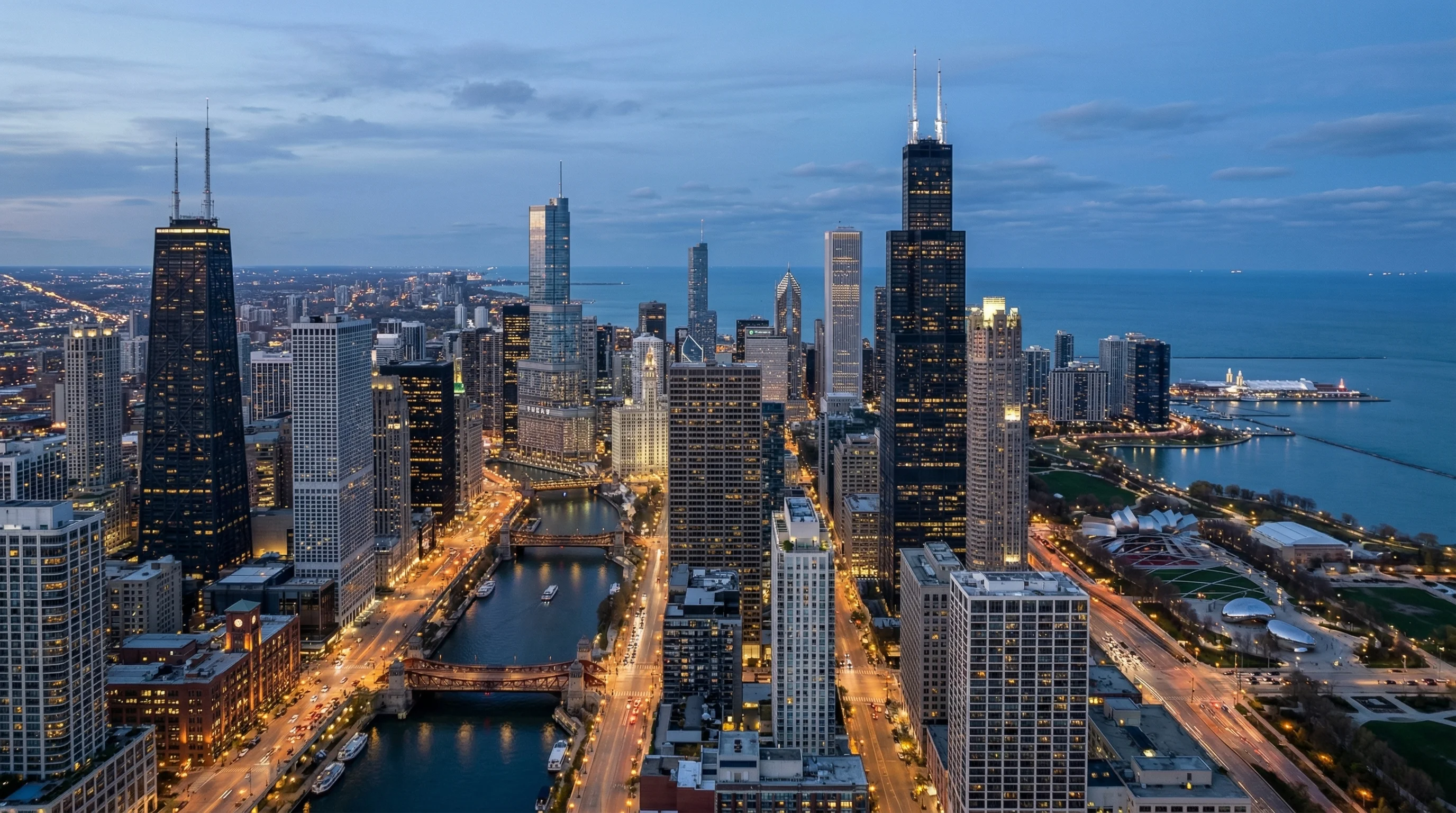 Origin
Chicago
Chicago stands as a premier logistics hub in North America, strategically positioned at the crossroads of major transportation networks. The city's O'Hare International Airport, one of the busiest in the world, combined with its extensive rail network and access to the Great Lakes, creates unparalleled connectivity. Chicago's economy thrives on manufacturing, particularly in machinery, food processing, and printing, alongside a robust financial services sector. The city's infrastructure includes multiple interstate highways, extensive warehousing facilities, and intermodal yards that facilitate seamless freight movement.
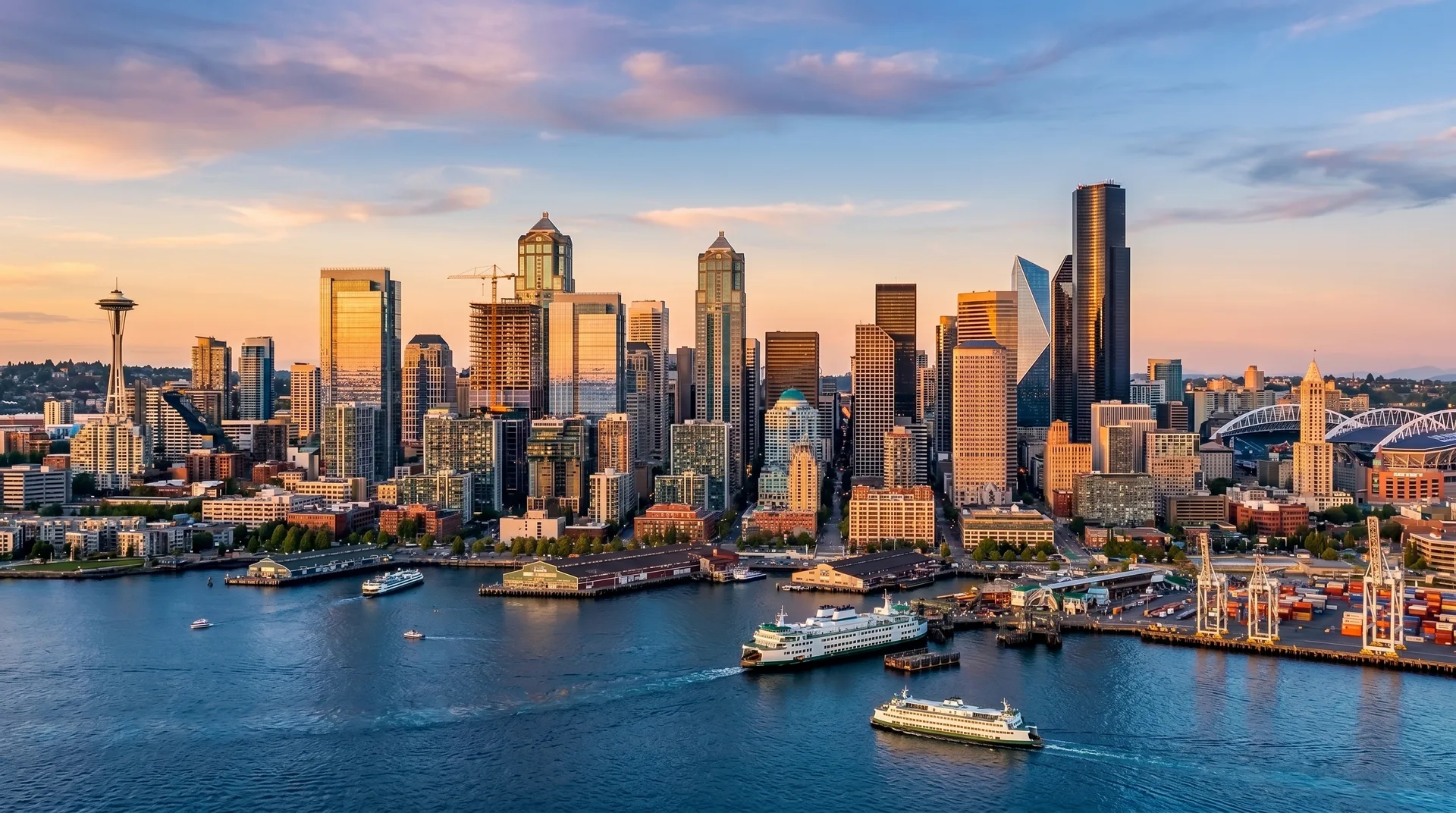 Destination
Seattle
Seattle serves as a critical gateway to the Pacific Rim, anchored by the Port of Seattle, one of the largest container ports in the United States. The city's economy is driven by technology giants, aerospace manufacturing (including Boeing's major presence), and a vibrant maritime industry. Seattle's strategic location provides direct access to Asian markets, making it essential for international trade. The region's transportation infrastructure includes the Port of Seattle, Sea-Tac International Airport, and an extensive network of highways connecting to the broader Pacific Northwest.










