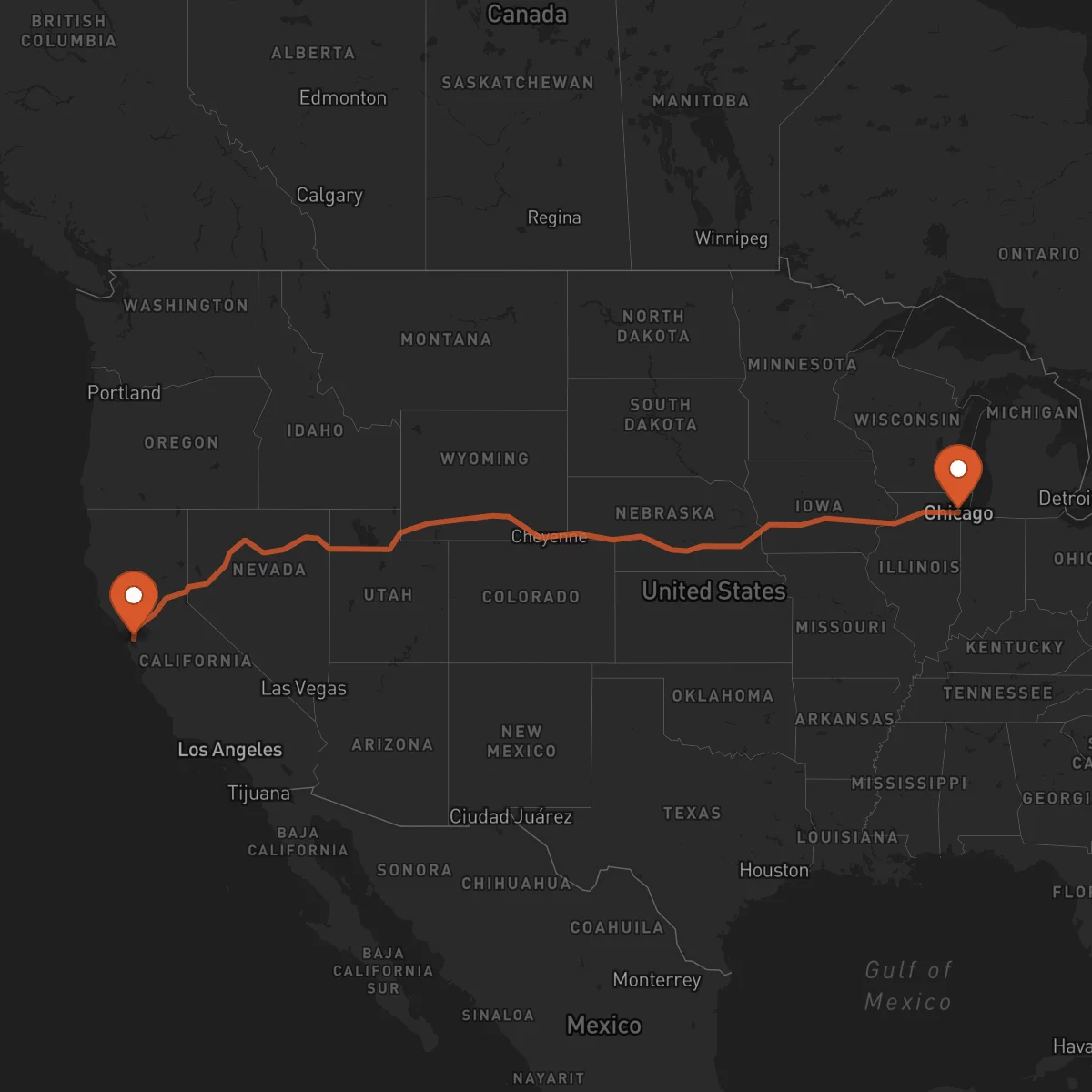
Chicago to Oakland
Oakland → ChicagoFTL freight transportation service between Chicago and Oakland. Reliable logistics solutions for your business.
Route Description
Everything you need to know about the corridor Chicago - Oakland
The Chicago to Oakland corridor represents a vital logistics connection between the Midwest and the West Coast of the United States. This 2,971 km route links two of America's most important economic hubs, facilitating the movement of goods across the country's heartland to the Pacific gateway. The corridor traverses diverse terrain and crosses multiple states, making it a critical artery for domestic freight transportation and supply chain operations.
The economic significance of this route cannot be overstated. Chicago serves as the nation's transportation hub, while Oakland functions as a major West Coast port and distribution center. This corridor supports the movement of industrial equipment, agricultural products, consumer goods, and raw materials between manufacturing centers in the Midwest and distribution networks along the Pacific coast. The route connects businesses to major markets and enables efficient cross-country logistics operations.
Key industries utilizing this corridor include manufacturing, automotive, technology, agriculture, and retail sectors. The route benefits from major interstate highways including I-80, which provides a direct transcontinental connection. This infrastructure supports high-volume freight movement and enables reliable transit times for time-sensitive shipments. The corridor also connects to major rail networks, offering intermodal transportation options for enhanced supply chain flexibility.
Control Terrestre provides specialized FTL transportation services along this strategic corridor, offering dedicated trucks and experienced drivers who understand the unique requirements of cross-country freight movement. Our network of certified carriers ensures consistent capacity and reliable service, while our advanced tracking systems provide real-time visibility throughout the journey from Chicago to Oakland.
Services for this Route
Available services for the corridor Chicago - Oakland
 Origin
Chicago
Chicago stands as a premier logistics hub in North America, strategically positioned at the crossroads of major transportation networks. The city's central location provides unparalleled access to both coastal regions and inland markets, making it an ideal origin point for nationwide freight distribution. Chicago's extensive intermodal facilities, including O'Hare International Airport and multiple Class I rail yards, create a multimodal transportation ecosystem that supports efficient cargo movement in all directions.
The Windy City's economy is diverse and robust, with key industries including manufacturing, food processing, printing and publishing, and technology. Chicago hosts numerous corporate headquarters and distribution centers, benefiting from its position as a major financial and commercial center. The region's manufacturing base produces everything from machinery to consumer goods, while its food processing industry generates substantial freight volume requiring reliable transportation solutions.
 Destination
Oakland
Oakland serves as a critical logistics gateway on the West Coast, anchored by the Port of Oakland, one of the busiest container ports in the United States. The city's strategic location provides direct access to Northern California's vast consumer markets and manufacturing regions, while its port facilities connect American businesses to Asian trade routes. Oakland's transportation infrastructure includes extensive highway networks, rail connections, and proximity to major airports, creating a comprehensive logistics ecosystem.
The Oakland metropolitan area supports diverse economic activities, with technology, healthcare, and advanced manufacturing leading the regional economy. The East Bay region has become a hub for biotechnology, clean energy, and professional services. Oakland's port facilities handle significant volumes of containerized cargo, automotive imports, and agricultural products, while its proximity to Silicon Valley creates demand for specialized logistics services supporting the technology sector's supply chain needs.










