
Chicago to Ocotepeque
Ocotepeque → ChicagoFTL freight transportation service between Chicago and Ocotepeque. Reliable logistics solutions for your business.
Route Description
Everything you need to know about the corridor Chicago - Ocotepeque
The Chicago to Ocotepeque corridor represents a vital cross-border logistics route connecting the industrial heartland of the United States with the growing economic center of western Honduras. This 3,056 km corridor facilitates the movement of goods between North America's largest economy and Central America's emerging markets, supporting trade relationships that span manufacturing, agriculture, and consumer goods. The route traverses diverse terrain and crosses multiple international borders, requiring specialized expertise in cross-border operations and customs compliance.
The corridor serves a wide range of industries, with manufacturing companies in Chicago exporting machinery, equipment, and industrial components to support Honduras' growing manufacturing sector. Agricultural products, textiles, and consumer goods flow in both directions, while construction materials and infrastructure equipment support development projects throughout the region. The route particularly benefits companies involved in automotive parts, electronics, and processed foods, which require reliable full truckload (FTL) transportation solutions.
Key transportation infrastructure includes major interstate highways from Chicago through the central United States, connecting to Mexican highways via Laredo or El Paso border crossings. From Mexico, the route continues through Guatemala and into Honduras via CA-1 and other regional highways. Control Terrestre provides comprehensive logistics management for this corridor, handling all aspects of cross-border operations including customs documentation, compliance with international regulations, and coordination with trusted carrier partners who maintain C-TPAT, FAST, and BASC certifications.
Services for this Route
Available services for the corridor Chicago - Ocotepeque
 Origin
Chicago
Chicago stands as a premier logistics hub in the United States, strategically positioned in the Midwest with unparalleled access to national transportation networks. The city's location at the intersection of major interstate highways (I-90, I-94, I-80, I-55) and its extensive rail connections make it an ideal origin point for cross-border freight movements. Chicago's O'Hare International Airport, one of the busiest cargo airports globally, complements the robust ground transportation infrastructure, while the Port of Chicago provides additional multimodal capabilities.
The Chicago metropolitan area hosts a diverse industrial base including advanced manufacturing, food processing, machinery production, and technology sectors. Major corporations in automotive, aerospace, and consumer goods manufacturing maintain significant operations in the region, creating substantial freight volumes for cross-border transportation. The city's central location allows for efficient distribution to both coasts within 48-72 hours, making it an optimal starting point for shipments to Central America.
 Destination
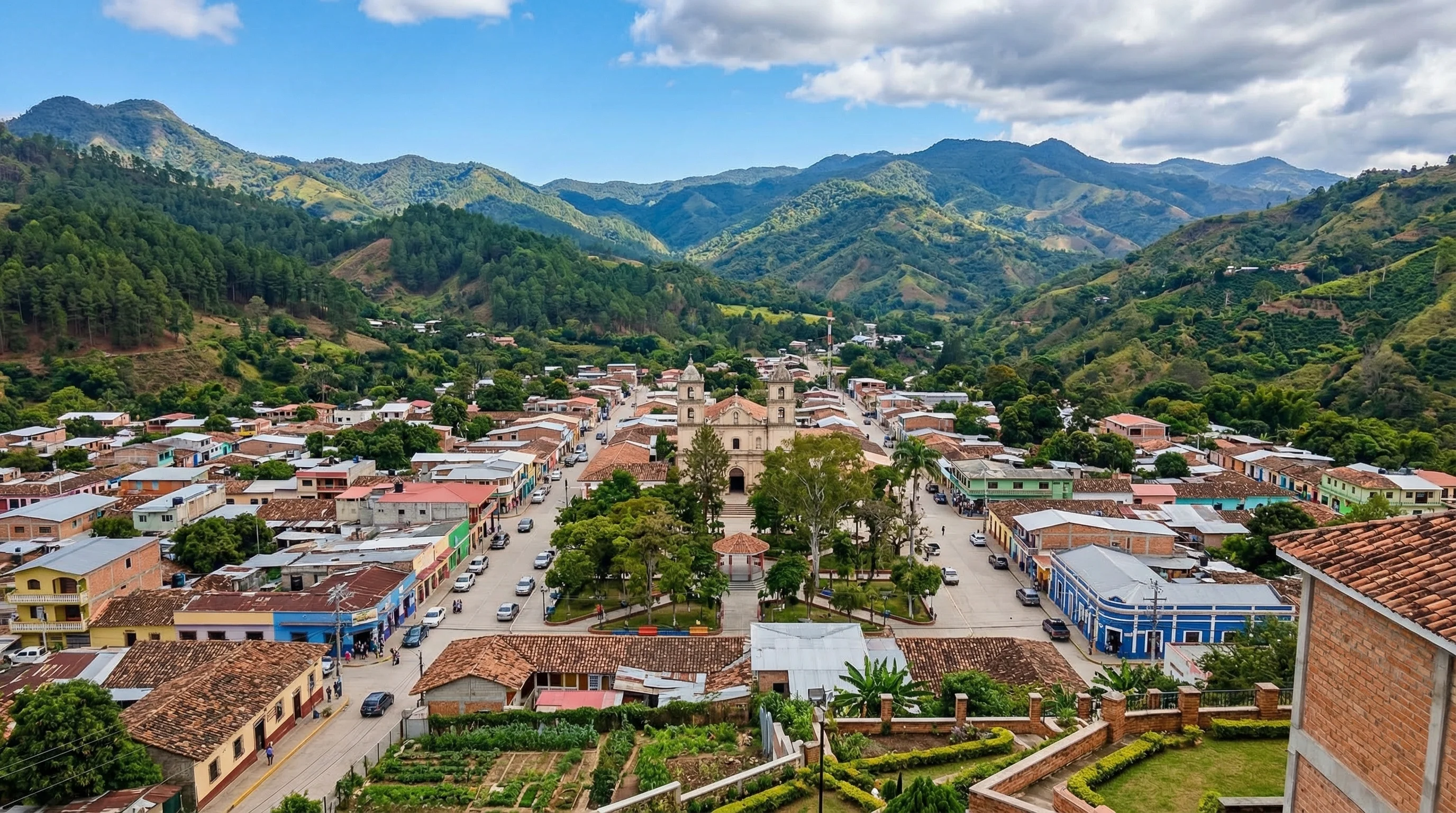
Ocotepeque
Ocotepeque serves as a strategic gateway to western Honduras, positioned near the border with Guatemala and offering access to both Pacific and Atlantic trade routes. The city's location in the mountainous western region provides connectivity to major agricultural and industrial centers throughout Honduras, while its proximity to the El Florido border crossing facilitates efficient cross-border operations. The region's developing infrastructure continues to improve, with highway CA-4 providing direct connections to San Pedro Sula and other major Honduran cities.
The local economy in Ocotepeque and surrounding areas focuses on agriculture, including coffee production, which is a significant export commodity for Honduras. The region also supports light manufacturing, construction materials production, and distribution centers serving western Honduras. As economic development continues in this area, demand for reliable freight transportation services has grown, particularly for industrial equipment, construction materials, and consumer goods from North American markets.










