Chicago to Lincoln
Lincoln → ChicagoFTL freight transportation service between Chicago and Lincoln. Reliable logistics solutions for your business.
Route Description
Everything you need to know about the corridor Chicago - Lincoln
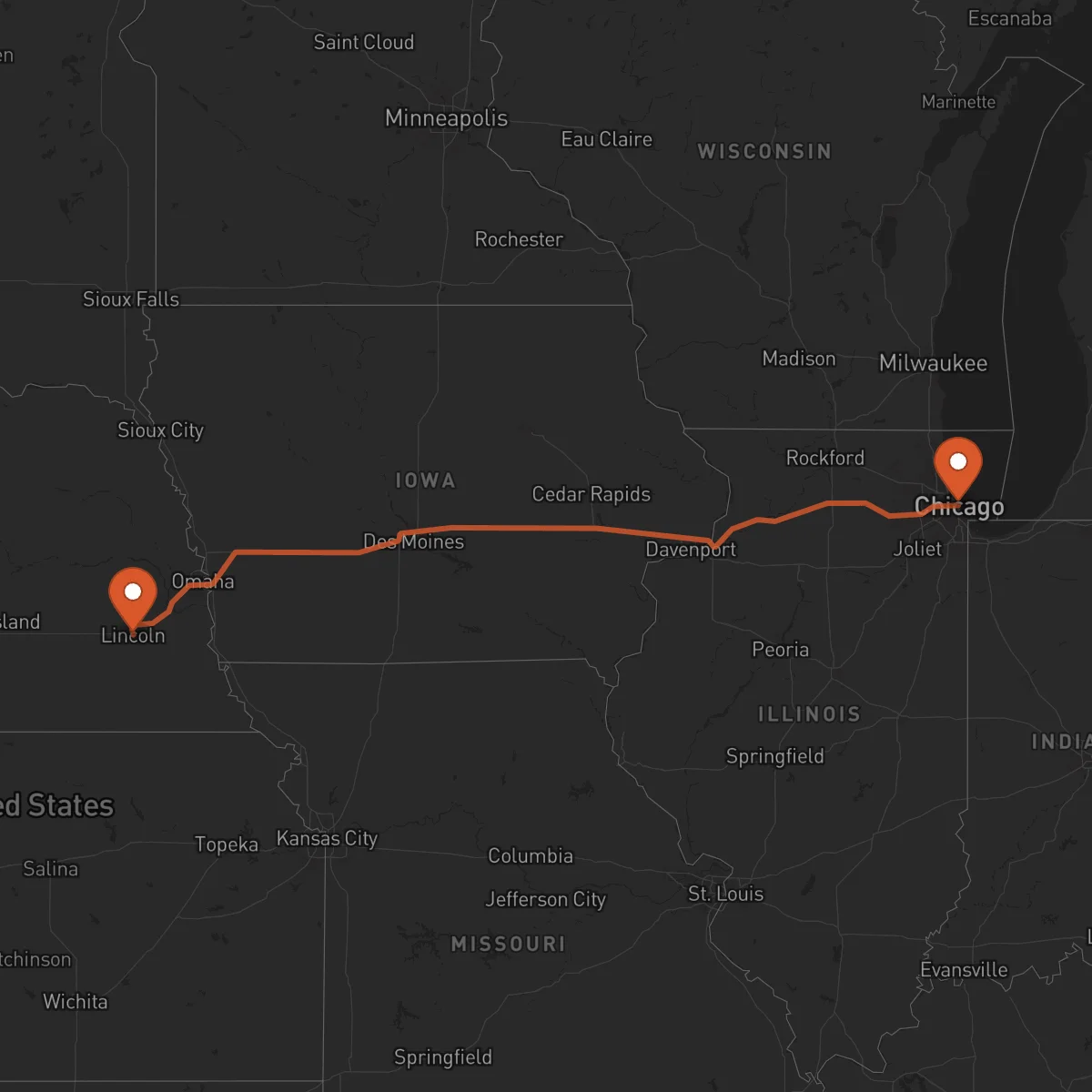
The Chicago to Lincoln corridor represents one of the most vital domestic freight routes in the Midwest, connecting two major economic hubs across 766 kilometers of strategic territory. This route serves as a critical link between the industrial powerhouse of Chicago and the growing commercial center of Lincoln, facilitating the movement of goods that drive regional commerce. The corridor traverses diverse terrain and crosses multiple state lines, making it essential for businesses that rely on efficient north-south freight movement throughout the central United States.
The economic significance of this corridor cannot be overstated. Chicago, as a global logistics hub, generates massive freight volumes that flow to emerging markets like Lincoln, where manufacturing, agriculture, and technology sectors continue to expand. The route supports key industries including automotive parts, agricultural equipment, consumer goods, and industrial machinery. Major distribution centers along the way create additional freight opportunities, making this corridor a backbone for supply chain operations throughout the region.
Transportation infrastructure along the Chicago-Lincoln corridor is exceptionally well-developed, with I-80 serving as the primary freight artery. This interstate highway provides reliable, high-capacity freight movement with multiple lanes and modern facilities. Additional routes including I-55 and I-88 offer alternative pathways and connect to secondary markets. The corridor's infrastructure supports consistent transit times and enables Control Terrestre to maintain reliable service schedules for our customers' full truckload shipments.
Control Terrestre leverages this robust infrastructure to provide seamless FTL freight solutions between Chicago and Lincoln. Our network of certified carriers ensures that your cargo moves efficiently through every mile of this corridor. We understand the specific requirements of businesses operating along this route, from just-in-time manufacturing schedules to seasonal agricultural shipping demands. Our dedicated approach means your freight receives priority handling, professional driver assignment, and real-time tracking throughout the journey, ensuring your supply chain remains uninterrupted.
Services for this Route
Available services for the corridor Chicago - Lincoln
 Origin
Chicago
Chicago stands as a global logistics powerhouse, strategically positioned at the heart of North America's freight network. The city's location provides unparalleled access to major transportation arteries, including the Great Lakes shipping lanes, extensive rail networks, and a comprehensive highway system. Chicago's O'Hare International Airport ranks among the world's busiest cargo facilities, while its inland port facilities handle millions of tons of freight annually. This convergence of transportation modes makes Chicago the ideal origin point for freight distribution throughout the Midwest and beyond.
The economic landscape of Chicago encompasses diverse sectors that generate substantial freight volumes. The city hosts major manufacturing facilities, particularly in automotive, machinery, and food processing industries. Chicago's role as a financial and corporate center creates demand for specialized freight services supporting technology, pharmaceuticals, and high-value goods. The region's agricultural processing and packaging industries also contribute significantly to outbound freight volumes, creating year-round shipping opportunities along corridors like Chicago to Lincoln.
 Destination
Lincoln
Lincoln, Nebraska has emerged as a strategic logistics destination in the central United States, offering businesses a cost-effective alternative to larger metropolitan markets. The city's location provides excellent access to major freight corridors while maintaining lower operational costs than coastal or border markets. Lincoln's transportation infrastructure includes direct highway connections to I-80, rail service from major carriers, and proximity to air cargo facilities in Omaha. This accessibility makes Lincoln an attractive destination for companies seeking efficient distribution points throughout the Midwest.
The economic profile of Lincoln reflects its growth as a regional commercial center. The city hosts significant manufacturing operations, particularly in agricultural equipment, machinery, and food processing. Lincoln's technology sector continues to expand, creating demand for specialized freight services supporting electronics and advanced manufacturing. The region's strong educational institutions and research facilities generate consistent freight volumes for scientific equipment, laboratory supplies, and technology products. These diverse industries create steady demand for reliable freight services connecting Lincoln to major markets like Chicago.










