Chicago to Cancún
Cancún → ChicagoFTL freight transportation service between Chicago and Cancún. Reliable logistics solutions for your business.
Route Description
Everything you need to know about the corridor Chicago - Cancún
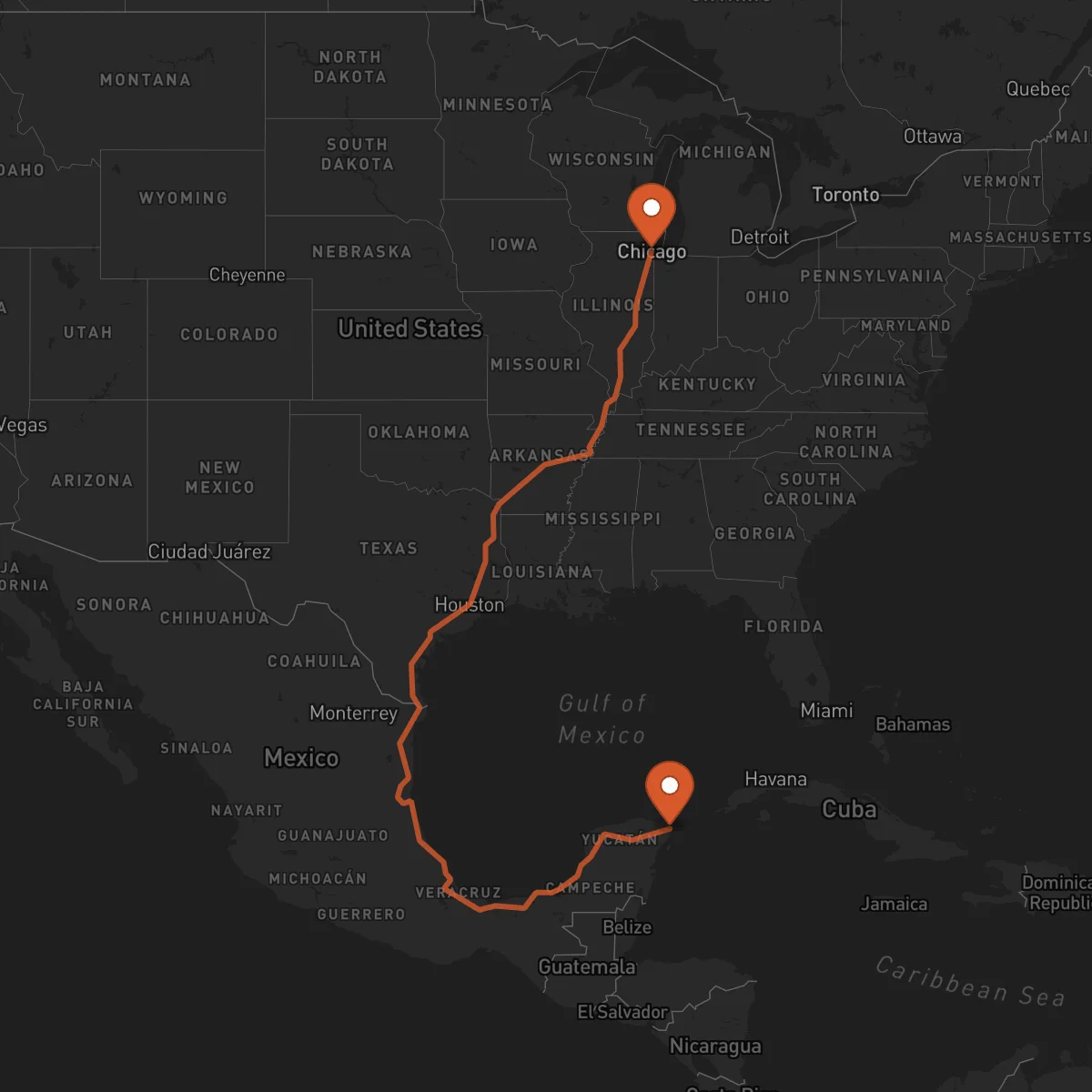
The Chicago to Cancún corridor represents a vital logistics connection between the industrial heartland of the United States and one of Mexico's most dynamic tourism and manufacturing hubs. This cross-border route spans approximately 2,305 kilometers, traversing diverse terrain and connecting two major economic regions. The corridor facilitates the movement of goods between the Midwest's manufacturing centers and the growing markets of southeastern Mexico, supporting both import and export operations for businesses operating in both countries.
This route is particularly significant for industries such as automotive, electronics, consumer goods, and agricultural products. Chicago serves as a major distribution hub with extensive rail and intermodal connections, while Cancún has evolved into a key logistics center for Quintana Roo and the broader Yucatán Peninsula. The corridor benefits from well-developed transportation infrastructure, including major highways like I-65 South to I-55 South, connecting to Mexico's Federal Highway 190, which provides direct access to the Quintana Roo region.
Control Terrestre specializes in facilitating seamless cross-border operations along this corridor, managing all aspects of the transportation process from origin to destination. Our expertise includes handling customs documentation, ensuring compliance with both USMCA regulations and Mexican import requirements, and coordinating with certified carriers who understand the specific requirements of this cross-border route. We provide full truckload (FTL) services that guarantee dedicated capacity for your shipments, eliminating the delays and handling issues associated with consolidated freight.
Services for this Route
Available services for the corridor Chicago - Cancún
 Origin
Chicago
Chicago, Illinois stands as one of North America's most important logistics hubs, strategically located in the heart of the Midwest. The city's central geographic position provides unparalleled access to major markets across the United States and Canada, with extensive connections to rail networks, interstate highways, and international air cargo facilities. Chicago's O'Hare International Airport ranks among the world's busiest cargo airports, while the city's intermodal facilities handle millions of containers annually, making it a critical node in global supply chains.
The Chicago metropolitan area is home to diverse industries including advanced manufacturing, food processing, pharmaceuticals, and technology. The region's industrial base produces a wide range of goods that require efficient transportation to international markets, particularly to Mexico and Latin America. Chicago's logistics infrastructure includes multiple Class I railroads, extensive warehousing and distribution centers, and a network of specialized freight facilities that can handle everything from temperature-sensitive pharmaceuticals to oversized industrial equipment.
 Destination
Cancún
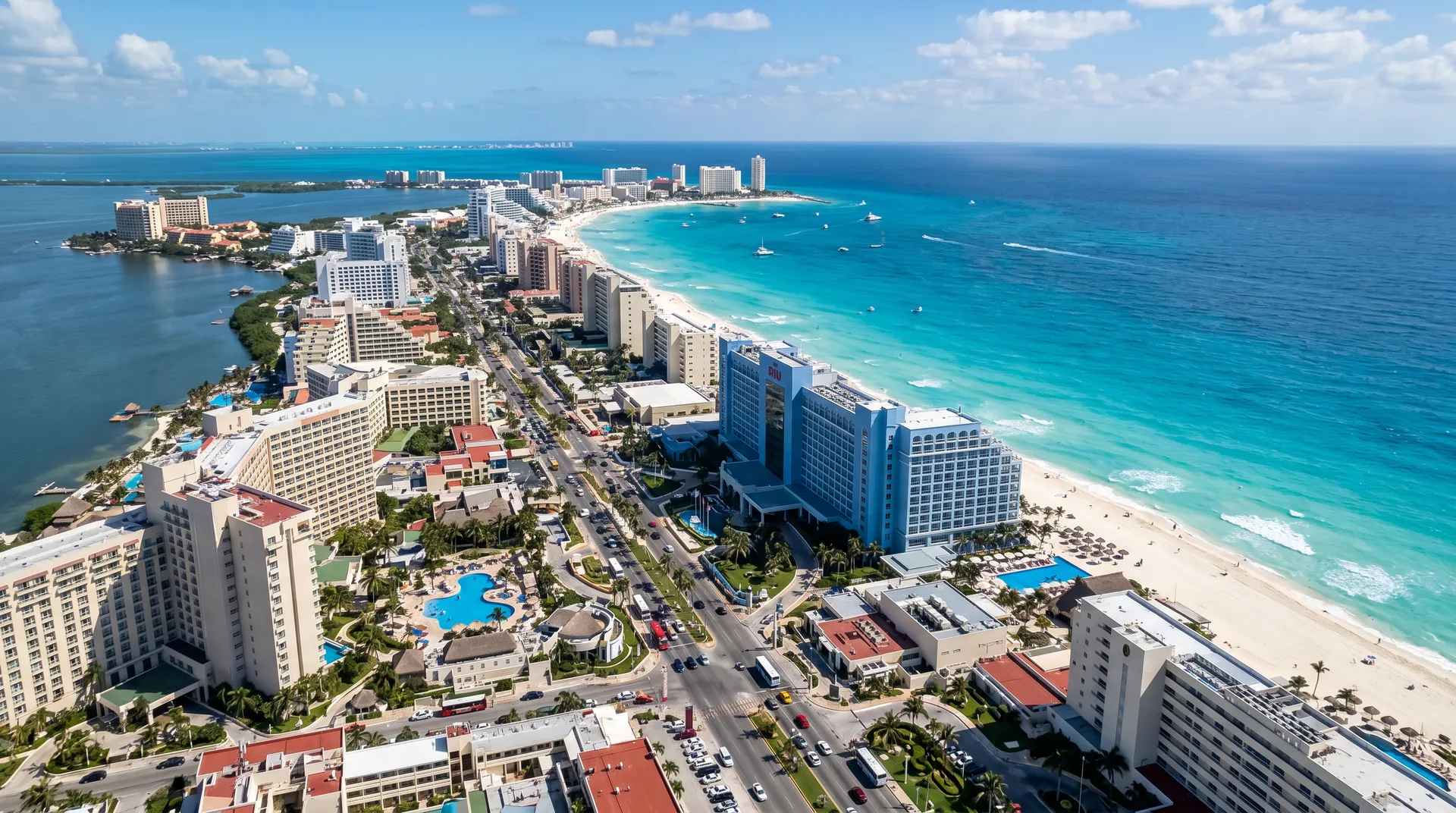
Cancún, located in Quintana Roo, Mexico, has transformed from a tourism destination into a significant logistics and manufacturing center for the Yucatán Peninsula. The region's strategic location provides access to growing markets in southeastern Mexico, Central America, and the Caribbean. Cancún's proximity to major ports and its developing industrial parks make it an attractive location for companies seeking to establish distribution centers for the region. The area benefits from Mexico's network of free trade agreements, providing duty-free access to multiple markets.
The local economy has diversified beyond tourism to include aerospace manufacturing, medical devices, and electronics assembly. Cancún International Airport handles significant cargo volumes, while the region's road network connects efficiently to major Mexican highways. The Quintana Roo area is experiencing rapid industrial growth, with new manufacturing facilities and logistics parks being developed to serve both domestic and international markets. This growth has increased the demand for reliable, full truckload transportation services connecting the region to major US markets.










