Cheyenne to Ocotal
Ocotal → CheyenneFTL freight transportation service between Cheyenne and Ocotal. Reliable logistics solutions for your business.
Route Description
Everything you need to know about the corridor Cheyenne - Ocotal
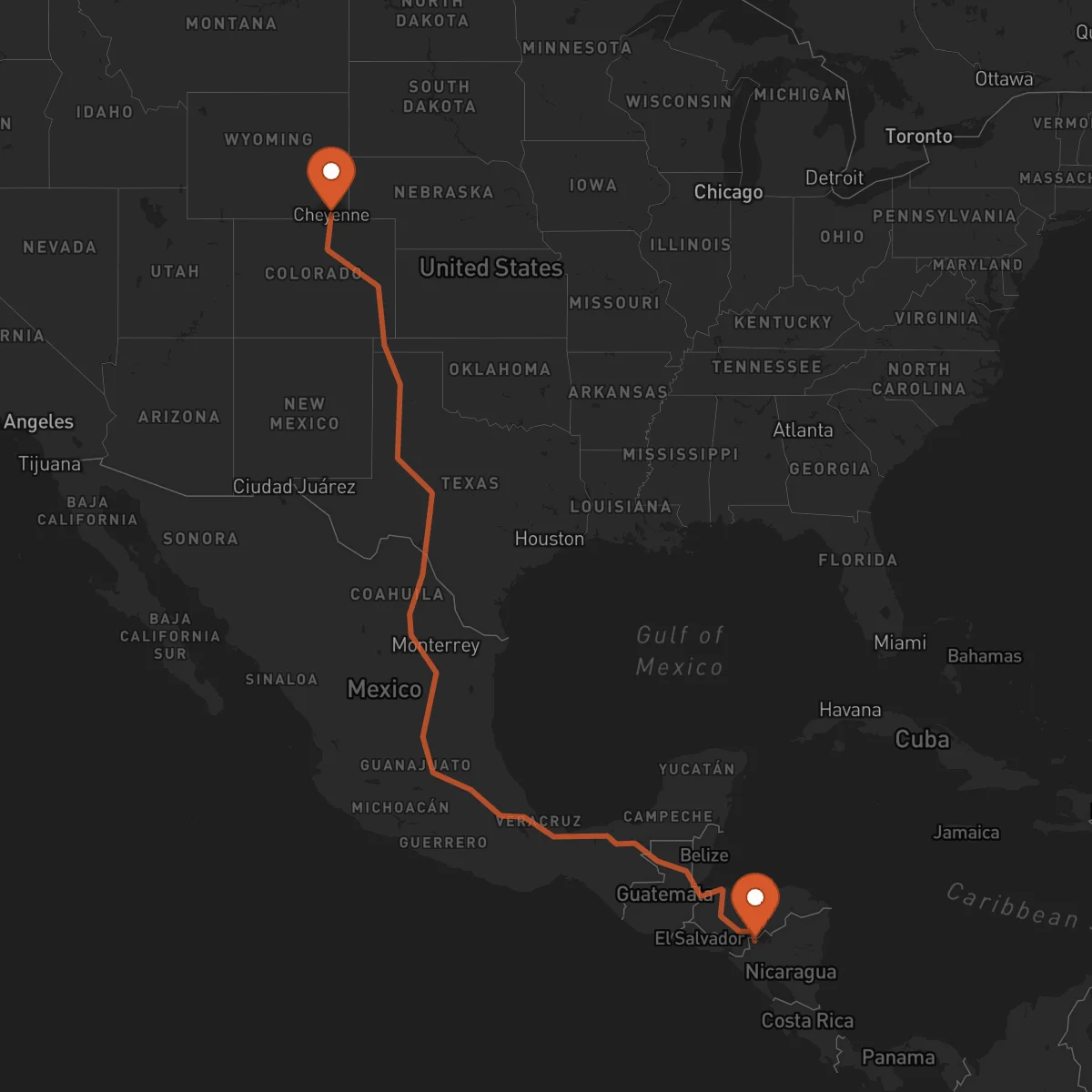
The Cheyenne to Ocotal corridor represents a critical north-south logistics artery connecting the interior of the United States with Central America. Spanning approximately 3,537 kilometers, this cross-border route is strategically vital for trade between the U.S. Rocky Mountain region and Nicaragua, facilitating the movement of goods that support economic integration across the continent. The corridor traverses diverse landscapes and regulatory environments, requiring sophisticated logistics management to ensure efficient transit from a major U.S. inland hub to a key destination in Central America.
Economically, the corridor serves the exchange of goods from Wyoming's core industries—including energy extraction, agriculture, and manufacturing—with Nicaragua's demand for capital goods, consumer products, and inputs for its agricultural and light industrial sectors. Key industries utilizing this route include agribusiness (grains, livestock inputs, coffee), construction materials, manufactured goods, and specialized cargo. The transportation infrastructure relies primarily on a sequential highway network: starting on I-25 south from Cheyenne to Laredo, Texas, then through Mexico via federal highways such as 57, 150, and 200 toward the Guatemalan border. After crossing into Guatemala, the route continues on CA-1 through Honduras and into Nicaragua, terminating in Ocotal. This multi-national highway chain demands meticulous coordination for border transitions.
Critical border crossings include the USA-Mexico gateway at Laredo (a major port leveraging C-TPAT and FAST certifications for expedited clearance), the Guatemala-Mexico crossing at Tecún Umán/Ciudad Hidalgo, and the Honduras-Nicaragua border at Las Manos. Each crossing presents unique customs procedures, documentation requirements, and potential delays. Control Terrestre facilitates seamless operations on this corridor through our robust alliance of certified transportation providers. Our partners hold key accreditations including C-TPAT, FAST, and BASC, which streamline U.S. and Mexican customs processes. We manage the full spectrum of cross-border documentation, coordinate transloading where necessary, and provide dedicated FTL and specialized equipment (such as dry vans, reefers, and flatbeds) to match cargo needs. By leveraging our network's expertise and green-focused approach, we optimize transit times and reduce complexities for shippers moving freight along this challenging international route.
Services for this Route
Available services for the corridor Cheyenne - Ocotal
 Origin
Cheyenne
Cheyenne, Wyoming, serves as a pivotal logistics origin point due to its strategic central location in the United States and its role as a major interchange for national freight networks. The city sits at the crossroads of I-80 (east-west) and I-25 (north-south), providing direct highway access to markets across the continent. Cheyenne is also a significant rail hub, with multiple Class I railroads converging there, offering intermodal flexibility. The local economy is driven by robust industrial sectors: energy (coal, natural gas, and trona mining), agriculture (cattle ranching and grain production), and government/military operations. This industrial base generates consistent outbound freight demand, including bulk materials, manufactured components, and agricultural supplies. The available transportation infrastructure is mature, featuring extensive warehousing and distribution facilities near the interstates, a major airport for air cargo complementarity, and established trucking services that connect to the primary southbound I-25 corridor toward the Laredo border crossing.
 Destination
Ocotal
Ocotal, the capital of Nicaragua's Nueva Segovia department, is a strategically important logistics destination in northern Nicaragua, positioned near the borders with Honduras and El Salvador. Its location makes it a regional distribution center for northern Nicaragua and a gateway for cross-border trade within Central America. The local economy is predominantly agricultural, with coffee (a major export), beans, corn, and livestock forming the backbone of production. There is also light manufacturing and commerce serving the region. Transportation infrastructure includes the Pan-American Highway (CA-1) which passes through Ocotal, connecting it southward to Managua and northward to the Honduran border at Las Manos. While the highway network is functional, rural and last-mile roads can vary in condition, requiring experienced carriers. The nearest major seaport is Corinto on the Pacific coast, accessible via road from Managua. For this corridor, Ocotal's infrastructure is suited for standard dry van and refrigerated FTL deliveries, with facilities to handle agricultural and general commercial freight, though specialized handling for oversized or hazardous cargo would require pre-coordination at the destination.










