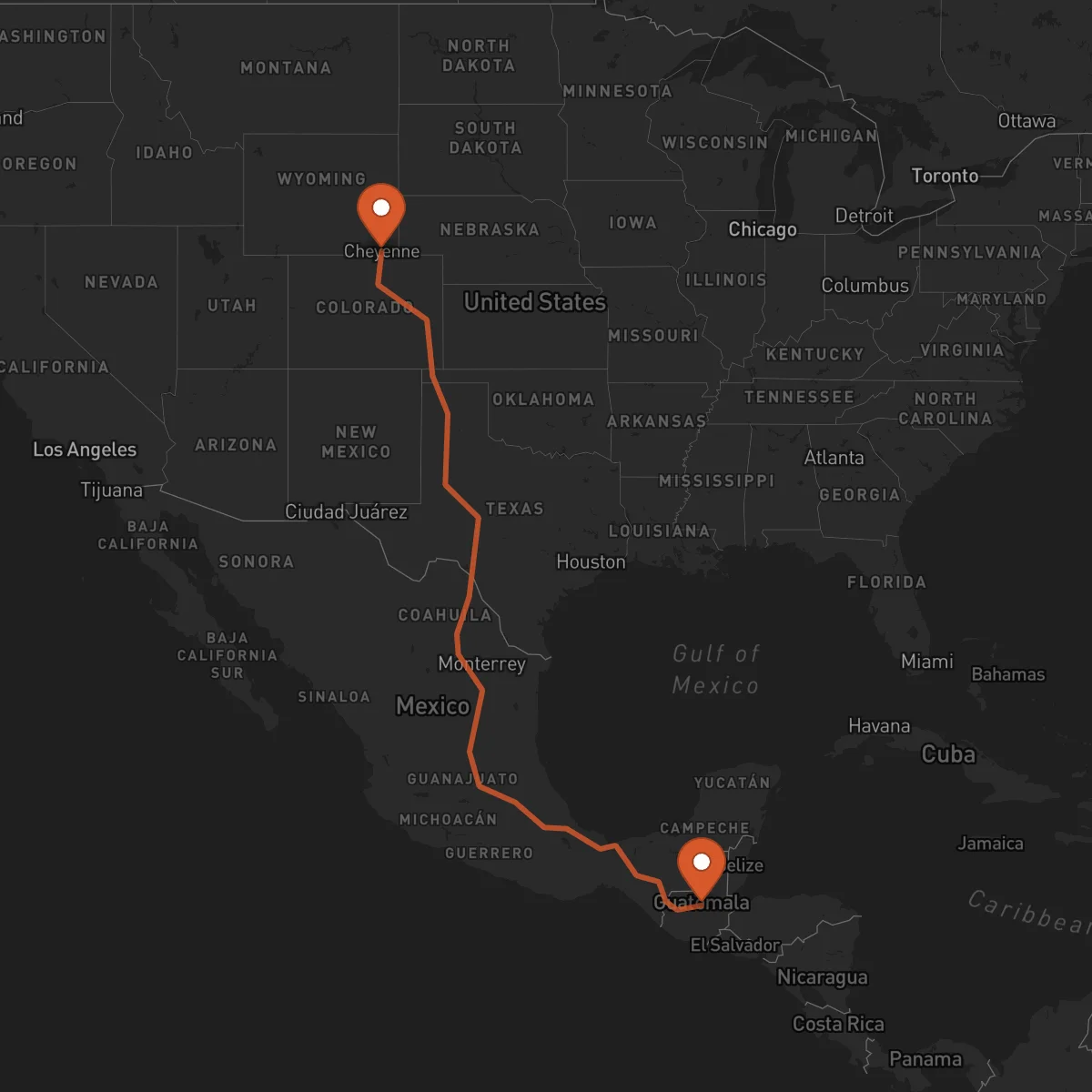
Cheyenne to Cobán
Cobán → CheyenneFTL freight transportation service between Cheyenne and Cobán. Reliable logistics solutions for your business.
Route Description
Everything you need to know about the corridor Cheyenne - Cobán
The Cheyenne, Wyoming to Cobán, Alta Verapaz, Guatemala corridor is a strategic cross-border artery connecting the industrial heartland of the U.S. Rockies with the agricultural highlands of Central America. This approximately 3,175 km route is vital for moving goods between North and Central America, serving as a critical link for supply chains requiring reliable, full truckload (FTL) transit. The economic context spans diverse sectors, from U.S. manufacturing and agricultural inputs to Guatemala's export-oriented agriculture. Key industries utilizing this corridor include agribusiness (coffee, bananas, vegetables), processed foods, construction materials, and industrial equipment. The transportation infrastructure primarily relies on the U.S. Interstate system (I-25 South to I-35, then I-10 West to Texas) before entering Mexico via major highways like Federal Highway 45 and 57. The journey continues through Mexico's network to the southern border, followed by Central American routes such as Guatemala's CA-1 and CA-14. The critical international border crossing is at the Mexico-Guatemala frontier, most notably the formal crossing at El Ceibo/Tecún Umán, which handles commercial freight with established customs procedures. Navigating the complex customs and regulatory environments of three countries requires expertise in documentation, compliance, and cross-border protocols. At Control Terrestre, we facilitate seamless operations on this corridor through our alliance of certified providers. Our team manages the entire FTL journey, leveraging C-TPAT, FAST, and BASC certifications to ensure secure and efficient cross-border movement. We coordinate dedicated and specialized equipment, including dry vans and refrigerated units, handling everything from standard cargo to temperature-sensitive goods, providing our clients with a single, reliable point of contact for this complex international route.
Services for this Route
Available services for the corridor Cheyenne - Cobán
 Origin
Cheyenne
Cheyenne, Wyoming, serves as a pivotal logistics origin point due to its strategic location at the crossroads of the U.S. Interstate system. It is a major hub on I-80 and I-25, providing direct, high-capacity access to markets from the Pacific Northwest to the Midwest and South. The city's economy is bolstered by diverse industries including agriculture (livestock, grains), energy (mining, renewables), and advanced manufacturing. This industrial base generates consistent outbound freight demand. Cheyenne's transportation infrastructure is robust, featuring extensive warehousing, distribution centers, and direct rail connections. Its position as a gateway from the Rocky Mountain region to the southern U.S. and Mexico makes it an ideal launching point for long-haul, cross-border FTL shipments destined for Central America, allowing for efficient consolidation and dispatch of full truckloads.
 Destination
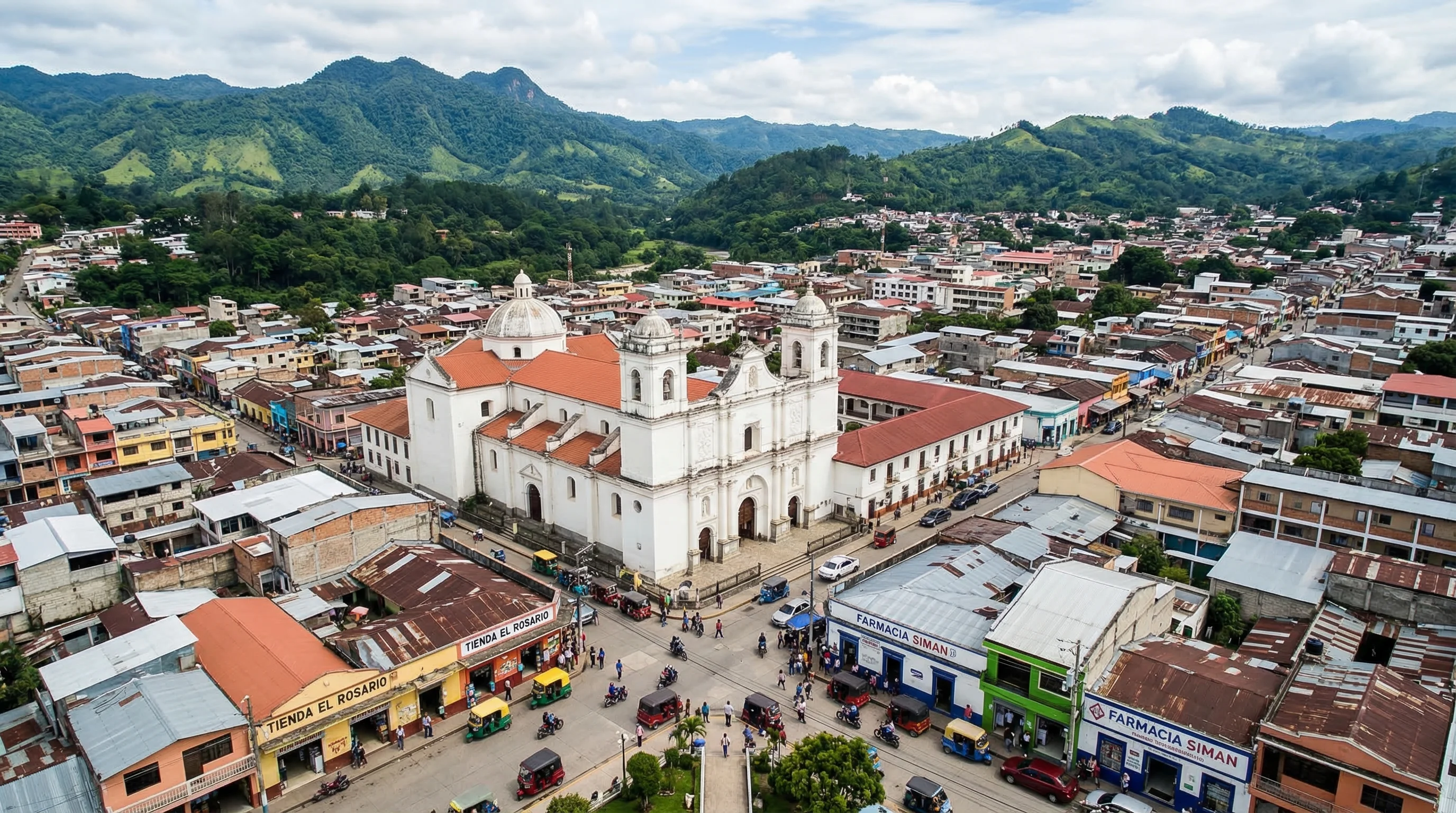
Cobán
Cobán, the capital of Guatemala's Alta Verapaz department, is a strategic logistics destination in the Central American highlands. It functions as the commercial and agricultural epicenter for one of Guatemala's most productive regions. The local economy is dominated by high-value agriculture, particularly coffee (a major global export), bananas, cardamom, and other tropical fruits and vegetables. This generates significant demand for inbound supplies like fertilizers, packaging, and equipment, as well as outbound refrigerated freight. Key infrastructure includes the nearby Mundo Maya International Airport for air cargo and a network of paved highways connecting it to Guatemala's main ports on the Atlantic coast (Puerto Barrios, Santo Tomás de Castilla) and the capital, Guatemala City. Route CA-14 is a primary corridor linking Cobán to these vital export gateways. The city's role as a collection point for agricultural exports makes it a crucial node for FTL freight moving between Guatemala's interior and international markets.










