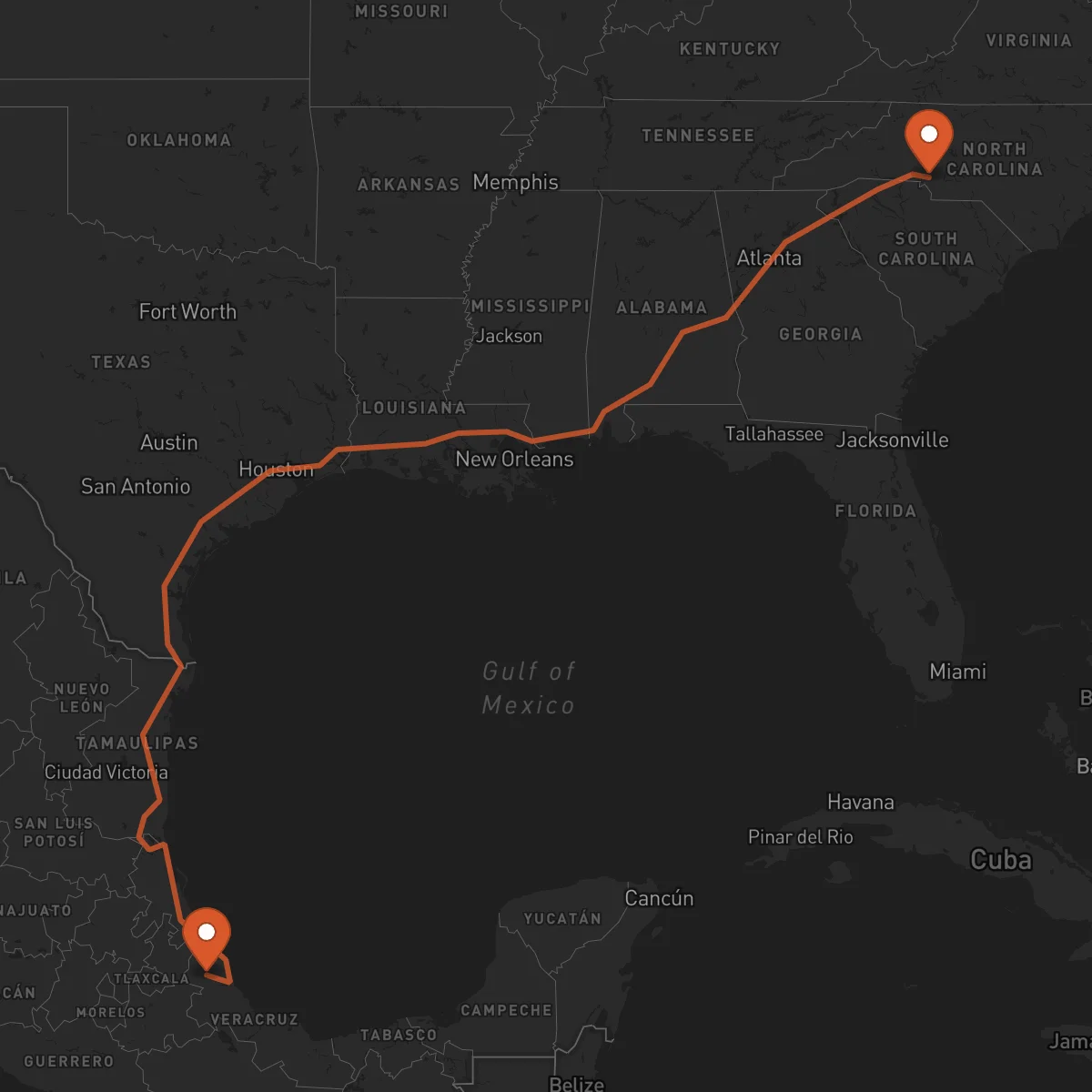
Charlotte to Xalapa
Xalapa → CharlotteFTL freight transportation service between Charlotte and Xalapa. Reliable logistics solutions for your business.
Route Description
Everything you need to know about the corridor Charlotte - Xalapa
The Charlotte to Xalapa logistics corridor represents a vital cross-border connection between the southeastern United States and the heart of Mexico's Gulf region. This 2,351 km route links North Carolina's largest city with Veracruz's state capital, facilitating the movement of goods between two dynamic economic regions. The corridor serves as a crucial artery for companies engaged in North American trade, particularly those leveraging the United States-Mexico-Canada Agreement (USMCA). Control Terrestre's expertise in cross-border operations ensures seamless transportation across this important trade lane, connecting manufacturing centers, distribution hubs, and consumer markets on both sides of the border.
The economic significance of this corridor is underscored by the complementary industrial strengths of both regions. Charlotte serves as a major financial center and logistics hub with strong automotive, energy, and technology sectors, while Xalapa is a growing center for education, research, and light manufacturing in Mexico's Veracruz state. The route passes through key commercial centers including Atlanta, Birmingham, and Monterrey, creating multiple opportunities for regional distribution and last-mile delivery. This corridor is particularly valuable for companies in the automotive, electronics, and consumer goods sectors that require reliable transportation between production facilities and distribution centers.
Transportation infrastructure along this corridor includes major interstate highways such as I-85, I-20, and Mexican Federal Highways 85 and 180D. The primary border crossing at Laredo/Nuevo Laredo offers multiple commercial lanes and modern customs facilities, though alternative crossings at Eagle Pass/Piedras Negras may be utilized depending on traffic conditions and specific cargo requirements. Control Terrestre's cross-border expertise includes comprehensive customs clearance services, ensuring that all documentation and compliance requirements are handled efficiently to minimize delays and optimize transit times for our customers' full truckload shipments.
Services for this Route
Available services for the corridor Charlotte - Xalapa
 Origin
Charlotte
Charlotte, North Carolina serves as a strategic logistics hub in the southeastern United States, offering exceptional connectivity through its central location and robust transportation infrastructure. The city is home to the sixth busiest airport in the world by aircraft movements (Charlotte Douglas International Airport) and benefits from extensive highway networks including I-85 and I-77, providing direct connections to major markets along the East Coast and throughout the Southeast. Charlotte's position as a financial services center, combined with its growing manufacturing and technology sectors, creates consistent demand for freight transportation services. The region's proximity to the Port of Charleston and Port of Wilmington provides additional multimodal shipping options for companies requiring comprehensive logistics solutions.
 Destination
Xalapa, the capital city of Veracruz, Mexico, occupies a strategic position in the Gulf region with excellent connectivity to major ports and industrial centers. Located in the central highlands of Veracruz, Xalapa provides access to the Port of Veracruz and Coatzacoalcos, two of Mexico's most important maritime gateways. The city benefits from its proximity to Mexico's Gulf coast and its position along Federal Highway 180, which connects to major industrial centers including Veracruz, Córdoba, and Orizaba. Xalapa's growing educational and research institutions, combined with its developing manufacturing sector, create demand for reliable freight transportation services. The region's infrastructure supports both domestic distribution within Mexico and international trade flows, making it an important node in the country's logistics network.










